D&D Homebrew Monster of the Week: Aeiros

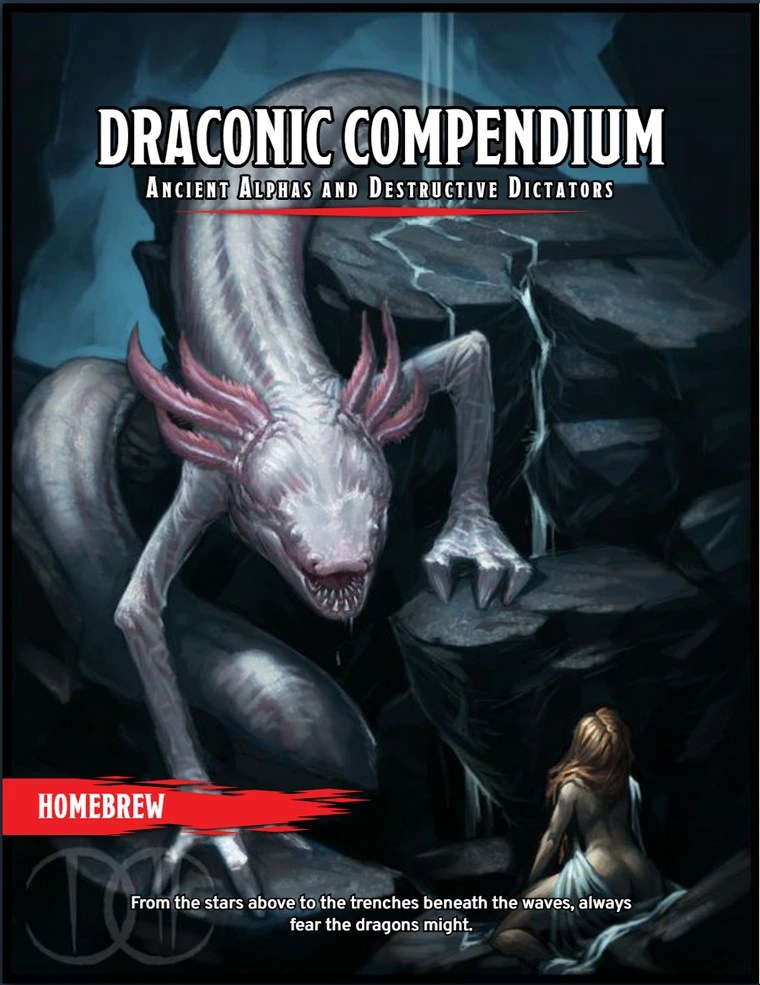
Aerios the Celestial Mother by Neigbourh

Pure of heart? You? Bah! I’ve seen insects with more courage than you. You are but mouse, scurrying underfoot, avoiding confrontation, all while corruption and heresy spreads like the plague. You want change? You want to ‘fix’ this realm? Act then.”

– Aeiros of the 7th Heavenly Court.

If I had a nickel for every blogpost I have made so far for a Celestial creature who is righteous to a fault and intolerant to anything even considered unholy, I’d have two nickels, which isn’t a lot but its weird how its happened twice already. Additionally, yet another creature that hovers in the air. It seems my taste for creature design is starting to show already. Hailing from the celestial heavens, the Aerios are dangerous celestials to get on the bad side of, relying on more deceptive means than one might assume to strike with holy retribution.

Aeiros: The Overview

The Aeiros are towering angelic figures who have their heart in the right place, if not a bit too much in the right place. Similar to Absolution, the last Celestial creature we discussed, the Aerios are incredibly righteous and pious creatures who seek to purify the lands of all that is unholy, aberrant, and heretical. Unlike the powerhouse that is Absolution, the Aerios are far weaker and nowhere near as much a battlefield dominator as Absolution. As such, the Aerios must rely on craftier means to turn the tables during combat. While a potent spellcaster, that is not the Aerios’ ace in the hole. Instead, the Aerios relies on its ability to possess and inhibit the bodies of mortal creatures to get close to their quarry before striking them down with holy fire. Additionally, if an Aeiros can help it, you will never see one coming before it’s too late.

Stats and Abilities:

Assertive and single minded at times, the Aerios are powerful angelic figures that track and hunt down those with ties to the unholy and heretical. Despite their noble ambitions, the Aerios have no qualms taking underhanded tactics to secure their goals. The Aerios are well rounded when looking at their statblocks with no real obvious tell-tale sign of weakness, but typically rely on their high WIS modifier for the saves on their notable spells and features. With a DEX of 14 being their lowest stat, the Aerios really can thrive just about anywhere but rely mostly on being in physical confrontation with their opponents as opposed to in the back line.

  • Stats and Skills: The Aerios has no obvious weakness in the stats department, boasting a high WIS alongside their respectable STR, INT, and CHA, the Aerios are perfect all rounders for nearly any situation, however their primary form of combat involves possession and stealthy approaches which isn’t really highlighted in the actual statblock. For starters, while the skill proficiencies they have currently are still applicable, I would say they need to have proficiency with Stealth checks if not outright expertise. With a meager +2 to all Stealth checks, it makes it quite hard for a creature to successfully sneak up on anything, regardless of other features. Bumping the Stealth to either a +5 or +8 would be leagues better and fit more in line with the Aerios’ tactical and sneaky approach.
  • Resistances, Immunities, and Senses: Resistant to nonmagical weapons like many creatures of this caliber and outright to Radiant damage feels very thematic for this creature. It is a holy agent and as such should be at the very least resistant to holy magics if not outright immune. With immunities to the Blinded, Charmed, and Frightened conditions, the only one I don’t agree with is the Blinded immunity. Typically the only time a creature is immune to being blinded is if they don’t have any eyes to speak of as then there would be nothing to actually blind. The reasoning I had for immunities to Charmed and Frightened is that the Aerios are incredibly stubborn and headstrong and would not succumb to these conditions due to their nature as well as their otherworldly physiology. In all honesty, 120ft. of Truesight might be a bit much as even dragons typically only get 30ft. of it. As I am unsure if we have even discussed Truesight to any degree on this blog yet, Truesight allows the following:

“A monster with truesight can, out to a specific range, see in normal and magical darkness, see invisible creatures and objects, automatically detect visual illusions and succeed on saving throws against them, and perceive the original form of a shapechanger or a creature that is transformed by magic. Furthermore, the monster can see into the Ethereal Plane within the same range.”

So pretty much the Aerios can do the following:
– Ignore illusion based spells and effects.
– See Invisible creatures without needing to make any checks to determine their location.
– See into the Ethereal Plane, the plane which typically acts as an in-between for the Material and the other planes.
– Bypass all forms of darkness or dim light.
– And lastly determine if somebody is currently shapeshifting.
That’s a whole lot for a range of 120ft. I would say Truesight is appropriate and while most creatures only have 30ft., the Aerios could get away with 60ft. due to it being wholly about tracking down and hunting criminals and heretics. It makes sense to me for a creature of this style to be able to see through lies and deceptions a lot better than many others, but 30ft. of Truesight would still serve the Aerios just fine.

Passive Abilities and Actions:

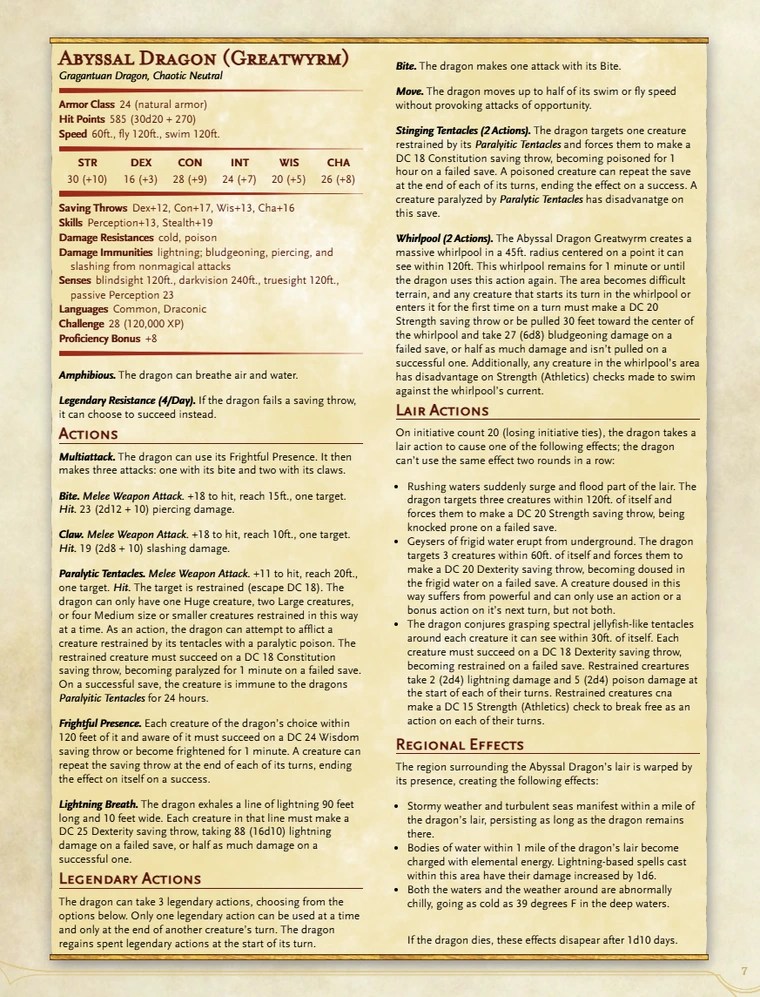
Magic Resistance. The Aeiros has advantage on saving throws against spells and other magical effects.

A staple of mid-higher tier monsters. No comments or adjustments to be made.

Innate Spellcasting: The Aeiros’s spellcasting ability is Wisdom (spell save DC 16, +8 to hit with spell attacks). The Aeiros can innately cast the following spells, requiring no material components:

  • At will: Burning Hands, Detect Evil and Good, Light
  • 3/day each: Blinding Smite, Daylight, Dispel Magic
  • 1/day each: Banishment, Mass Healing Word, Spirit Guardians

While I am quite happy with the spells on selection here, this isn’t perfect:

  • Burning Hands is a decent enough offensive option, but for a CR 8 it does feel a bit on the weaker side, being a 1st level spell that covers and incredibly small 15ft. cone and only dealing 3d6 fire damage. A better option would be Scorching Ray, a 2nd level spell that deals a total of 3d10 across 1-3 targets with 120ft. of range and being an attack roll vs a saving throw.
  • Detect Evil and Good feels almost redundant with hindsight. This spell allows the caster to see if their is an Aberration, Celestial, Elemental, Fey, Fiend, or Undead within 30ft. of themselves. Even if we were to nerf Truesight down to the distance of what most other creatures that have Truesight have, it still would cover the same distance as Detect Evil and Good. Detect Thoughts feels more at home within the Aerios’ utility as while it can see invisible creatures thanks to Truesight, it has no ability to actually probe for thoughts.
  • Light is usually a good utility, but for the Aerios it feels like clashes with what the Aerios is trying to accomplish. The Aerios is all about skulking and sneaking in on the unsuspecting, and it already can see in the dark so why would it illuminate the area? I think a better spell would be Crown of Madness as that gives the Aerios another form of mental control at the cost of its concentration and ability to act aside from dictating the creature through the spell.
  • Daylight is in a similar position as Light. Why would the Aerios want to remove any darkness at all, especially magical Darkness it can see through but most other creatures couldn’t. Silence feels much more applicable in this spell list as if the Aerios can dispose of its prey without a sound, then it absolutely would every chance it gets. Additionally, the non-spell list options within the Aerios kit don’t require any verbal components so it could cast silence, take possession of a martial oriented character or NPC, and then go to town.
  • Mass Healing Word also feels out of place as typically, an Aerios would work alone and would not care too much if others got injured in the wake of trying to dispose of their target. Dominate Person feels like it should be the trump card within the Aerios’ kit, allowing it one final tool to try and gain control of another.

Selective Appearance. The Aeiros can dictate which creatures can perceive it so long as the creatures are not engaged in combat with the Aeiros. Creatures within 120ft. of a hidden Aeiros can make a DC 16 Wisdom (Perception) check to notice remnants of an Aeiros’ presence and will not be surprised should the Aeiros attack the target.

This is just messy writing. I tried to be more creative and unique with how the Aerios could sneak into locations. At the end of the day, because I am trying to create something new, it doesn’t have a preset on how it interacts with other mechanics of D&D, so ultimately it would be better if this was a form of invisibility as opposed to just being perceived. This would still have it function to an indefinite version of the Invisibility spell, having the Aerios be invisible until it attacks, casts a spell, or is successfully hit by a spell or attack. After it has been revealed, the Aeiros must wait 1 full minute before it goes back to being invisible.

Multiattack. The Aeiros makes two attacks.

Nothing to say. Standard feature for a monster of this caliber.

Luminous Strike. Melee Spell Attack. +8 to hit, reach 10ft., one target. Hit: 14 (4d6) radiant damage.

The standard attack of the Aeiros. The damage might be a smidge high paired with the multiattack, but honestly it’s not completely game-breaking with the damage it can deal.

Radiant Blast. Ranged Spell Attack. +8 to hit, range 60ft., one target. Hit: 16 (4d8) radiant damage.

With the revamp to the spell list to include Scorching Ray, this feels almost redundant, especially with the fact that the Aeiros will likely never be attacking at a range as it wants to get close, possess someone, or get close enough to control through Crown of Madness or Dominate Person. This has no place in this statblock and will be removed.

Possession (Recharge 6). The Aeiros can enter the mind of a humanoid creature it can see and use their body as its own. The Aeiros targets a creature it can see within 60ft. of itself and forces them to make a DC 16 Charisma saving throw or become possessed by the Aeiros. While a creature is possessed in this manner, the target is incapacitated and loses control of its body.

The Aeiros now controls the body but doesn’t deprive the target of awareness. The Aeiros can’t be targeted by any attack, spell, or other effect, and it retains its alignment, Intelligence, Wisdom, Charisma, and immunity to being charmed and frightened. It otherwise uses the possessed target’s statistics, but doesn’t gain access to the target’s knowledge, class features, or proficiencies. The Aeiros can still cast spells from its Innate Spellcasting feature as normal. The possession lasts until the body drops to 0 hit points, the Aeiros ends it as a bonus action, or the Aeiros is forced out by an effect like the Dispel Evil and Good spell. When the possession ends, the Aeiros reappears in an unoccupied space within 10 feet of the body. The target is immune to this Aeiros’ Possession for 24 hours after succeeding on the saving throw or after the possession ends.

This is the Aeiros’ trump card. Forcing a creature to make a CHA save or become possessed leads to a number of problems, namely the Aeiros becomes undamageable until it exists the possessed individual. The game-plan for an Aeiros is to target a powerful martial PC or NPC, giving it a boost to its AC and hit points while still retaining all of its spell casting abilities and mental stats. If a party is ambushed by an Aerios, it could spell disaster as there are very few tools to actively get rid of an Aeiros once it is possessing someone. The only saving grace is that once a creature saves or is no longer possessed, they become immune for 24 hours, and with the recharge timer on this ability somewhat forces the Aerios to target creatures with low Charisma scores and higher hit point totals to try and maximize the ability.

Revisions:

I am quite happy with this statblock, but again it’s not perfect though thankfully the changes that need to be made are pretty simple:

  • Lowering Truesight down to 30ft.-60ft. of range as opposed to 120ft.
  • Spell list revisions of changing certain spells out to better mesh with the ideas I have for this creature.
  • Tweaking Selective Appearance to just be normal invisibility for rule clarity.
  • Remove Radiant Blast as it is somewhat replaced by Scorching Ray and clashes with the attack economy the Aeiros wants to be prioritizing.
Raziel, Scholar of the Infinite by Peter Mohrbacher

Thank you for reading another entry in this series. It has been a bit stressful trying to get this out between work, errands, and other projects I’m working on. Recently I have been resuming work on the other WIP statblocks I have sitting in my collection which has lead to even more to-dos in my life, but I’m keeping myself on these posts, trying to make sure we got one out every two weeks! See you next time and thanks again!
D&D Homebrew Monster of the Week: Bagworm Builder

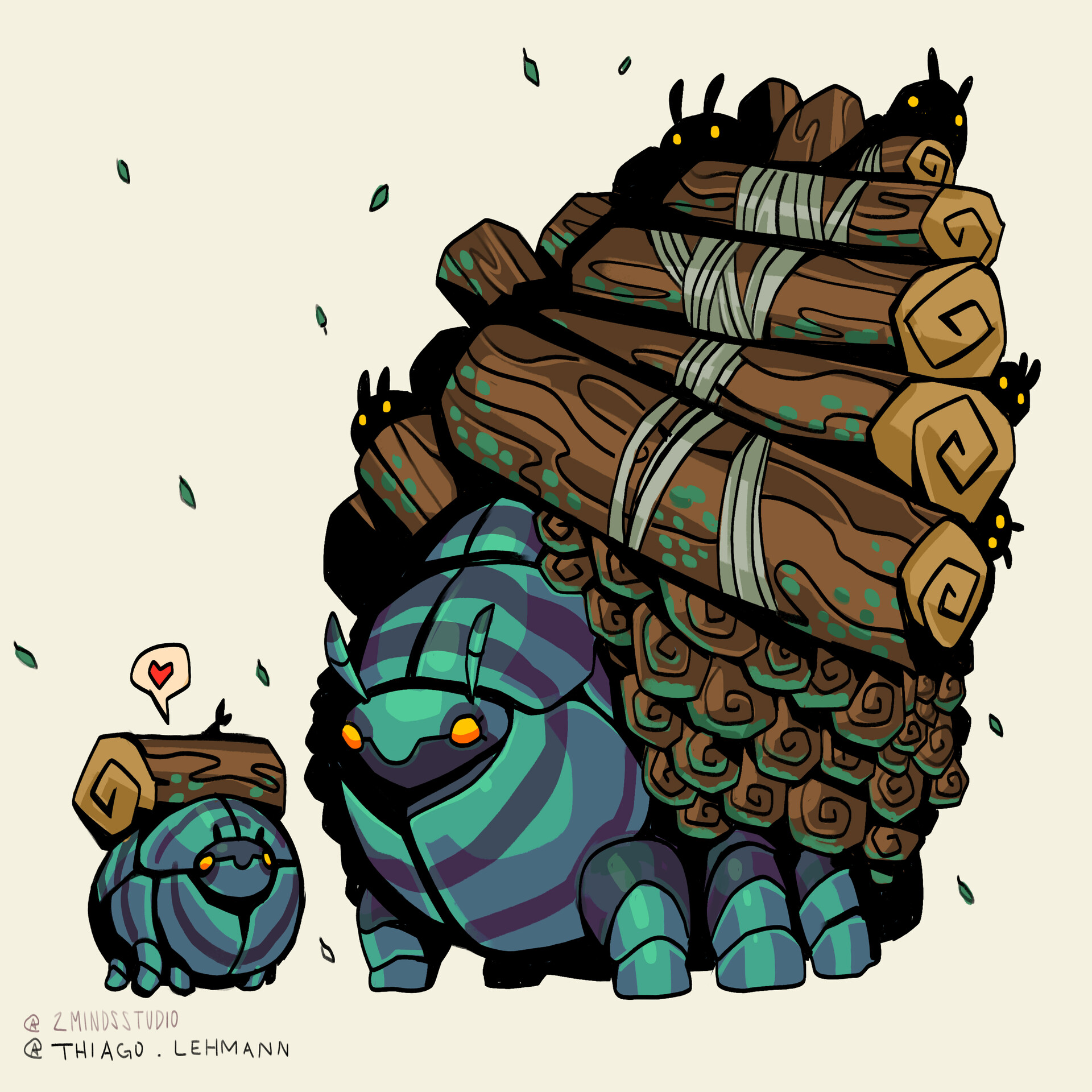
Bagwurm builder – BugWorld by Thiago Lehmann

CONSTRUCTION UNDERWAY!

Do not feed, pet, or otherwise distract the Bagworm Builders from their work. 150gp fine for first offense.

– Sign posted by a local guild handling construction of a new building.

Back again with another big ol’ beastie: The Bagworm Builders! These are massive insects that reside in forested regions, creating tough shells by weaving fallen trees and logs together on to it’s back. These “shells” often also act as nurseries for the Bagworm Builder’s young. While I do love these from a lore and worldbuilding standpoint, to call their statblocks perfect would be sadly incorrect.

Bagworm Builders: The Overview

Large almost caterpillar like beetles, Bagworm Builders use their massive and razor sharp mandibles to easily cut through logs and trees before webbing them to the complex shells they carry on their back. Again while I love this idea, their actual statblock does nothing to actively lean into this idea so a hefty amount of revisions are needed. I imagine these creatures to travel in large herds, carving paths through forests and leaving rows of tree stumps in their wake. Relying more on their resilient shells rather than the wooden fortresses upon their backs, Bagworm Builders are slow but powerful lumbering beasts, though still often timid and docile compared to many other creatures within D&D, being used as beasts-of-burden by local farmers and villages on the outskirts of forests.

Stats and Abilities

Bagworm Builders are bulky beasts of burden who use their large frames and powerful jaws to split trees before webbing them to their exterior carapaces to serve as additional “shells”. Sadly, the stat-spread only somewhat leans into this. The Bagworm Builders depend heavily on STR and CON as they should but that’s as far as it goes. In all honesty, I feel as though their DEX needs to be lowered slightly to showcase the lumbering nature of these beasts and a WIS of 13 means their craftier then they should be. I think 8 DEX, 8 WIS, and 5 CHA would be a better fit as while their CHA already isn’t great and they live in groups, 5 CHA puts them around the same level as Cows which feels in line. Additionally this doesn’t feel like a CR 4, especially after the last post with the Aberrant Hound being the same difficulty and having a lot more of a kit to back it up. This feels more in line with a CR 2 to be perfectly honest.

  • Stats and Skills: Boasting a really solid STR and CON for this early of a level, Bagworm Builders are simple beasts, using their overwhelming size and strength to push back predators and attackers. Because they aren’t especially mobile (especially after adding several trees worth of logs to their shells), these creatures would likely fight to the death before fleeing as they don’t have the fattest run speed and would be outran by almost everything else. Granted, 25ft. isn’t a bad movement speed, but I will likely adjust it to around 20ft. to help reflect their more lumbering nature. Boasting no additional Saving Throws or Proficiencies, this is a simple creature with a simple mind and simple needs.
  • Resistances, Immunities, and Senses: With only a measly resistance to Poison damage, the Bagworm Builder relies on it’s AC and hit points above anything else. This could be likely tweaked after leaning more into the shell of trees Bagworm Builders would build as that could temporarily allow for resistance to nonmagical weapon attacks while now being vulnerable to Fire damage due to the wood and webs being flammable. Otherwise, a 60ft. Darkvision doesn’t really change too much for this creature. Relying on its size and numbers, that doesn’t really change whether it’s night or day and the Bagworm Builder isn’t an ambush predator seeking out to get the jump on unsuspecting prey.

Passive Abilities and Actions:

Beasts of Labor. The Bagworm Builder can carry up to 1,500 pounds of logs or other materials on its back. It can still climb and move at full speed with this weight.

In all honesty, while it’s nice that this ability spells out what exactly how much weight and strength a Bagworm Builder is boasting, this first is shooting way underneath what a beats of this size should be able to pull (full grown ox can pull upwards of 2x this amount) and secondly it doesn’t add much importance to the actual statblock. It’s a good reference to keep in mind what the Bagworm Builder should be able to move, but I doubt players are going to dive headfirst and argue that a tree or rock might be too large for this to move if it seems feesible.

Sticky Silk. The Bagworm Builder can use its sticky silk to create structures or webbing that can support up to 2,000 pounds of weight. The silk can be destroyed with fire as per the Web spell.

Similar to Beast of Burden, this feature doesn’t seem to bring too much to the table and is also just not framed correctly. A creature of this size could easily spin webs capable of holding up several tons as opposed to the meager 2,000lbs. Again, this is great for a frame of reference, but isn’t explicitly needed in the statblock. If a creature should be able to and/or need to pull several tons of logs for a shell, it should be able to in the realm of fantasy.

Bite. Melee Weapon Attack: +4 to hit, reach 5ft., one target. Hit 8 (1d8 + 4) piercing damage plus 4 (1d8) poison damage.

A standard bite attack. Nothing about the Bagworm Builder screams venomous or any ability to withstand poisons so I will be revising this to deal only piercing damage. If I lower the CR down to 2, the damage will likely remain as is, maybe increasing slightly to help compensate for the lack of poison damage. This is the creatures only offensive measure and so it should have some oomph behind it, especially since this creature can feel trees.

Web Shot. Ranged Weapon Attack: +4 to hit, range 20ft./80ft., one target. Hit The target is restrained (Escape DC 13).

I’m usually pretty good about explaining more intricate abilities in greater detail so I am unsure why this one was so… lackluster. I think a better description would be as follow:

Web (Recharge 5–6). Ranged Weapon Attack: +3 to hit, range 30/60 ft., one creature. Hit: The creature is restrained by webbing. As an action, the restrained creature can make a DC 13 Strength check, escaping from the webbing on a success. The effect also ends if the webbing is destroyed. The webbing has AC 10, 5 hp, vulnerability to fire damage, and immunity to bludgeoning, poison, and psychic damage.

Revisions:

This… needs a lot of work to be honest and I’m not happy with where it is. I’ve been struggling to put this post out because at the end of the day this almost doesn’t feel like a creature that necessarily needs a statblock, instead it’s just something that exists and does it’s thing. Regardless, here are the changes that I feel would make this statblock a lot better all around:

  • Lower the CR to 2 and adjust damage, health, stats, and AC respectively. These are not dangerous creatures for the average adventurer and should not be as high as CR 4.
  • Combine Beast of Burden and Sticky Silk into one feature laying out the groundwork for the Bagworm Builder’s strength and carry capacity. D&D already has a guideline for a creature’s carrying capacity as well as their ability to push or pull objects so I will base my revisions off that templet and adjust accordingly.
  • Revise Web Shot. See above as a possible idea of simply expanding on the feature. This is a tool mainly used by the Bagworm Builder to help fasten their shells, not a trap to be used against others.
  • Add a shell feature. Bagworm Builders are often carrying massive log huts on their backs to add as extra defenses, lean into that. Possible ideas include a damage threshold or reduction effect until the “shell” is broken or destroyed. This feature should be a once per combat ability as a Bagworm Builder would not have the ability to quickly swap between these shells or build a new one. While the shell is in use, possibly create a withdraw feature that allows the Bagworm Builder to add on top of their AC.

Thank you for reading this week’s post! I’m sorry for the hit and miss schedule. Due to the holidays and recent transfer within my work, my schedule has been all over the place and hasn’t quite fully been nailed down and cemented yet. I’m hoping to resume regular postings from here on out, but am also working on other projects as well for this blog and the associated YouTube channel Nerds N’ News. This is a big project that I’ve been working on for a few months now and am still grabbing footage for everything and getting everything written out, but stay tuned! I’m hoping to have this next big video out before the end of the month!

D&D Homebrew Monster of the Week: Aberrant Hound

Shade – Shardbound by Nicholas Cole

Any idea what it is?”

“Alien, but that’s about it.”

“Agreed. You think there’s more out there?”

“Gods above I hope not.”

Two adventurer’s first encounter with a dead Aberrant Hound.

Been a little while and for that I apologize but after completing one full circle in out creature types with the compendiums, we are returning to Aberrations with the Aberrant Hound! Since we covered the general rulebook for Aberrations back with the Abductor during the start of this blog, I won’t get into the nitty-gritty of Aberration rules (spoiler: there isn’t really a hard set of rules), but a quick refresher:

  • Aberrations are alien and unsettling, often hailing from dimensions beyond the world’s setting. This means they can often be anything and have any set of tools at their disposal and fit in some form or fashion.
  • Aberrations typically focus on mental superiority and/or manipulation (Beholders being extra vain and highly intelligent while Mindflayers and Aboleths turn others into thralls through mind control). While not needed, Aberrations typically have some sort of mental ability to put them at advantage.
  • They do not act like normal creatures. Alien biology and mannerisms lead Aberrations (or at least the feral Aberrations) to act far differently from what their counterpart from the material plane might act.

These aren’t hard rules that every DM needs to follow, but this is kind of the checklist I follow when making statblocks or prepping encounters using Aberrations. To me, if an Aberration doesn’t have that extra push to be something unique, then there’s little reason to use it in place of any other creature type.

Aberrant Hounds: The Overview

Aberrant Hounds are a versatile monster, capable of both being a challenging single mini-boss foe for lower level parties as well as attacking in packs to attack as a group against mid level parties. While that is a strength, it’s also a bit of a weakness. The Aberrant Hound sadly has little identity due to its versatile nature and frankly, I’m not entirely sure what I wanted it to be. I believe this creature would work best as a pseudo pack hunter, ravenous and agile but also quick to get aggressive amongst themselves, leading to possible infighting. At the bare minimum, Aberrant Hounds are aggressive, nimble, and stealthy hunters that almost exclusively stick to the shadows and the night in order to ambush unsuspecting prey. Using their specialized abilities to hide in shadows and striking at a distance is exactly what I want them to do, but the statblock only leans into this partially so some heavy revisions are in order.

Stats and Abilities:

The Aberrant Hound is a jack of all trades, master of none in a way. With its weakest stat being CHA at an 8, there’s little the Aberrant Hound is going to struggle against except something that would reposition them like a Vortex Warp or Banishment spell, though if a party has that option they would likely save it for something stronger. Clocking in at CR 4, this creature is of menial threat once players get to around level 5-6, but even 2-3 can become problematic. The Aberrant Hound has a heavy focus on DEX and STR, similar to the Abductor, and in a way I want this revised version to play similarly: focusing on hit and run ambush tactics to start before going in to grapple and separating its prey through brute force. Being a pack monster, the AC and Hit Points likely need to be tweaked marginally as if even one is a bit too tanky even on a moderate size, having larger packs of these spells a death sentence unless the players get real lucky.

  • Stats and Skills: With good STR and DEX and moderate CON, INT, and WIS, Aberrant Hounds almost need to be made dumber in the revisions. As they are, their mental stats don’t spell out the almost feral and wild nature I now have envisioned for these creatures. Additionally, I might bump their CON up marginally at the cost of lowering their AC. These creatures aren’t exactly armored but should still be able to take a hit or two comfortably. With proficiency in Perception and Stealth, these creatures are expert ambush hunters, using their natural advantage in shadowy conditions to ambush and separate prey from others to quickly feast before returning to the fray.
  • Resistances, Immunities, and Senses: Honestly, I’m not too certain why I marked these creatures as resistant to Necrotic damage. nothing in their kit screams unholy or malignant. They just are creatures that attack via shadowy ambushes, but aren’t exactly made of shadows. In all honesty, I would consider replacing this resistant with Poison damage at most, but that doesn’t feel like it fits either. A vulnerability to Radiant damage however is very thematic. I imagine that in their home realm, Aberrant Hounds live in near perpetual darkness or dim light, prowling craggy and barren wastelands in the search of food. In the sudden presence of a blinding and harmful light, an Aberrant Hound would likely freak out and quickly flee before returning to stalk later, much more cautious a second time around. The massive line of sight Aberrant Hounds have with their 120ft. of Darkvision is a necessity for how often these creatures prowl and hunt during the night. The only thing I would really change about this section of the statblock is their Languages. With how feral and wild I’m imagining these creatures would be I doubt they would really be able to speak any language, instead being more akin to a pack of wolves using their own form of communication only they know.

Passive Abilities and Actions:

Amorphous. The hound can move through a space as narrow as 1 inch wide without squeezing.

Being comprised almost entirely of inky shadows, it makes sense for the Aberrant Hound to be able to squeeze through narrow crevices and gaps to continue hunting or chasing prey. This also allows it to thrive in close quarters arenas such as building interiors and allows it to be a lot more aggressive as it can semi-easily flee if pushed into a corner.

Shadow Meld. As a bonus action, the hound can magically meld into the shadows. While melded in within a shadow, it cannot be targeted by outside attacks or effects (unless said attack or effect would alter the shadows location and composition (i.e. Fireball, Frost Brand, Light)).

If the shadow that the hound is occupying becomes disrupted or illuminated (this must be a deliberate attempt at the shadow or cover the shadows space if its an area of effect), the hound is forcefully ejected from the shadow to a unoccupied space within 5ft. of the shadows original location unharmed. While melded with a shadow, the hound can move to any space with a connected shadow, including the shadows of other creatures. When the hound inhabits a shadow of a living creature, the target must make a Wisdom (Perception) contest against the hounds Dexterity (Stealth) check.

This feature… is bad. While it’s cool from a thematic standpoint, it accomplishes nothing and leads nowhere. None of the other features pair well or play off of this ability so it’s just kind of worthless. I do like the idea of Aberrant Hounds being able to slink and meld into shadows but it needs to have an ability or feature that it can play off of. Here is a possible revision that could work:

Shadow Meld. As a bonus action, the Aberrant Hound can merge into a shadow within 5ft. of itself. While merged with the shadow, the Aberrant Hound is considered Invisible and cannot be targeted by any weapon or spell attacks. A successful DC 14 Wisdom (Perception) check can reveal the location of the merged Aberrant Hound. While merged with the shadow, the Aberrant Hound can travel along any shadowed ground so long as the shadow connects to another shadow on the ground. If the Aberrant Hound attacks or the shadow it is inhabiting is disrupted (Light, Fireball, Frost-Brand light, etc.), it appears in an unoccupied space within 5ft. of the shadow.

While I’m still not thrilled with this feature and it’s still a rough re-draft, I feel this is a bit more concise of an idea I had for the Aberrant Hound and what I imagined this feature would bring to the table.

Multiattack. The hound makes either two attacks, one with its Bite and its Claws, or four attacks with it its Riftstrike ability.

This might be tweaked as whether or not the attacks of the Aberrant Hound remain the same or not are in the air. This should have between 2-3 attacks as it is a nimble creature with an aggressive nature so we will see how I feel at the end of this after reviewing the rest of the statblock.

Bite. Melee Weapon Attack. +6 to hit, reach 5ft., one target. Hit. 11 (2d6 + 4) piercing damage.

While I had the idea of a grappler style monster initially, spending some more time to think on it I don’t think that would vibe nearly as well due to how dangerous being able to grapple a PC and drag them into the shadows would be. If I intend on keeping Aberrant Hounds as pack style, aggressive, hit-and-run fighters that ambush, attack, and hide again to ambush once more. I honestly might change the damage and bump it up to be around the 20 damage mark and not have it featured in the Multiattack feature, but that remains to be seen.

Claws. Melee Weapon Attack. +6 to hit, reach 5ft., one target. Hit: 9 (2d4 + 4) slashing damage.

Much like the Bite attack, I’m not quite sure where I want the damage numbers on this to be, but as a basic attack. I think it’s fine. If I change Bite to do more damage, I think either bumping the damage up or having three Claw attacks in turn would be a suitable tweak.

Riftstrike. The hound creates a temporal rift and slips one of its arms into it, allowing it to strike a creature with a melee attack from quite the distance. Melee Weapon Attack. +6 to hit, reach 30ft., one target. Hit. 8 (1d4 + 4) slashing damage.

I really like this idea but it needs some slight tweaks. Initially, I thought having this only be usable while under the effects of Shadow Meld, but it kind of messes with their ambush tactics if they reveal themselves while performing a ranged attack. Instead, an idea I like more is that this feature is a concentration based gimmick where the Aberrant Hound can make an attack that still deals damage, but two of their hands now remain deep in portals that are clinging to their prey as the close the distance and maul them with claws and bites. This gives the Aberrant Hound both a solid ranged option and an ability to lock down other creatures that it wants to distance from or separate.

Ink Spray (Recharge 5-6). The hound sprays a 25-foot cone of shadowy ink in front of it. Each creature in that area must make a DC 14 Dexterity saving throw, taking 21 (6d6) acid damage on a failed save and is blinded until the end of their next turn, or half as much damage on a successful one and are not blinded.

This feature I feel needs to be removed. While the Aberrant Hound’s body is an shadowy, inky, and amorphous mass, there’s nothing that really states or shows an actual ink-like substance as apart of it’s body. Like sure it looks gooey and viscous looking, but I wouldn’t say its actual acidic ink or slime. I need to deliberate more on a possible replacement, but perhaps a teleportation or a wall of clawing hands erupts from the ground could both be suitable replacements.

Revisions

Sometimes the best tool a homebrew creator can have is another set of eyes to look over and help revise. u/BreadforPain1 on Reddit was momumental in helping me with some revisions for this monster and so the credit for these next ideas go to them:

  1. Shadow Meld. As a bonus action, the hound magically melds into a shadow within 5 feet of it (the shadow must be in dim light or darkness). While melded:
    • The hound is heavily obscured.
    • It can’t be seen or targeted by attacks or other effects originating from outside the shadow unless those attacks or effects would also affect the shadow (such as the daylight spell or an effect that deals fire damage to the area).
    • The hound can use its full movement to magically shift to and appear in any other shadow it can see within 60 feet. This movement doesn’t provoke opportunity attacks.
    • The hound can use a bonus action to de-meld, appearing in an unoccupied space within 5 feet of the shadow. If a bright light source illuminates the shadow, or if the hound takes radiant damage while melded, it is forcibly ejected into the nearest unoccupied space within 5 feet of the shadow’s original location (unharmed except for the triggering damage). If the hound melds into the shadow of a living creature, that creature must succeed on a Wisdom (Perception) check contested by the hound’s Dexterity (Stealth) check or remain unaware of the hound’s presence. While melded with a shadow, the hound can move to the shadows of other creatures

Riftstrike. (Recharge 5-6). The hound creates a rift in reality and slips one of its limbs through, allowing it to make a melee weapon attack from up to 30 feet away. melee Weapon Attack: +6 to hit, reach 30 ft., one target. Hit: 15 (3d6 + 4) slashing damage.

Shadow Grasp (1/day). Shadowy tendrils erupt from the shadows beneath creatures in a 20-radius originating from the hound (the area must be dim light or darkness). Each creature in the cone must make a DC 14 Strength saving throw, taking 21 (6d6) necrotic damage and becoming restrained by the grasping shadows until the end of its next turn on a failed save, or half as much damage and not restrained on a success.

The changes to Shadow Meld are almost exactly what I wanted and so I am very thankful for u/BreadforPain1 putting my ideas into words and structuring them in a way I was struggling to. As for Riftstrike and Shadow Grasp, I do think Shadow Grasp will be the replacement for Ink Spray as it feels a lot more cohesive and fitting for the Aberrant Hound, but I still have some slight tweaks to make. Riftstrike I really do like being a grapple/restrain gimmick so I don’t think I will change it from the revisions I mentioned earlier. Shadow Grasp I would change to a recharge from a 1/day feature and change it form an AoE centered on the Aberrant Hound to either a line based gimmick or choosing 3 targets similar to the Scorching Ray spell.

While it took a while to get to where I wanted it, I’m much happier with this creature’s statblock now than I was before I made this post. While tough, these revisions have been excellent and very needed for these statblocks. Stick around next time to see what beasties I got waiting for you in a couple weeks! Apologies for the sudden drop in posts. I recently moved and have been struggling to get back into the rhythm of work again, but here’s hoping things start getting back into gear now!

D&D Homebrew Monster of the Week: The Accursed

Udug – The Demonic Paradise

“We never saw it coming. It surrounded us un all sides like a rolling fog. It grasped Juliana and Mortes like it was grabbing a feather. I saw them screaming, gasping, but no sound was stirring. Yohan suddenly keeled over weak and weary. I couldn’t even hit the damn thing no matter what I did. I tried to save Yohan, but before we left the forest he was dead. No wounds, no disease. Just dead.”

– Testimonial of a sole survivor.

On to the category that arguably could contain the second most iconic cast of monsters behind the Dragons: the Undead. From simple Skeletons to all powerful Liches and everything in-between, the Undead creature type is surprisingly broad when compared to the stereotype one might imagine. On the frailer side of the CR ranking, Skeletons, Specters, and Zombies will be the most common type of undead a party will encounter as they can fit virtually everywhere and anywhere with little need for validation on their placement. Library with a Specter? Library’s haunted. Zombies wandering through a forest? Long dead adventurers whose souls never found their way to the afterlife. Skeletons reanimating in a dungeon? That just happens you know? On the opposite side of the difficulty spectrum, Liches, Death Knights, and Vampires all are well established creatures of unholy origin that have the potential to fell entire nations. Due to the sheer variety in the catalog of Undead creatures, there’s almost no wrong way to create an Undead. I would say the general rules of creating an Undead are as follows:

  • 1 – Typically creatures of the night. Most Undead don’t want to be caught in broad daylight or do serve any downside to fighting in dark rooms/lairs, so they typically only act as nocturnal creatures.
  • 2 – Most if not all Undead are heretical in nature and should be adverse to holy arts. Liches for example sacrifice hundreds of souls to a phylactery to achieve immortality, Vampires frequently show fear to holy items in most media forms, and Cleric’s literally have a feature called Turn Undead which can even kill weaker Undead once the Cleric is a high enough level.
  • 3 – Going along with rule 2, with the exception of maybe Revenants Undead are evil creatures. Ghouls savagely rip anything apart to feast off of, Banshees curse and haunt those who they feel scorned by, and Nightwalkers embody the literal chill and aura of death.

The Accursed: The Overview

Starting with the first Undead of the compendium, we got a real heavy hitter straight out the gate. Designed as a boss-level creature, The Accursed does not pull any of its punches. While sadistic and twisted, reveling in the panic it can sow by shutting down parties in a single ambush, The Accursed is no fool and knows who poses the greatest threat and knows when to stop toying with its prey. Like many spirits (Ghosts, Wraiths, Specters), The Accursed was once mortal but fell into a perpetual state of undeath, unable to pass onto the afterlife and now lurks in a lair in a place of deep significance. Spiteful to the core, The Accursed despises those who draw breath, seeking to inflict as much death and misery as it can with its newfound unholy strength.

  • Stats and Skills: Being CR 14, no stat is really going to be super low and with a a4 in INT as the lowest, this monster can do it all. With a high DEX and CON, The Accursed functions best an ambusher monster, using its myriad of features to stay out of sight and land surprise attack after surprise attack and cripple party members one at a time. With already decent if not high mental stats and being proficient in Perception checks, sneaking up on The Accursed is near impossible and with a +10 to Stealth checks from The Accursed, it can very easily sneak up on at least one, if not two party members from the gate. Even if the party quickly lights up the area to lock down on the hit and run tactics posed by The Accursed, with a 60ft. flying speed it can very easily outpace and outmaneuver most characters, and while not always wanting to take free hits from Attacks of Opportunity, with a 17 AC The Accursed can choose to play a little loose and aggressive if it wishes.
  • Resistances, Immunities, and Senses: Being a high mid-game to low end-game boss monster, The Accursed is by no means a pushover in the defensive department. Sporting immunities to Necrotic, Poison, and nonmagical weapon damage types, resistant to Cold damage, and immune to a large handful of potent Conditions, There is little that actually poses a threat to The Accursed. Obviously, Clerics and Paladins definitely make The Accursed play a lot more cautiously as nobody enjoys taking smites to the face and Clerics can pose to be tough cookies to chew through due to their own myriad of defensive options. Even still, with 120ft. of Darkvision, +10 to Stealth and some following features, The Accursed is a perfect monster to have lie and wait for unsuspecting parties walk right into it’s domain and immediately spring the trap on the weakest link.

Passive Abilities and Actions:

Incorporeal Movement. The Accursed can move through other creatures and objects as if they were difficult terrain. It takes 5 (1d10) force damage if it ends its turn inside an object.

This feature is a staple for most if not all ghost and spirit themed monsters. This allows The Accursed to phase both through creatures an objects with ease. Additionally, if you really want to maximize the hit-and-run playstyle with this monster, you can have it attack and then vanish into a nearby wall, floor, or ceiling and because it is now fully engulfed by the terrain it cannot be targeted by attack rolls. Personally, I would only do this as a last resort and would additionally rule that AoE spells and features that cover spheres, cones, and cubes would still force the save. The Accursed is smart enough to know it has this feature out the gate, but it’s not fun from a player perspective to only fight back using attacks of opportunity to make attacks.


Legendary Resistance (3/day).
 If The Accursed fails a saving throw, it can choose to succeed instead.

Staple of high end monsters, no comment needed.

Shadow Step. In dim or dark lighting, The Accursed can use a bonus action to instantly teleport up to 30ft. to another point it can see so long as that new point is also in either dim or dark light.

A massive movement advantage for The Accursed alongside it’s 60ft. movement speed. Being able to near freely teleport at will is insane with the only stipulation that it has to be within dim or dark light. Even if the party comes in with torches or magical lighting, that just paints a bigger target on their back as once the caster/torch-bearer go down, The Accursed dominates the arena even more so with unrestricted movement. A perfect skill that’s only crime is that it might be a tad bit overturned and too good. This could be a very good Recharge (4-6) feature

Smoky Visage. The Accursed can cast Alter Self at will, using only the Change Appearance function and appearing as a smoky visage of the creature it is mimicking.

The idea behind this feature is that The Accursed, like it’s similar and weaker smoky counterpart the Allip, disguises itself as smoky visions of those close to it’s prey and victims and lure them away into it’s lair. The Accursed is spiteful and vindictive, hating those alive simply because they live. While it can be a bruiser and go toe-to-toe with many martial classes, it has no reason to with how intelligent and stealthy it is. Why risk injury if you can simply kill your victim before they know what’s what? In all honesty, this feature is kind of a stretch and more a flavor-text I had in the intial creation and might be a bit too out there for The Accursed, but I think it brings an interesting note to the table. The Accursed could simply masquerade as a simple Allip to lure overconfident adventurers to their grave in addition to civilians.

Sunlight Sensitivity. While in sunlight, The Accursed has disadvantage on attack rolls, as well as on Wisdom (Perception) checks that rely on sight.

Standard trait for a handful of Undead and other cave dwelling creatures. The Accursed is a creature of shadows and darkness and with the fact a shadow cannot exist in pure unfiltered light, it makes sense to me that it would be harmed in pure sunlight. This does not extend to torches or light from the Light spell, but personally i would consider the Daylight spell to trigger this feature.

Undead Nature. The Accursed doesn’t need to eat, drink, or breathe.

Staple feature for all Undead creatures. Why would you need to eat, breathe, sleep, or drink if you’re nothing but bones/smoke/or rotting organs?

Multiattack. The Accursed makes two attacks: one with its Suffocating Grasp and one with its Curse of Draining.

This needs to be tweaked. Being able to use both its recharge ability and a dangerous attack is too much. Suffocating Grasp needs to be tweaked as well, but having both abilities at once is too much.

Suffocating Grasp. Melee Weapon Attack. +10 to hit, reach 10ft., one creature. Hit: 24 (4d8 + 5) necrotic damage and the target must succeed on a DC 17 Constitution saving throw or be unable to breathe, silenced, and suffocating. A suffocating creature can repeat the saving throw at the end of each of its turns, ending the effect on a success.

For a basic attack, this is too much. It’s a great ability but honestly functions better as either a recharge or a Legendary Action. Additionally, this feature also needs the stipulation that after a success, a creature is immune for 24 hours. It’s a great gimmick and feature, but is a bit strong. As a bit of a counterbalance for nerfing it so hard, Even after a success, a creature can still be silenced for 1 round if they fail the save, but I just need to workshop it a little bit better.

Curse of Draining (Recharge 6). The Accursed targets one creature it can see within 60 feet. The target must succeed on a DC 17 Constitution saving throw or have its vitality drained. The cursed target loses 10 (3d6) maximum hit points at the start of each of its turns, and The Accursed gains hit points equal to the ones lost by the cursed creature.

If this effect would reduce a creatures maximum hit point total to 0, the creature dies. The curse lasts until removed with a Greater Restoration spell or similar magic.

This is a very strong ability and arguably the opening move by The Accursed. I would say that there should be a limit of 1 creature being cursed at a time and The Accursed heals for half the damage dealt as opposed to all of the necrotic damage dealt. Otherwise, I feel that this is a solid and dangerous ability within The Accursed’s arsenal and fittingly should be the cornerstone for how The Accursed handles the fight.

Legendary Actions: The Accursed can take 3 legendary actions, choosing from the options below. Only one legendary action option can be used at a time and only at the end of another creature’s turn. The Accursed regains spent legendary actions at the start of its turn.

Typical for this level of combat. No comments needed.

Legendary Action Suffocating Grasp. The Accursed makes a Suffocating Grasp attack.

Rework as mentioned in the Suffocating Grasp blurb.

Curse Reinforcement (3 Actions). The Accursed strengthens its Curse of Draining on a creature currently affected by it, increasing the maximum health reduction by the cursed creature by an additional 10 (3d6) hit points at the start of each of its turns until the curse is removed.

The maximum this damage can be increased to is 21 (6d6) per turn per creature affected by The Accursed’s Curse of Draining.

This needs to be scrapped or heavily reworked as there is no save to avoid suddenly losing 20 hit points in a single turn. I need to theory-craft some better fits for a Legendary Action, and while I like the idea of the curse ramping up in damage and becoming more dangerous as the fight progresses, this is not the way to do it. I would tweak this to cost 2 Legendary Actions instead of 3 but only increase the damage by 1 dice to a maximum of 3d6. This would make the threat and build up better while also giving the cursed creature more time to react and get Greater Restoration ready to remedy them.

Revisions

While I’m happy with this statblock, it’s not perfect nor where it needs to be. One more major change I would make is having the creature repeat the saving throw when targeted by Curse Reinforcement as well as limit the amount of uses The Accursed has of Curse of Draining to 3/day. Only being curable with a 5th level spell is expensive and if The Accursed is able to freely use this ability (aside from waiting for it to recharge), then it’s broken on a fundamental level. In addition, because of the extensive changes made to both Suffocating Grasp and Curse of Draining, The Accursed needs a basic melee attack to help compensate for these changes. Likely 2-3 moderate damage slashes, nothing crazy but enough to keep it in the fight as it is a close-quarters fighter first and foremost.

Bake-Kujira by Kammi & Sorath’s Clan

And with that, we have completed 1 creature for each of the compendiums I have, so next week we are circling back to Aberrations! I will be moving these posts to Wednesdays to better fit with my schedule as I am rushing after work to get these finished and posted each Monday, so tune in next week on the 17th for the next post! To everyone reading these, a massive shot out for your time and I hope y’all are enjoying this series even half as much as I am.

D&D Homebrew Monster of the Week: Armored Ooze

Feradimun Titans

“I’m telling you sir, we can’t go any deeper. I saw first hand what lives down there and it isn’t something we can handle. None of our equipment can break its hide, and even if we could, anything that touches its body sticks. You ever smelled someone’s flesh being burnt away? You ever hear the sound a man being crushed by something thrice his size like he was a piece of glass? You want that cave cleared? Do it yourself.”

–Excerpt from a former worker of a mining company.

Who says an Ooze can’t be armored? Who says that the only way they can kill something is through digestion? Not me, that’s for sure! Oozes are one of, if not the most, straightforward enemy types in D&D as typically their main form of battle “tactics” are to run (slowly) forward and absorb anything in their path. To offset the abysmal mental states and lower typically AC, they make up for it with much higher hit points and CON scores along side decent enough STR scores. Ooze’s scarcely are challenging enemies as they usually suffer in 4/6 stats (DEX, INT, WIS, and CHA) so most are below CR 5 and are really only useful as either traps or actual enemies in the lower levels. Because of this dwindling strength, Oozes function best in ambush encounters. That’s why the Gelatinous Cube, the literal posterchild of slime monsters every where, is best when you fall into it or it falls on to you. As a result of this… underwhelming performance, Oozes need some help and some innovation I feel as Gray Oozes, Black Puddings, and Ochre Jellies all follow the same game plan with minimal variance: Acidic by nature so it can melt through equipment, grapple focused to maximize contact damage and restrict movement, minimal intelligence compensated by being incredibly resilient.

Armored Ooze: The Overview

Residing in underground caverns and tunnels that are rich with mineral deposits, Armored Oozes drag their highly adhesive bodies against these metals and minerals to create shells to help protect their squishy and soft bodies. Pushing this even further, Armored Oozes will also congeal these mineral deposits in their forearms to create dense and solid clumps to better bludgeon prey and trespassers alike. An Armored Ooze is incredibly territorial and aggressive and will attack anything it can see without a second thought. Despite having a mainly adhesive and sticky body, Armored Oozes still are comprised of a highly acidic slime that spills out when they bludgeon something within their armored fists, causing severe burns to anything they strike. Despite their burly, clumsy, and ungraceful fighting style and even with their low DEX, Armored Oozes can be somewhat competent ambush fighters, blending seamlessly into the rock and appearing like an untapped mineral deposit. Due to their literal iron hide and dangerous temperament, the presence of an Armored Ooze is enough to shut down entire mines or tunnels for months at a time.

Stats and Abilities:

Armored Oozes lean as heavily as possible into the idea of being a tanky, slow moving, heavy hitting bruiser that was envisioned by their lesser kin. Leaning heavily into STR and CON, the Armored Ooze might not be able to close a gap quickly, but once something is in range then their in for a walloping. Despite being a CR 0, the Armored Ooze sports lower than average DEX and WIS with really low INT and CHA which kind of pigeonholes it into a bruiser class monster without much variety in tactics, but that’s ok! If you’re using an Ooze to fight a party, chances are you’re not looking for an unique or mechanically in-depth fight.

The Armored Ooze’s biggest strength aside from it’s high damage swings are obviously its defenses. Boasting an impressive 20 AC and a whopping 147 hit points, the Armored Ooze can take swing after swing and still keep going, which it will need to offset it’s glaring weaknesses. Moving at only 20ft./turn without dashing leaves the Armored Ooze lagging behind most player characters and could easily be outmaneuvered by a rogue or ranged character. This is where that slight bit of stealth could come into play with False Appearance allowing the Armored Ooze to blend into it’s terrain. Now with being an aggressive and territorial monster, the chances of it actually waiting and getting maximum output of it’s ambush is minimal. Likely, it would wait until any creature gets close and then swings on them, regardless of who or what they are.

  • Stats and Skills: Lacking Skill Proficiencies across the board (I should probably give it a bonus to Stealth due to False Appearance), The Armored Ooze lacks subtlety or nuance in its fighting, opting to use the most straightforward plan of attack: Attack. Being proficient in only STR and CON Saving Throws means that this ooze excels in dealing and taking hits, but struggles in everything else. It can very easily shrug off being shoved or grappled/restrained as well as anything not poison related that could force a CON save, but the second you start pulling out Fireball and Dominate Monster spells, the Armored Ooze is quickly going to start struggling.
  • Resistances, Immunities, and Senses: Most Oozes have a laundry list of features listed here as for a near non-sentient pile of sludge, there are a lot of features and effects that wouldn’t work on them. Due to their hardened “shells”, they resist all nonmagical weapon damage as even piercing weapons that could puncture stone fall flat with how densely packed the minerals are. Like most other Oozes, being comprised of acidic slime both makes it so the Armored Ooze is immune to Acid as well as the Poison damage type. My logic for why most if not all Oozes are immune to Poison damage is that these are creatures that eat anything organic they can grab, so naturally they can stave off any venom or poison secreted by possible prey. Finally, being immune to the Blinded, Charmed, Exhaustion, Frightened, Poisoned, and Prone conditions are fairly on brand for most typical oozes, even a little less than what the typical Ooze would be immune to. However, there are still tweaks to be made here. The Armored Ooze does need to its INT to be immune to effects or spells that could Charm it, likely lowering it to as little as 4 or 3 INT as most Oozes have around 1-4 INT as their score. Additionally, this is a much more humanoid Ooze and a lot more solid, so it should be able to be knocked prone as it’s not an amorphous blob like most other slime monsters. Finally, the Armored Ooze should be immune to the Petrification status as it’s got large rock and mineral deposits over it’s arms and body, so it should be resistant to being turned into stone in my opinion.

Passive Abilities and Actions:

Adhesive. The ooze is comprised of a sticky adhesive that makes up its body. Anytime the ooze is hit by a melee weapon attack, the attacker must succeed on a DC 15 Strength (Athletics) check. Ona failure, the weapon is stuck to the ooze’s body until a creature within 5ft. uses an action to make a Strength (Athletics) check to pull the weapon free.

Additionally, a Large or smaller creature adhered to the ooze is also grappled (escape DC 15). Ability checks made to escape this grapple have disadvantage.

This functions as an enhanced version of the Mimic’s Adhesive trait, grappling creatures that are hit by the Armored Ooze’s melee attacks, but it also carries the ability to rip weapons from the hands of attackers. In all honesty, I like the idea but I’m not going to sit here and argue that this isn’t a tad strong and unfair against melee dedicated characters, especially ones that rely on DEX over STR like Rogues. This requires some playtesting in all honesty as I feel lit could be interesting but could just as easily be obnoxious and unfun.

False Appearance. While the ooze remains motionless, it is indistinguishable from a collection of minerals/gems.

While not incredibly common for Oozes as a whole, it feels thematic for the rock themed ooze monster to be able to hide itself as a pile of rocks and minerals. Now with the wording of False Appearance, a good Stealth bonus isn’t technically needed as a “creature is “while [the creature] is motionless, it is indistinguishable from [terrain feature/object],” however I think the Armored Ooze should still have a passable Stealth bonus as a bare minimum so it at least makes more sense.

Spider Climb. The ooze can climb difficult surfaces, including upside down on ceilings, without needing to make an ability check.

Most Oozes, by proxy of being piles of sticky acidic sludge, can slide across walls and ceilings with ease. Despite the fact the Armored Ooze is much more humanoid shaped than it’s kin, it still is comprised of mostly adhesive goo so I don’t think it would struggle to clime walls and ceilings, especially with the fact this monster lives in caves and tunnels where walls and ceilings are plentiful.

Slam. Melee Weapon Attack. +10 to hit, reach 10ft., one target. Hit. 28 (4d10 + 6) bludgeoning damage and 13 (3d8) acid damage and the target is subjected to its Adhesive trait.

Unlike a lot of monsters, especially at this level of play, the Armored Ooze lacks Multiattack and that is by design. I wanted to make this really feel like a lumbering and dense oaf of a monster, so when it takes a swing at something, it’s putting everything it has into that swing and that one swing only. Additionally from a gameplay point, I didn’t want Adhesive to get out of control with grappling multiple creatures at once or almost guaranteeing a grappled target by giving the Armored Ooze multiple chances in a round.

Acidic Counter. When a creature hits the ooze with a melee attack, the ooze can use its reaction to spray acid at the attacker. The attacker takes 11 (2d8) acid damage on a failed DC 18 Dexterity saving throw, or half as much damage on a successful one.

In all honesty, this feature is likely going to get axed as I like the other Reaction more, and as such this would rarely ever get used. Between the two, why go for an extra bit of small damage and take a hit when you could just avoid the hit in the first place. I like what this feature brings to the table, but it belongs on a different monster.

Withdraw. Upon being targeted by an attack, the ooze can increase its AC by 5. This also lowers its movement speed by 5ft., this effect lasts until the end of its next turn.

This… This is disgustingly good. This is way too much for what it does, as there is no reason not to use this the second the Armored Ooze is successfully struck. Sure it’s speed drops to 15ft, making it super easy to outrun, but 25 AC is ridiculous and punishes martial classes even more. This feature needs to be overhauled from the ground up. Instead of a +5 to AC until the end of it’s next turn it’s a+3 for that one attack, similar to the Parry skill some knights get. Additionally, because it’s only for one attack, I don’t see why there would be a movement speed reduction on this feature as it’s not fully hunkering down, just blocking one attack.

Revisions:

So, as mentioned above the big revision would be with the Armored Ooze’s Withdraw feature, and again, lowering that to 3 for 1 attack akin to the Parry skill I think is a much better feature. It gives it the defensive utility a creature of this type wants, but doesn’t make it obscenely broken. My idea on how this would work in combat is instead of doing it the first attack of combat, the ooze would instead use it against the highest damaging attack it took last round, so if a barbarian hit it the hardest, it parries that and the next round it parries the fighter and so on. Next up, remove Acidic Counter. This does nothing the ooze can’t already do with an action and just isn’t worth it compared to Withdraw. Finally, give this proficiency in Stealth checks. Sure it can’t be differentiated while immobile, but I feel just giving it the skill proficiency and tying it all together would make it look much nicer.

Green Pods by Chris Waller

This was one of the earliest statblocks I ever made and even with these hefty revisions, I’m quite happy with how it turned out. Tune in next time when we cover the aggressive flora of the region with the Plant Compendium!

D&D Homebrew Monster of the Week: Aetheriphan Swarm

Aetheriphan – Creature Concept by Pencil Equipped

“Now while alone, these little guys won’t bother you too much, they just love to seek out other Aetheriphans, leading to massive rolling schools. While swarming, these fellas might as well be a sentient lightning bolt, flying around and zapping anything and everything that gets too close!”

– Eve Stirwin.

Finally, we reach the real monsters (literally). Monstrosities are a hard bag to exactly explain why they are classified as such, but from what I’ve seen and chosen to rule is that a Monstrosity needs to either invoke the feeling of a typical monster. So for example, the Hydra. This is a creature that could easily go into either the Beast or Dragon category as at its core, it is a huge multi-headed aquatic reptilian creature that uses its multiple heads to bite and tear prey apart. There’s nothing inherently magical about it unless you choose to believe it’s rapidly regenerating heads as inherently magic (I personally choose to believe this to be a biological trait of the same caliber as why a dragon can breathe fire.) So why put the Hydra as a Monstrosity as opposed to the other two? Well, it lacks the wings, presence, features, and shape a dragon might have. Sure we have Drakes which are quadrupedal wingless reptiles like the Hydra, but they still have horns and a truly draconic aesthetic to them. You can look at a Drake and say “yep, that’s definitely related to a Dragon,” while a Hydra doesn’t invoke that feeling. As for why it wouldn’t put it as a Beast? Well, Beasts are reserved for more “normal” creatures I’d put it, things that don’t wholly invoke the vibe that a monster would. A Hydra has too much going for it to be merely classified as “just a regular beast,” in my opinion. With all that said, why make the Aetheriphan a Monstrosity as opposed to a Beast? While it could very easily go into either, I feel with the nature of the Aetheriphan and how they function leads them closer to a Monstrosity than a simple Beast.

Aetheripahn: The Overview

Aetheriphans are tiny shrimp-like creatures that draw energy from static electricity as well as direct electrical sources such as a construct or elemental powered by lightning. They frequently can be found in massive swarms amidst storms and trailing after lighting bolts. A starved Aetheriphan Swarm is a dangerous matter as these little critters will swarm the biggest electrical source they can sense and latch on to it, both shocking the prey to death with the lingering static electricity trapped in the swarm, but also drawing out the electrical charges from the creature, though typically the prey is long dead from the static shocks produced by the swarm before the Aetheriphan Swarm is done feeding. Despite being only CR 6, that is still a credible enough of a threat for even up-and-coming heroes to be warry of and with their habitat being wherever storms brew, they can be found virtually everywhere that is above ground, though most frequently residing high above and inside the clouds.

Stats and Abilities:

Despite being frail as an individual, Aetheriphans in a swarm will rush towards danger or a potential meal and attempt to use their overwhelming numbers to subdue their quandary. Because of the size of their swarm (Huge), an Aetheriphan Swarm is not easy to fully clear and they cna prove to be resilient with their 16 CON. Additionally they’re incredibly nimble with both a 60ft. hovering speed and a 16 in DEX making them incredibly hard to lock down. Sadly, all of their other stats falter with only a 10 in WIS being their next highest and a 6 in CHA, 4 in INT, and 3 in STR means the Aetheriphans will be able to see threats or prey from a far, but they won’t know how ton adapt if a prey proves difficult. They have one plan of attack and they’re going to stick with it, no matter how much of the swarm falls.

Aetheriphan Swarms are fast, being able to dash up to 120ft. in a single turn which drastically outpaces a massive amount of creatures. Even their regular movement of 60ft. is the same speed as a typical adventurer running full sprint, allowing the swarm to keep pace without losing the ability to attack. This massive speed advantage pairs nicely with their Scatter feature and the necessity to be sharing the same space as other creatures to actually land an attack, all of which will be discussed in more detail here shortly. Simple minded and direct attackers, if they aren’t aimlessly floating above the hills an Aetheirphan Swarm would lock on to what it perceives to be the biggest meal and dives from above and engulfs the target with blinding speed and subjecting it to a myriad of painful and likely deadly shocks.

  • Stats and Skills: Lacking proficiencies in any skills or saving throws leaves a lot to be desired, forcing the swarm to play as aggressively as possible to try and end a fight as soon as possible. It could be argued to give the swarm at least one or two proficiencies, likely in CON and Perception, but all in all these are simple creatures that swarm and overwhelm prey with little nuance. Their biggest boon is their large size as they can quickly descend and even encircle multiple characters at once to deal as much damage with Static Aura as possible. With the fact the AC is a tad low, there can be an argument for bumping the hit points up a few notches, but all in all this is a nice balance that possibly needs some tweaking once it’s actually being used in a fight.
  • Resistances, Immunities, and Senses: Because a swarm of creatures is not a singular entity but instead a multitude, it is very easy to bludgeon, stab, or slash a singular Aetheriphan, but to do it to multiple with a singular strike is nigh impossible. Just like most if not every other swarm of creatures in D&D5e, the Aetheriphan Swarm is resistant to all Bludgeoning, Piercing, and Slashing damage type, magical or nonmagical it doesn’t matter. Minor mistake, Aetheriphans should be immune to Lightning damage not resistant due to that being their primary food source and it doesn’t make sense for a creature that both feeds of electricity and harnesses it for offensive means to be able to take Lightning damage. I do also suppose the swarm should get pseudo-Blindsight as well due to their ability to locate electrical pulses as described, and this would have a lengthy range to it but could be balanced by only being able to detect creatures but not structures like walls, trees, or see through X amount of feet of a material. Otherwise, a lot of their remainign immunities are present because like with Bludgeoning, Piercing, and Slashing damage types, you could probably charm a singular Aetheriphan, but not a whole swarm at once and the rest of the conditions follow this same idea.

Passive Abilities and Actions:

Static Aura. A creature that starts its turn sharing the same space as the swarm takes 7 (2d6) lightning damage.

With how much electricity is stored in a swarm, it’s no surprise anything caught in the same space as them is bound to get shocked. Flavor wise, this also causes the swarm to target whatever just got shocked as their food source just zapped into a nearby creature. Good moderate chip damage, and with how much area they cover, this can easily chip away at multiple creatures at once.

Swarm. The swarm can occupy another creature’s space and vice versa, and the swarm can move through any opening large enough for a Tiny creature. The swarm can’t regain hp or gain temporary hp.

this isn’t a fight against one creature, this is a fight against hundreds. If one can get in, the rest will surly follow. Granted, Aetheriphans don’t want to be in closed spaces or underground as they need open areas for their speed advantage to shine, but any animal that is hungry enough will do whatever it takes to secure a meal. Another rule of swarming creatures is the no regaining hit points or gaining temporary hit points. Every successful attack or spell, tens of members of the swarm die instantly, so it’s rather hard to say “oh, the 14 tiny beetles splattered into paste by the swinging maul suddenly got better! +15 hit points!”

Shocking Touch. Melee Weapon Attack. +6 to hit, reach 0ft., one creature in the swarm’s space. Hit: 25 (10d4) lightning damage, or 12 (5d4) lightning damage if the swarm has lost half of it shit points or fewer. If the target is a creature wearing metal armor or holding a metal weapon, the swarm has advantage on this attack.

So unlike other attacks, attacks from a swarm don’t add their respective mod, instead focusing on the raw dice damage which will weaken once the swarm reaches half health since half the swarm is now dead. Additionally, most swarms don’t get the Multiattack feature since most swarming creatures attack in unison, so its one attack has to hit hard to compensate for that and even harder at that since halfway through the fight it’s severely weakened.

Overload (Recharge 6). The swarm overloads its own electrical energy. Each creature within 20 feet of it must make a DC 14 Dexterity saving throw, taking 28 (8d6) lightning damage on a failed save, or half as much damage on a successful one.

The big-damage option for the swarm, where it lashes out and shocks everything nearby. Covering a rather large range of 20ft. from the swarm (not a radius, just everything within 20ft.) and dealing a nice bit of damage that’s just slightly better than its standard attack, the swarm is starting with this feature and using it every chance it recharges. After all, why hit one creature for 25 damage when you could hit everybody for 28? This probably does need a weaker version similar to its standard attack however to help keep it in line with how swarms function in D&D5e.

Scatter (Recharge 5-6). When the swarm is hit by an attack, the swarm scatters and reappears within 20ft. of it’s initial space. This movement does not provoke attacks of opportunity.

This reaction allows the nimble swarm to rapidly disperse and relocate within 20ft. This is another ability the swarm has no reason not to use whenever it can unless it’s only fighting one creature. Being able to suddenly move for free as a reaction is a valuable tool and allows the swarm to rapidly shift targets with ease. The wording does need to be cleared up as the swarm would still take the damage before vanishing, those of the swarm who don’t get hit just scatter in opposite directions before reforming nearby.

Revisions:

All in all, I’m quite happy with how this statblock turned out as this isn’t supposed to be anything groundbreaking and mainly relies on its quick speed, good hit point pool, and decent damage output as opposed to any real tricks or tactics. The only thing I would consider changing is possibly adding an ability to heal when they are hit with lighting damage for half the damage they would have taken if they weren’t immune. The main reason I haven’t is that they already have over 100 hit points and resistant to all weapon damage types, so they effectively have 200+ hit points for martials. Adding a healing effect feels like it’s too much for a CR 6 monster. The only other thing I would change is changing the creature type from Monstrosity to Beast, but with the fact they feed off electricity and are far more aggressive than typical creatures, Monstrosity still feels like the better fit in my opinion.

Cryonax by Ryan van Dongen

Sorry for the late upload, got carried away with other projects and work this week. I will make sure my next post will be on time next time. Hopefully each of you reading and staying up to date are enjoying this little series! Until next time!

D&D Homebrew Monster of the Week: Blood Ogre

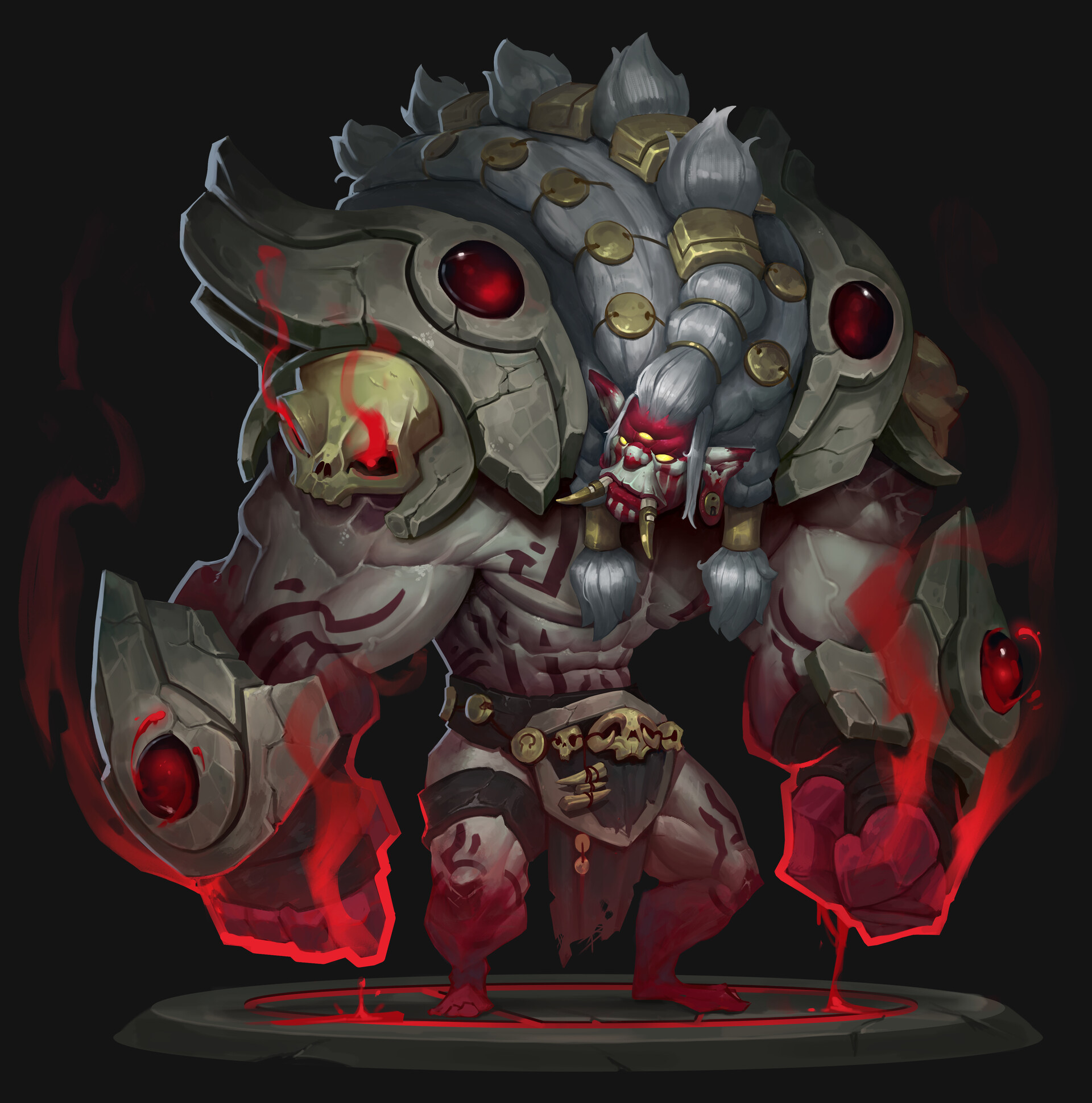
Blood Ogre by Thomas Guedes

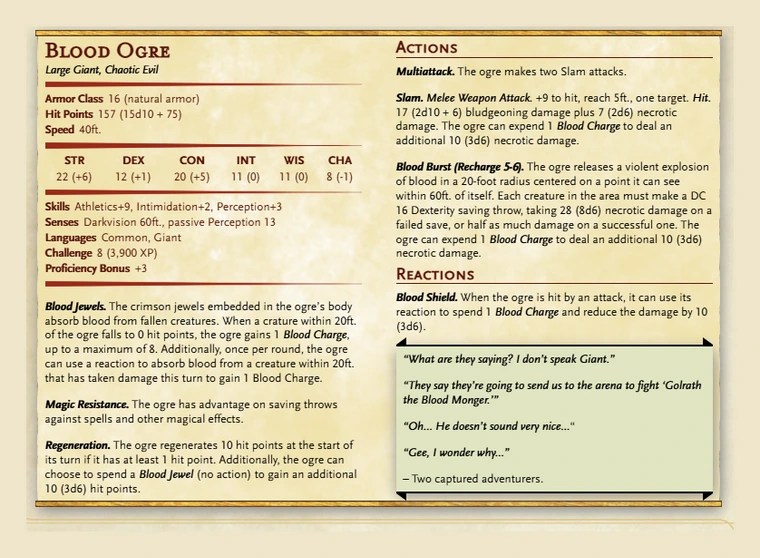
“What are they saying? I don’t speak Giant.”

“They say they’re going to send us to the arena to fight ‘Golrath the Blood Monger.’”

“Oh… He doesn’t sound very nice…

“Gee, I wonder why…”

– Two captured adventurers.

Welcome to the realm of Giants, where 9/10 times, the game plan in a fight is to smash, smash again, maybe bash for some extra flavor, and then smash. It’s no surprise that an entire group of monsters built around the idea of “what if a guy was the size of a large house?” all happen to play fairly similarly where they just use a high STR and CON stat to deal out devastating blows and take hits like nobody’s business. So that raises the question, how does one make a giant unique and interesting while still leaning into their simple play style?

Blood Ogres: The Overview.

Ogres are the low level fodder of Giant-kin, clocking in at a measly CR 2. They show up, they hit hard, they die. Typically, an ogre is a good boss for a very low level party of 1-2, but otherwise it has very little interesting features aside from their bulk and high damage. Blood Ogres are a much higher step above their average brethren, using the jewels of congealed blood across their armor for a variety of uses including bonus damage, healing wounds, and reducing damage from incoming attacks.. I imagine Blood Ogres being either right hand men to other stronger Ogres or leading entire war bands themselves. Just like other Ogres, they take no nonsense, don’t back down from a fight, and are incredibly dangerous close-quarters-fighters.

Stats and Abilities:

Just like most other Giants and Ogres, Blood Ogres focus on high STR and CON with lackluster stats across the board. While it’s stats are better than the average Ogre, the Blood Ogre’s other 4 stats are nothing to write home about with it’s next highest stat being a 12 in DEX. With lower mental abilities across the board and despite being much more intelligent than a regular Ogre, it still is an Ogre at the end of the day and still can be rather easily goaded into a trap or quickly succumb to a spell’s effect.

The big focal point is the Blood Ogre’s Blood Jewels skill, as most of its abilities revolve in some form or fashion in tandem with Blood Jewels. When compared to the regular Ogre’s laughable 5 in INT (-3 modifier) and 7 in WIS (-2 modifier), the Blood Ogre seems like a tactical genius to its brethren, and to a degree it is. Regular Ogres will run forward, throwing caution to the wind in the same direction the launch a commoner in. With an 11 in both INT and WIS, Blood Ogres are much more intelligent and perceptive, and can quickly shift from one form of bashing to another. They’re smart, but they’re not geniuses. At the end of the day, they still really only excel in smashing others underfoot, but they have a better idea on who to smash with their fist now.

  • Stats and Skills: Boasting no saving throw proficiencies hurts the Blood Ogre a lot less than it initially leads on thanks to Magic Resistance. It’s not an answer to every spell and effect due to the innately lower mental stats, but it can help with balancing that out slightly. Having proficiency in Athletics and Perception allows Blood Ogres to be in the fray and bulldoze through obstacles to close distance while also keeping a semi-sharp eye on others while its fighting in the fray. the proficiency in Intimidation is there more for flavoring because these should be intimidating. I mean come on! It’s a 10-12ft. hulking roided up behemoth of a man that can somehow conjure blood from the gemstones in it’s armor.
  • Resistances, Immunities, and Senses: Having no immunities or resistances to speak of does hurt the Blood Ogre a bit, but not to an insane degree. If there is one thing that I could argue for, it would be a resistance to Necrotic damage as it is constantly using blood for its features. Otherwise, everything else is pretty one-to-one to the regular Ogre statblock: 60ft. of Darkvision, 40ft. movement speed. Now granted, regular Ogres can’t speak Common, but again, they have 5 INT. That’s barely sentience for most creatures, and so with having over double the INT score it makes sense for Blood Ogres to be able to speak common in my eyes.

Passive Abilities and Actions:

Blood Jewels. The crimson jewels embedded in the ogre’s body absorb blood from fallen creatures. When a creature within 20ft. of the ogre falls to 0 hit points, the ogre gains 1 Blood Charge, up to a maximum of 8. Additionally, once per round, the ogre can use a reaction to absorb blood from a creature within 20ft. that has taken damage this turn to gain 1 Blood Charge.

This is the entire gimmick of the Blood Ogre as almost every other feature it has in it’s arsenal can be enhanced by expending a use from Blood Jewels. I figured 8 would be a good amount to allow the Blood Ogre to be a bit reckless with these, especially it can almost guarantee 1/round of combat by using a reaction. Additionally, a Blood Ogre might choose to fight with much squishier allies such as Goblins to maximize the amount of passively gained charges.

Magic Resistance. The ogre has advantage on saving throws against spells and other magical effects.

No notes.

Regeneration. The ogre regenerates 10 hit points at the start of its turn if it has at least 1 hit point. Additionally, the ogre can choose to spend a Blood Charge (no action) to gain an additional 10 (3d6) hit points.

Typically, the Regeneration feature works in one of two ways
– A.) The creature regains hit points so long as it has 1 hit point left.
– B.) The creature regains hit points no matter its current hit points. This is balanced by a sentence being tacked on usually stating “If the [ ] takes X or Y damage, this trait doesn’t function at the start of the [ ]’s next turn. The [ ] only dies if it starts its turn with 0 hit points and doesn’t regenerate.”
So, a Blood Ogre’s Regeneration functions like option A, but it has the added benefit of being buffed by Blood Jewels if the Ogre chooses. Now while this could cost a Bonus Action, I figured that because Regeneration never requires any action to function, the optional buff should follow suit as Rules As Written, the Ogre will never be able to buff the hit points gain due to the regenerating hit points happening at the start of its turn, before it has the chance to do anything.

Multiattack. The ogre makes two Slam attacks.

No notes. The Blood Ogre has no other attacks that would be applicable to use in a multiattack.

Slam. Melee Weapon Attack. +9 to hit, reach 5ft., one target. Hit. 17 (2d10 + 6) bludgeoning damage plus 7 (2d6) necrotic damage. The ogre can expend 1 Blood Charge to deal an additional 10 (3d6) necrotic damage.

Typical attack for a typical bruiser. Hit hard and ask questions later. Average of 42 damage without pumping using Blood Jewels, which is not too shabby. Could be bumped a little bit up, but again it’s right along the typically CR 8 damage boundaries.

Blood Burst (Recharge 5-6). The ogre releases a violent explosion of blood in a 20-foot radius centered on a point it can see within 60ft. of itself. Each creature in the area must make a DC 16 Dexterity saving throw, taking 28 (8d6) necrotic damage on a failed save, or half as much damage on a successful one.

The ogre can expend 1 Blood Charge to deal an additional 10 (3d6) necrotic damage.

The big nuclear option for a Blood Ogre, something it’s going to use every chance it gets to maximize the damage it can pull off. Same damage as a Fireball spell, which is a nice middle ground. Honestly, might re-flavor this to be a self-centered AoE as it feels more in line with the Ogre running into the fray and causing an explosion on those its focused on rather than trying to take out the back line. After all, would an Ogre of all things be smart enough (even one with advanced intelligence) to target backliners when there are resilient frontliners to trade blows with?

Blood Shield. When the ogre is hit by an attack, it can use its reaction to spend 1 Blood Charge and reduce the damage by 10 (3d6).

This is the only ability that partially conflicts with Blood Jewels as it requires a reaction to use. I personally imagine, until the Ogre is presented with somebody that can easily chunk its hit points like a Barbarian, Fighter, or Rogue, its going to use its reaction to keep gaining Blood Charges through Blood Jewels. Once there is a threat that is quickly burning through the Ogre’s hit points, its going to start using what it can to minimize the damage it takes.

Revisions:

As I’m finishing this post, I’m leaving somewhat… mixed. On one hand, there’s nothing that blatantly is in need of fixing. On the other, there is just this sense of something missing? Like yeah it has a gimmick through Blood Jewels, but because everything else is dependent on that one feature, it feels like I have somewhat limited myself on its features. It also doesn’t feel that healthy for supposedly being a tougher Ogre, but any Barbarian, Fighter, or Rogue at level 8 will make mincemeat out of these guys. They don’t resist any weapon damage, magical or otherwise. They don’t resist any damage from any other source, and are susceptible to all conditions so even spellcasters can still get an edge on them. They also feel heavily dependent on fodder to aid them, again helping maximize their Blood Jewels refilling, but if they need something fragile, what’s stopping a party from instantly killing half of the fodder with a single Fireball or something similar. This feels like a monster that needs to be revamped from the ground up sadly, though there’s something to be said about someone being their own worst critic. Again, this is a perfectly fine statblock, I just feel like it’s missing that little extra spice to really elevate it.

Watch by kleinerHai

D&D Homebrew Monster of the Week: The Abyss Mage

Relinquished Nightmare by Concetto19

“Arise my kin, arise and make merry! Let this malaise fill and fuel you! May you revel in their death, their suffering, the carnage! MAY YOU NEVER GO HUNGRY AGAIN! “
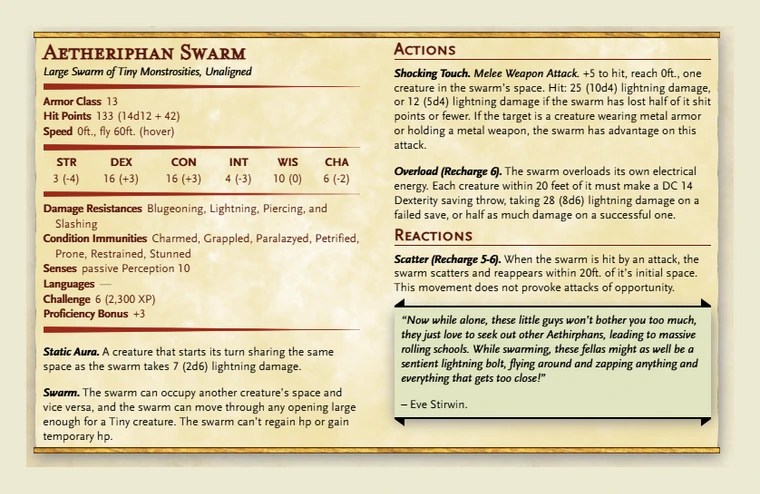
– Aklimnok, Fragment of the Abyss

Fiends are a bit tricky within the D&D mythos as there are three predominant types of Fiends: Demons which come from The Abyss, Devils hailing from The 9 Hells, and Yugoloths which are their own separate can of worms. All you need to know is each one represents a flavor of evil:

  • Demons – Chaotic Evil – Demons don’t care about any pleading, bargain, or deal they might have promised. They’re savage, cruel, deceitful, and exist to sow chaos and destruction wherever they tread. Most Demonic worshiping cults in D&D simply are either crazy, descendants or related to Demons in some form or fashion, or bitter and spiteful enough that they don’t care if they die or the whole world is destroyed, they just want everyone else to suffer.
  • Devils – Lawful Evil – Devils are evil… but with loopholes. While a Demon might lie to you about not killing you… and then kill you, a devil will barter and strike a deal, not a good deal but a deal nonetheless. Typically what a Devil wants is your soul and in exchange for it until you die you are granted something: powerful magical affinities, wealth beyond measure, a harem of beautiful men/women, or that one comic that went out of date 70 years ago and there’s only two left in existence.
  • Yugoloths – Neutral Evil – Yugoloths fill a weird spot in the fiendish hierarchy and more often than not act as mercenaries for other fiends. They don’t really have much of a plane to call home like the other two and all in all, are a bit lack luster comparatively. Because they fill the Neutral slot in-between Demons and Devils, they aren’t as interesting from a story perspective. they aren’t as crazed or aggressive as Demons, but they’re not the pinnacle of sinister schemers like the Devils are.

Abyss Mages: The Overview

So as a Demon, Abyss Mages hail from the Abyss. Who would’ve guessed? In all seriousness, these guys went through a bit of an overhaul lore wise before ending up here. Initially, I wanted them to be similar to Absolution: a general for their respective forces, but I had them as commanders for both Demons and Devils alike which felt somewhat weak and weird? Why would something so closely tied to The Abyss, a place spilling out into The 9 Hells leading to Demons and Evils fighting constantly, not only serve Devils but be allowed to serve them? Additionally, their abilities were rather lackluster for aiding anything on the combat field aside from just obliterating their opponents. So, I went and changed a lot of their stats and abilities around to better mold them to something that both strictly fills the Demonic idea as well as give them abilities to help aid their fellow demonic kin.

Stats and Abilities

Unlike the last general/leader statblock we made with Absolution, Abyss Mages are much more focused on assisting from the backlines then being up in the fray. Bolstering high INT, WIS, and CHA with lackluster STR, DEX, and CON for a CR 10, Abyss Mages have no issue taking a star hit from a spell, but the second there’s a Barbarian, Fighter, or Rogue in their face, it’s time to panic.

What makes Abyss Mages dangerous is their self sustain being hard to permanently kill. Even worse, they know this. So while its not ideal for an Abyss Mage to be stuck locking blows with a Fighter, so long as there’s no Radiant damage being flung around and it’s not at a risk of being struck with a critical hit, the Abyss Mage continues supporting it’s allies how it can, though that is frequently “Get over here and help me!”

  • Stats and Skills: With proficiency in only INT, WIS, and CHA saving throws, this really forces the Abyss Mage to lean into a backliner role and support from a distance rather than be in the fray. On top of having these high mental scores, Abyss Mages also pack Magic Resistance, making that much more difficult to challenge in spell-to-spell combat. Minor typo, the Skills section in the statblock should not be there as the Abyss Mage has no proficient skills.
  • Resistances, Immunities, and Senses: Being resistant to all nonmagical weapons allows the Abyss Mage to be an adequate threat to those unprepared, enforcing the idea that this is a monster that prefers to prey on the weak rather than those that stand a fighting chance. Being outright immune to Necrotic damage and resistant to Poison damage comes from the fact that this is a fragment of The Abyss manifested into flesh. The Abyss is a place fueled by plagues, destruction, and death so it makes sense that Abyss Mages would naturally be able to handle those elements. Like a surprising majority of the creatures posted so far, the Abyss Mage hovers through the air as its only form of movement and thus cannot be knocked Prone nor can it be Charmed or Frightened. Another slight edit that needs to be made is granting the Abyss Mage immunity to being Poisoned as with most creatures that are resistant to Poison damage they end up being immune to the Poisoned condition. Reliant on Darkvision, the Abyss mage prefers to attack in the dead of night, playing more into it favoring unfavorable matchups for its opponents.

Passive Abilities and Actions:

Anti-Life Siphon. Anytime the Abyss Mage deals necrotic damage to another creature, it heals for half the necrotic damage dealt.

This is the main function on how Abyss Mages can keep themselves alive despite their moderate AC and HP pool. This becomes a lot better as more features are revealed as it effects anything that deals Necrotic damage from the Abyss Mage’s aresenal.

Magic Resistance. The Abyss Mage has advantage on saving throws against spells and other magical effects.

Staple for any monster at CR 10 or higher. I have already mentioned in depth its utility so no notes.

Rejuvenation. If it dies, the Abyss Mage returns to life in 1d10 days and regains all its hit points, spell slots, and features. This effect ceases to function if the Abyss Mage was slain by either radiant damage or a critical hit.

Even if Anti-Life Siphon ends up falling short and the Abyss Mage falls in combat, it’s not over yet (unless it died at the hand of a critical hit or radiant damage). Being a fragment of a plane of existence, especially one as infectious as The Abyss allows Abyss Mages to fester and regrow after death. So if you’re hunting one, come prepared.

Spellcasting. The Abyss Mage is a 10th-level spellcaster. Its spellcasting ability is Intelligence (spell save DC 16, +8 to hit with spell attacks). The Abyss Mage has the following warlock spells prepared:

Cantrips (at will): eldritch blast, mage hand, minor illusion, toll the dead
1st level (4 slots): armor of agathys, arms of hadar, bane, hex
2nd level (3 slots): hold person, invisiblity, misty step
3rd level (3 slots): antagonize, dispel magic, hunger of hadar
4th level (3 slots): blight, shadow of moil
5th level (2 slots): negative energy flood

Another full caster just like Absolution, so lets rapid fire this off and try and make this quickish:

Cantrips:
Eldritch Blast – The Abyss Mage’s main form of attack as it lacks an actual attack Action. Just barely misses the 3rd beam that comes from being a level 11 caster.
Mage Hand – A strictly very niche utility. I can think of exactly one instance where this could be useful in combat, and even then I could be misremembering how effect the spell is.
Minor Illusion – This is a very ‘meh’ option as while it might want to lure others away from their allies, more often than not an Abyss Mage is going to be accompanied by other Demons who aren’t going to sit around and wait.
Toll the Dead – A counterbalance so the Abyss Mage doesn’t strictly need to rely on an attack roll to hit a target consistently, thus hitting allowing them to be able to hit a high AC Fighter (who might have dropped WIS slightly. Still won’t help against a Paladin thought…)

1st Level:
Armor of Agathys – This is not a spell the Abyss Mage would use a 1st level slot for. Instead, it would likely use it’s 5th level slot to jump both the temporary hit points granted and the damage dealt by the spell from 5 to 25. Now granted, this doesn’t play well with the Abyss Mage’s Corrupting Land as Temporary Hit Points don’t stack, so it has to choose one or the other. I imagine this would either be the opening spell cast or one where the Abyss Mage is trying to retreat and needs a little more oomph to its hit points.
Arms of Hadar – A good “get off me tool” as it forces everything within 10ft. of the Abyss Mage to make a STR save, dealing a little damage and preventing creatures who failed from taking Reactions (attacks of opportunity. Not great, but decent.
Bane – A great support spell that can severely hinder up to three separate creatures at once. Only down side is that it’s a concentration spell which the Abyss Mage has a large amount of.
Hex – Interchangeable with Bane as instead of three creatures, it targets one and forces disadvantage on all Ability Checks using one stat of the Abyss Mage’s choice and it also deals 1d6 necrotic damage every time the Abyss Mage hits it (free hit points!) so long as it maintains concentration.

2nd Level:
Hold Person – This is one of the most dangerous spells for its level. Being able to force the Paralyzed condition on a failed save for a full minute could spell death for a Player Character. Great utility and support. Sadly, another concentration spell.
Invisibility – I’ve mentioned this one in a prior monster entry, but this is the trump card if the Abyss mage is actively retreating. Abyss Mages are smart and while hungry for destruction, know to turn tail if a competent paladin or cleric is on the field.
Misty Step – Another great option to create space and try and escape. Also useful if the Abyss Mage simply wants to reposition. Regardless of how many times it attempts Hold Person or uses Misty Step, it will always save one 2nd level slot for Invisibility.

3rd Level:

Antagonize – A good spell to force your foes to attack each other. An instant effect and does a moderate amount of damage and even if the target fails the save but can’t attack another creature as the spell dictates, it instead suffers disadvantage on it’s next attack roll.
Dispel Magic – A great utility spell that allows Abyss Mages to remove beneficial buffs to the players. Not as effective as a shut down as Counterspell is, so it’s more so used to stop lingering effects rather than big damage spells.
Hunger of Hadar – This is one of the Abyss Mage’s nuclear options. A concentration spell that covers a good 20ft. radius that deals turnly damage both at the start (or when first entered) and when ending a turn in the area for a total of 4d6 acid/cold damage. On top of that, everything inside is Blinded, so even creatures with Devil’s Sight that pierces magical darkness aren’t immune. This is one of the best spells for the Abyss Mage to have.

4th Level:
Blight – The Abyss Mage’s other big damage option, dealing a whopping 8d8 necrotic damage on a failed CON save (that’s a whole lot of healing). Not the greatest save option as most players have an adequate CON score as a minimum, but still taking half damage of 8d8 on a successful save is rough.
Shadow of Moil – Another retaliatory defensive option for the Abyss Mage, granting resistance to Radiant damage and dealing 2d8 necrotic damage to anything that hits it with a melee attack. Another concentration spell however, so it has to pick and choose when it’s worth using this. Best option is likely when the Abyss Mage feels threatened by a Paladin/Cleric and needs to offset any Smites or the like.

5th Level:
Sickening Radiance – Another nuclear option that honestly feels less thematic than Hunger of Hadar or Blight. now that’s not to say it’s bad, but it just doesn’t quite feel right. A concentration spell creating a lingering 30ft. area that not only deals lingering Radiant damage, but also causes levels of exhaustion on failed saves and prevents creatures in the AoE from benefitting from being invisible. Again, this just feels… off?

Shadow Bind. The Abyss Mage targets one creature it can see within 60ft of itself. The target must make a DC 16 Dexterity saving throw or be restrained by shadowy tendrils. While restrained, the target is silenced and takes 11 (2d10) necrotic damage at the start of its turn.

The target can make a DC 16 Strength (Athletics) check at the end of each of its turns, breaking free on a success. The Abyss Mage can only have one creature restrained in this way at time.

With this feature, while it doesn’t paralyze like Hold Person, it is an adequate replacement. Now, a fun yet cruel combo is to use this on the same target after a successful Hold Person spell as the Paralyzed condition forces auto failures for any DEX or STR check/save, meaning the Abyss Mage can freely use this and start getting some hit points back. Looking back, I’m not sure why there is a lingering silencing effect on this. That should be removed and I have no idea why I put that there to begin with.

Corrupting Land (1/day). The Abyss Mage touches the ground and infects with the malignant infection of the Abyss. The ground within a 60ft. radius of the Abyss Mage becomes desecrated and bolsters Demons while crippling all others. Whenever a Demon first enters the desecrated area or starts its turn within it, it gains 18 (3d12) temporary hit points until the end of its next turn.

While a Demon has these temporary hit points, it can make one additional attack on its turn as part of its attack action. Non-Demonic creatures must make a DC 14 Constitution saving throw whenever the first start their turn or first enter the area. On a failed save, the creature takes 7 (3d4) necrotic damage and on its next turn choose whether it gets to move, an action, or a bonus action; it gets only one of the three. The area remains desecrated for 1 hour.

The ultimate feature of an Abyss Mage, being able to channel The Abyss out into the surrounding area, providing a literal home-field advantage for any Demons in the vicinity. Now, funnily enough aside from the constant refresh of Temporary Hit Points the Abyss Mage doesn’t gain a whole lot from this as it only corrupts the ground and like Aurelionite with Tremorsense in the last post, Abyss Mages hover and scarcely will be anywhere close to the ground. Additionally, this effect specifies “[demons] can make one additional attack as part of its attack action.” and the Abyss Mage has no actual attack actions, only Shadow Bind. So this is strictly to support any demons that are partying with the Abyss Mage, and as such 9/10 this is the opening move an Abyss Mage will play.

Revisions:

Like I mentioned in the beginning of the post, this already was heavily revised before I began work on the post and even still, there’s bits here and there I think still need to be touched up:
– Giving the Abyss Mage immunity to the Poisoned condition.
– Changing it’s Spellcasting feature to Innate Spellcasting so it’s spells feel more impactful and so there won’t be any spells out of place like Sickening Radiance.
– Removing the silencing effect from Shadow Bind. Seriously, what was i thinking two years ago?
Even with all these tweaks, I’m much happier with how this is vs. what it was and I loom forward to seeing y’all next week when we start with the literal giants of D&D; The Giants!

The Last Nightmare-Memory by Midnight

D&D Homebrew Monster of the Week: The Aurelionite

Wayfinder Creatures and Monster Concepts – Gold Elemental by Baldi Konijn

“Whoa! Check this out!”

“Wow… It’s a whole legion of golden statues. They’re so realistic too… A bit too realistic. Take a look at the faces. No way someone spent that long carving that level of detail.”

“Well come on! If someone can spend this much gold for just statues, they gotta be beyond loaded! Haha! We’re gonna need more wagons!”

“I’m not too sure about this…”

– Final conversation of two dungeon delvers.

Leave it to D&D to even have the rocks be threatening creatures. Just typical… The first Elemental we got on the plate is the Aurelionite, which fun fact shares its name to the somewhat secret boss in the extremely popular (and a beloved game of mine) Risk of Rain 2 which is also a towering rocky/golden elemental. The Aurelionite is a special kind of monster, because unlike every other we have covered so far, it WILL NOT EVER be found outside its lair. Honestly, despite being nowhere close to the Abyssal Greatwyrm’s CR, this might be the most dangerous monster shown up until this point and for a good bit more.

Aurelionite: The Overview

Elementals can typically be found in one of 4 elements: Air, Earth, Fire, and Water. Now these can have sub-categories, but typically its one of these four. Aurelionite obviously falls entirely into the Earth Elemental genre and as such it I designed a few “rules” for it to follow: Slower than other creatures of its caliber and giving it a chunky AC and hit point pool. This is not meant more so to be an obstacle than a creature in a way as it will never leave its Lair, and as such will never be a persistent threat to the party but rather a final test/challenge for a party through a difficult dungeon. I envisioned the Aurelionite as a tragic creature due to its most dangerous feature being ripped straight from the tale of King Midas from Greek mythology. It’s cognizant of its destructive power and thus holes itself away, only attacking those who have found it to try and hide its secret.

Stats and Abilities:

With high STR, CON, and WIS, solid INT and middling DEX and CHA, the Aurelionite is designed to be a bruiser with hit points to spare. While its INT is not bad, with a 20 in WIS the Aurelionite cannot be tricked or ambushed easily, and while diplomacy will rarely work for a creature determined to keep itself hidden, it’s not impossible to reason with.

This thing is a bulky behemoth in combat, sporting an 18 AC and over 200 hit points, this goliath will not be tapping out anytime soon. With a Lawful Neutral alignment, its not inherently good or evil, but instead following its own ideology and acting in its own interest. Its still honorable, abiding by the rules it has in place of itself, but these rules are not strictly malevolent or benign. As mentioned, it doesn’t want to be freed. If you’re nearby but don’t venture into the center of its lair and leave, all good. If you encounter it and try to escape, it will hunt you down until it is too risky to pursue.

  • Stats and Skills: With proficiency in four saving throws, STR is not as important as the other three as typically a STR check is to breaking free of restraint or avoiding being moved against your will/knocked prone (the latter which the Aurelionite is outright immune to). DEX and CHA are great because these are the Aurelionite’s lowest stats and as such need to be helped as spells/effects that require these saves are typically big damaging spells such as Lightning Bolt or effects that remove Aurelionite from the battle outright such as Banishment. While lacking any skill proficiencies, the Aurelionite is no fool and naturally is guarded. Paired with Magic Resistance makes it so most other utility or control spells likely won’t be effective against it.
  • Resistances, Immunities, and Senses: Resisting all nonmagical weapons and being immune to both Fire and Poison damage is very on brand as while gold itself isn’t the most resilient material, you can’t poison a rock, its got molten gold spilling from its body, and it is at the end of the day a pile of gold covered boulders. Additionally, its common for most elementals to be immune to a plethora of conditions, and with rock-themed elementals specifically i find it hard to paralyze a pile of rocks, you cant petrify it because it is already stone, it cant be poisoned because… rocks…, and it cant be knocked prone because its hovering in the air. Having Darkvision makes a lot of sense as this is a creature that resides deep in gilded caves, isolated from the outside, but TremorsenseTremorsense is the ability to detect vibrations through the earth which makes sense for a creature that is comprised of earth, there’s just one problem… With the fact the Aurelionite’s only movement option is to hover through the air, its not going to be on the ground. With that, I might instead bump Darkvision up to 120ft. and remove Tremorsense, but thats a change for a later day.

Passive Abilities and Actions

Elemental Nature. The Aurelionite doesn’t require air, food, drink, or sleep.

Just like a lot of other creatures, the Aurelionite doesn’t need food or anything of the like. After all… its a pile of golden rocks…

Immutable Form. The Aurelionite is immune to any spell or effect that would alter its form.

Just like most constructs, the Aurelionite cannot have its form altered in anyway, preventing a lot of cheap and easy solutions (though between magic resistance and Legendary Resistances, this wouldn’t be likely anyways).

Legendary Resistance (3/day). If the Aurelionite fails a saving throw, it can choose to succeed instead.

Just like the other big bosses shown off, this is a staple that is required for end-game level monsters. Additionally, due to its bonuses and saving throw proficiency, its likely to use this whenever it fails a save (minus a STR saving throw)

Magic Resistance. The Aurelionite has advantage on saving throws against spells and other magical effects.

Big boon to have against spellcasters and a necessary aid to help avoid the upper tier magic spells.

Midas Touch. Anything the Aurelionite directly touches eventually solidifies into solid gold. If the Aurelionite touches a mundane object, it immediately solidifies into gold.

If the Aurelionite touches a creature, it becomes cursed until the curse is removed by Remove Curse or similar magic. Immediately after becoming cursed, the target must make a DC 18 Constitution saving throw. On a failed save, it has the Restrained condition for the duration. On a successful save, its Speed is 0 until the start of the Aurelionite’s next turn. Constructs automatically succeed on the save. A Restrained target makes another Constitution saving throw at the end of each of its turns. If it successfully saves against this effect three times, the effect ends. If it fails its saves three times, it is turned to gold and has the Petrified condition for the duration. The successes and failures needn’t be consecutive; keep track of both until the target collects three of a kind. On a successful save, the creature remains cursed but doesn’t immediately suffer the negative effects, but must remake the save at the end of each long rest until the curse is removed. Each subsequent failure, causes a portion of the cursed creature to solidify into gold, starting from the point of contact and spreading from there. After 3 failed saves, the creature is fully petrified. If a creature already cursed, but not fully petrified is touched by the Aurelionite again, it makes the save at disadvantage.

So we go from several abilities we have already covered and are simple, one sentence description to something that rivals Homer’s The Odyssey… Typical. Well buckle in, this is a doozy. To simplify it down, essentially this is the Midas Touch from Greek mythology; anything that King Midas touched is turned to gold. Now, in a game setting that’s not fun to deal with as there’s no counterplay to “I touch you and you’re petrified now :),” so instead it functions similarly to the Flesh to Stone spell. When a creature is directly touched by the Aurelionite (not through one of its attacks), its speed is reduced to 0 for that round and it makes the CON save and one of two things happens:
Failure – It becomes partially restrained as its body slowly solidifies into gold. It repeats the saving throw until it either has three failures or three successes, becoming fully petrified on three failed saves or ending the effect on a success.
Success– It still becomes cursed until it passes three saving throws, however these only occur once per day and at the end of a long rest (or until the curse is removed). Again, three failures leads to petrification and three successes ends the effect. Additionally, if a creature that initially passed the save (and is suffering the lingering effects of the curse) is touched by the Aurelionite again, it makes the save at disadvantage this time.

Searing Gold. Molten gold fills the body and spills out of the Aurelionite directly underneath itself. If a creature hits the Aurelionite with a melee attack while within 5ft., the attacking creature takes 10 (3d6) fire damage as the gold splashes back in retaliation.

A penalizing retaliatory feature to dissuade constant close-quarters aggression and to help chip at the frontliners. Equal damage to the CR 11 Remhorahz, so it feels very much in line difficulty wise. Not the most fun ability for players, but its thematic.

Multiattack. The Aurelionite makes three attacks: one with its greatsword and two with its shield.

This needs to be re-flavored some as despite it being a higher-end monster which frequently have more than two attacks, something this bulky, slow (compared to other CR 14s), and deliberate should only have two swings. Additionally with a new idea I have for the Shield attack, it should only be able to use it once per turn.

Gilded Greatsword. Melee Weapon Attack. +12 to hit, reach 10ft., one target. Hit. 26 (3d10 + 7) slashing damage.

A friend of mine gave me an idea I might adopt. In the artwork for the Aurelionite, gold covers the edge of the blade and so it could have caused the weapon to go from a sharp bladed weapon to more of a club. Minor flavor change, but a fun idea. Otherwise, this is just a normal attack, though the damage will likely be increased when dropping the amount of attacks Multiattack allows. It varies slightly, but around CR 14, a creature should deal ~40 damage per turn with a multiattack.

Golden Shield. Melee Weapon Attack. +12 to hit, reach 5ft., one target. Hit. 18 (2d8 + 7) bludgeoning damage.

So… It turns out initially the Aurelionite was doing ~60 damage per turn… ahem… So this damage will actually be lowered as the new idea I had was allowing the Aurelionite to knock a target prone (provided the target fails a STR save) with the shield attack. This allows it to follow up with the greatsword attack at advantage (so long as the Aurelionite is no more than 5ft away).

Torrent of Gold (Recharge 5-6). The Aurelionite releases a 30-foot cone of molten gold. Each creature in that area must make a DC 18 Dexterity saving throw, taking 55 (10d10) fire damage on a failed save, or half as much damage on a successful one.

Typical with end-game monsters, the Aurelionite comes packing a nuclear deterrent similar to a dragon’s breath weapon feature and packs a solid punch. Otherwise, not too interesting. Could lower the damage and have it be a possible restrain mechanic, but I don’t want to do too much at once because it’s not really fun for anyone if a monster has three effects off of one feature and Midas Touch is already pushing it.

Legendary Actions: The Aurelionite can take 3 legendary actions, choosing from the options below. Only one legendary action option can be used at a time, and only at the end of another creature’s turn. The Aurelionite regains spent legendary actions at the start of its turn.

The Aurelionite has the following Legendary Actions:

Greatsword. The Aurelionite makes one attack with its greatsword.

Nothing to really note with this. Typical, on brand attack costing one Legendary Action.

Malleable Terrain (2 Actions). The Aurelionite targets a creature that it can see that is standing on a golden surface and forces them to make a DC 18 Dexterity saving throw. On a failure, the target is restrained as the gold molds itself to restrain the creature, partially engulfing them.

As an action on each of their turns, the restrained creature can make a DC 18 Strength (Athletics) check to break free.

An area control ability to help halt advancing players and allow it (or any summoned allies) free reign for a bit. Chances are, anything in this area either has a good enough DEX to avoid the initial save, or has a high enough STR to break free quickly on following turns.

Gilded Waves (2 Actions). The Aurelionite creates a flood of molten gold. Each creature within a 30ft. radius, centered on the Aurelionite must make a DC 18 Dexterity saving throw, taking 35 (10d6) fire damage on a failed save, or half as much on a successful one.

To be perfectly honest, I’m not super thrilled about this feature as it feels too similar to Torrents of Gold. A 30ft. AoE that deals fire damage, but again and in a different shape with less damage. This is subject to being tweaked and changed, but to what yet I do not know.

Lair Actions: On initiative count 20 (losing initiative ties), the Aurelionite takes a lair action to cause one of the following effects; the aurelionite can’t use the same effect two rounds in a row:

  • Fountain of Gold. An eruption of molten gold occurs in a 40ft. long, 20ft. high 1ft. wide line within 60ft. of the Aurelionite. Until the start of the next round, the line acts the same to the Wall of Fire spell (DC 18), dealing 27 (5d8) fire damage to each creature that ends their turn within 10ft of the wall or inside the wall. At the start of the next round, the wall cools and acts the same as the Wall of Stone spell. The wall lasts until the Aurelionite uses this lair action again.
  • Meld the Cracks. The gold throughout the lair melds and reforms from any damage its taken. The Aurelionite and any summoned golden statues within 30ft. of the Aurelionite heal 10 (3d6) hit points.
  • Cursed Legion. 7 (2d6) golden statues become animated under the Aurelionite’s control and act on their own initiative. The golden statues remain animated for 1 hour, until the Aurelionite uses this ability again, or until the Aurelionite is incapacitated

Each of these Lair Actions offer a large boon for the Aurelionite’s options; creating semi-permanent effects in the arena to wall off opponents from allies or simply create space if needed, heal a moderate amount of hit points to help sustain the fight, and finally to allow for allies to join the fray and help take hits. Just a little bit of everything at its disposal and that really helps elevate the Aurelionite from a challenging boss to something really special and memorable (and dangerous).

Regional Effects: The region containing the Aurelionite’s lair is warped by its magic, which creates one or more of the following effects:

  • Within 1 mile of the Aurelionite’s lair, non-magical plants and animals transform into solid gold over time, creating areas of golden terrain. Each creature that spends 7 uninterrupted days in this area must make a DC 10 Constitution saving throw when taking a long rest, becoming afflicted with the lingering version Midas Touch curse on a failed save.
  • Mineral veins within 1 mile of the lair all take a golden appearance, appearing 10x more valuable than normal, but return to normal after 1d4 days after leaving the area.
  • Light refracts easier, making it harder to perceive minute details via sight. All Wisdom (Perception) checks made via sight have a -5 modifier.
    If the Aurelionite is killed, these effects dissipate over 1d10 days.

Like most Regional Effects, these will have little outcomes during a battle, though the final one should be tweaked and reworded as a flat -5 to perception is very strict for just being in the area (which is also an undisclosed amount of land).

Revisions:

While I’m happy that this statblock doesn’t feel obscene or completely imbalanced, I would be lying if I said it was perfect. Midas Touch I feel needs to have its DC lowered and possibly reworded to make it easier to comprehend that way it doesn’t automatically petrify the low CON casters in the back, who would be the answer to free anyone else cursed. Additionally, there needs to be clarification on how exactly the Aurelionite touches another creature. Is it a DEX save? Is it an attack roll? Does it just happen? So there’s a lot of missing info. Gilded Waves I’m sure will be reworked into something else down the line, but again I’m not sure what to. Finally, the more I think about the lingering effects of the Midas Touch effect, the more i dislike it so I will probably be removing that section and just have it function akin to the Flesh to Stone spell.

Dragon Land by Konstantinos Skenteridis

I’m still very happy with how this turned out and am content with the fact it’s not as dangerous as it could have been. A lot of work needs to happen before it’s as good as it can be, but all in all, not too bad if I say so. Well, that’s all this week, so tune in next time when we cover the infernal and abyssal beings of sin: The Fiends!

D&D Homebrew Monster of the Week: Abyssal Dragons

Dragon Captuveri – Luminous Ages by John Silva

“Everyone warns ya to look to the skies when searching for dragons. No one ever mentions the ones that come from below.”
– An old townsfolk’s warning.

Well it wouldn’t be Dungeons and Dragons without some Dragons populating the monster compendiums would it? Before diving into the Abyssal Dragons, a few guidelines on how this post is going to go as Dragons in D&D are a special kind of monster. Most “true” dragons have multiple statblocks depending on the stage of their life they’re at when encountered. This starts at the lowest with Wyrmlings, progressing to Young Dragons, then Adult Dragons, and after that to Ancient Dragons, and then to the oldest level called Greatwyrms. Wyrmlings sit in the lower CRs (3-5), Young Dragons just above that (6-9), Adults are the first real challenge and a suitable boss monster (13-17), Ancients are campaign ending challenges (19-22), and Greatwyrms are for only the highest echelon of combat encounters (25+). As dragons age and grow in power, they gain new abilities and their prior ones enhance, growing more dangerous the larger and older they get. To prevent this blogpost from being a hour long read, i will be marking * to display which level of dragon has which feature using the key below:

  • * – Wyrmlings
  • ** – Young
  • *** – Adult/Ancient
  • **** – Greatwyrm

Not perfect, but it helps a bit. Now, without further delay, lets get to it!

Abyssal Dragons: The Overview

The first of the mighty Dragon Compendium, Abyssal Dragons make their nests and lairs deep under the ocean’s surface, using their aquatic prowess to hunt and defend their homes with terrifying prowess. While not one of the “Big Three” dragon types (Chromatic (Evil), Gemstone (Neutral), or Metallic (Good)), Abyssal Dragons are temperamental and somewhat aloof as a result of their isolationist natures. While residing deep underwater, these dragons are just as quick in the air as they are underwater so they have no qualms leaving the safety of the ocean floor and soaring into the sky if provoked or needing to make a hasty exit. As apex predators of the seas, Abyssal Dragons often feed on other massive sea creatures such as whales, Storm Giants, or even Krakens once strong enough.

Stats and Abilities:

While vastly different in strength between all the different ages, each of the Abyssal Dragon’s statblocks all point to it being a bruiser with its high STR and CON, yet unlike a decent chunk of bruiser type monsters, all of the Abyssal Dragon’s mental stats are above board and can lead to diplomatic solutions. Afterall, if there is one thing dragons love more than fighting, its tributes and adoration. Even if its secluded from the rest of the world and is a bit more “savage” than its other kin, a dragon is still a dragon.

Dragons scarcely have weaknesses that are obvious in a statblock. More often than not, a dragon’s weakness is something in its personality. It’s vain and easily snaps when its character is questioned, they love gold and are easily swayed with monetary incentive, they were previously wounded severely in earlier events of the story so they avoid combat, etc. The weakest section in the statblock is the dragons still good DEX and WIS, as it is more often not relying on brute force due to its “feral” nature (when compared to other true dragons), yet thanks to its proficiency in those saving throws, along side CON and CHA, every level of this dragon is not going down without a fight or some good diplomacy (and probably groveling).

  • Stats and Skills: As mentioned, having proficiency in four saving throws allows the dragon to act in a much more aggressive and sure manner during combat, not fearing offensive or utility spells. With a decent AC and fair hit points (especially in the weaker levels) it does fairly well in close quarters, but as a Wyrmling, it can be easily overwhelmed. Proficient in both Perception and Stealth allow the Abyssal Dragon to be somewhat of an ambusher, though even with that bonus because of its lower DEX/WIS scores it would still focus more on brute force rather than hit and run tactics in a fight.
  • Resistances, immunities, and Senses: Being resistant to lightning initially and later gaining more while shifting to a lightning immunity, the older it gets the more resilient the dragon’s hide gets. In the upper tiers, being immune to lightning and resistant to cold, poison, and all nonmagical weapon attacks, the Adults, Ancients, and Greatwyrms have little to fear aside from the other CR 15-20+ creatures of the sea. Capable of taking on entire ships with little more than scratches unless said ship is specifically designed to fight them, in which they can slink away deep under the surface. Intelligent to boot, these dragons know when to abandon a fight or when to stop toying with their prey. Not having condition immunities such as frightened, poisoned, or charmed seems… odd? Already a revision that should happen, other Greatwyrms are immune to these conditions and I don’t think the Abyssal Dragons should be an exception to this.

Passive Abilities and Actions:

Amphibious. The dragon can breathe air and water.*

It’s kind of important to have an aquatic undersea dragon be able to breathe while underwater, and with its equally fast flying speed, there is no reason it wouldn’t have to also be able to breathe air.

Bite. Melee Weapon Attack. [ ] to hit, reach [ ]ft., one target. Hit. [ ] ([]) piercing damage.*

Obviously a Wyrmling’s bite isn’t going to hit nearly as hard as a Greatwyrms, so the to hit bonus, reach, and damage will all vary between the levels. Every dragon has a face full of sharp and pointy teeth, why not use it?

Paralytic Tentacles. Melee Weapon Attack. [ ] to hit, reach [ ]., one target. Hit. The target is restrained (escape DC [ ]). The dragon can only have one Large creature, or two Medium size or smaller creatures restrained in this way at a time.

As an action, the dragon can attempt to afflict a creature restrained by its tentacles with a paralytic poison. The restrained creature must succeed on a DC [ ] Constitution saving throw, becoming paralyzed for 1 minute on a failed save. On a successful save, the creature is immune to the dragons Paralytic Tentacles for 24 hours.*

The big gimmick of the Abyssal Dragon line, using the myriad of jellyfish-like tentacles across its body to grab, restrain, and paralyze their targets. As they grow larger, the difficult of escaping grows, the range they can attack at increases, and with Greatwyrms the size of creatures they can restrain also increases. This is an incredibly dangerous ability with how debilitating the paralyzed condition in D&D is (Incapacitated (cannot take actions or bonus actions, cannot speak, or concentrate on spells), movement drops to 0ft., automatically fail on STR and DEX saving throws, all attack rolls roll at advantage, and creatures that hit a paralyzed creature within 5ft. automatically critically hit), that is why once a creature saves, it is immune to the effects of Paralytic Tentacles for 24 hours. Otherwise, a whole party is gonna go down paralyzed and slowly get crit to death by the dragon, and that’s no fun.

Lightning Breath (Recharge 5–6). The dragon exhales lightning in a [ ]-foot line that is 5 feet wide. Each creature in that line must make a DC [ ] Dexterity saving throw, taking [ ] ([ ]) lightning damage on a failed save, or half as much damage on a successful one.*

It wouldn’t be a dragon statblock if it didn’t have a breath weapon now would it? With the main focus on Abyssal Dragons being their jellyfish tentacles and their tendency to reside in stormy seas, lightning felt like the best selection for a breath weapon attack. While poison might have also worked since that’s what a jellyfish toxin is, in fantasy settings it feels more appropriate that a jellyfish’s sting “shocks” you instead and thus would deal lightning damage

Multiattack. The dragon can make three attacks: one with its bite and two with its claws.**

Aside from the Wyrmling, every other level of the Abyssal Dragon gains the Multiattack feature as it is a necessity to compete with adventuring parties the higher and higher level you go.

Claw. Melee Weapon Attack. [ ] to hit, reach [ ]ft., one target. Hit: [ ] ([ ]) slashing damage.**

Similar to bite, if you have razor sharp claws, why not use them? Dragons are prideful creatures and while they could spend the entire combat flying and raining fire, acid, poison, or whatever else from their maws, its more fun to strike your enemies with your own hands, at least if you’re a building sized lizard with swords for claws.

Legendary Resistance ([ ] /Day). If the dragon fails a saving throw, it can choose to succeed instead.***

Surprise surprise, the all powerful dragon is a legendary creature in its older age. Like the last legendary creature mentioned a couple weeks ago, the celestial Absolution, Abyssal Dragons have such good stats and saving throws that if they fail one, they’re going to just expend a usage of one of their Legendary Resistances to pass.

Frightful Presence. Each creature of the dragon’s choice within 120 feet of it and aware of it must succeed on a DC [ ] Wisdom saving throw or become frightened for 1 minute. A creature can repeat the saving throw at the end of each of its turns, ending the effect on itself on a success.***

Frightful Presence is a staple ability for any dragon once they reach adulthood and just about every “true dragon” has this feature (though for some reason, the Greatwyrms form Fizban’s Treasury of Dragons doesn’t). This is the first thing a dragon will do in combat as the frightened condition prevents creatures from approaching any closer than they already are and they suffer disadvantage on ability checks and attack rolls while the source of the frightened condition is within line-of-sight. For this reason, an Abyssal Dragon’s main arena is likely to be a spacious cavern with minimal hiding spots, thus its always within line of sight. Additionally, this arena style allows the dragon’s Lightning Breath to meet its maximum range without being blocked by stray pillars or walls.

Legendary Actions: The dragon can take 3 legendary actions, choosing from the options below. Only one legendary action can be used at a time and only at the end of another creature’s turn. The dragon regains spent legendary actions at the start of its turn.***

Just like Absolution, Abyssal Dragons gain three Legendary Actions per round they can use after another creatures turn. The Abyssal Dragon gets the following Legendary Actions:


Bite. The dragon makes one attack with its Bite.
***

A standard Legendary Action. No notes.

Move. The dragon moves up to half of its swim or fly speed without provoking attacks of opportunity.***

Most other dragons have their Wing Attack that deals damage to everything around them and then allows them to move freely, but with the design and aesthetic of the Abyssal Dragons I just don’t get that. While not super dexterous, I feel as though the dragon has no difficulty to slip out without provoking attacks of opportunity.

Stinging Tentacles (2 Actions). The dragon targets one creature restrained by its Paralytic Tentacles and forces them to make a DC 18 Constitution saving throw, becoming poisoned for 1 hour on a failed save.

A poisoned creature can repeat the save at the end of each of its turns, ending the effect on a success. A creature paralyzed by Paralytic Tentacles has disadvantage on this save.***

So remember that brief blurb earlier about how when a jellyfish “shocks” you its actually a toxin? Well the Abyssal Dragon can do something similar. The poisoned condition in D&D is more of a nuisance than a threatening debilitation like the paralyzed condition. It’s still bad as it forces disadvantage on ability checks and attack rolls, and if you have a low CON, that hour long timer could lead to multiple combats suffering under its effects (if the DM is mean enough to throw more combat encounters after an Adult Dragon that is). This can technically be a nasty feature as if the dragon successfully grapples a creature, it can wait until the end of the next turn in the initiative and immediately try and poison the creature it restrained, but thankfully poisoned creatures can repeat the save at the end of each of their turns, so chances are they will get out of it in time.

Whirlpool (2 Actions). The Abyssal Dragon Greatwyrm creates a massive whirlpool in a 45ft. radius centered on a point it can see within 120ft. This whirlpool remains for 1 minute or until the dragon uses this action again.

The area becomes difficult terrain, and any creature that starts its turn in the whirlpool or enters it for the first time on a turn must make a DC 20 Strength saving throw or be pulled 30 feet toward the center of the whirlpool and take 27 (6d8) bludgeoning damage on a failed save, or half as much damage and isn’t pulled on a successful one. Additionally, any creature in the whirlpool’s area has disadvantage on Strength (Athletics) checks made to swim against the whirlpool’s current.****

This legendary action is exclusive to the Greatwyrm statblock and is definitely something that needs some tweaking. Currently, it’s best used in a strictly underwater location so the open cavern idea from earlier doesn’t make this too applicable unless the whirlpool actively replaces terrain. So for example, it creates a 45ft. radius and any creatures in that area fall into a turbulent whirlpool, suffering the effects as normal. Another revision that might need to be made is that a 45ft. radius is massive AoE and unless you’re in an absolutely gargantuan combat map, there is nowhere this won’t cover. Limiting the AoE down to even 30ft. or 25ft would drastically help balance this so its not guaranteed to immediately get everybody in the whirlpool.

Lair Actions: On initiative count 20 (losing initiative ties), the dragon takes a lair action to cause one of the following effects; the dragon can’t use the same effect two rounds in a row: ***

  • The dragon conjures grasping spectral jellyfish-like tentacles around each creature it can see within 30ft. of itself. Each creature must succeed on a DC 18 Dexterity saving throw, becoming restrained on a failed save. Restrained creatures take 2 (1d4) lightning damage and 5 (2d4) poison damage at the start of each of their turns. Restrained creatures can make a DC 15 Strength (Athletics) check to break free as an action on each of their turns.
  • Rushing waters suddenly surge and flood part of the lair. The dragon targets three creatures within 120ft. of itself and forces them to make a DC 18 Strength saving throw, being knocked prone on a failed save.
  • Geysers of frigid water erupt from underground. The dragon targets 3 creatures within 60ft. of itself and forces them to make a DC 18 Dexterity saving throw, becoming doused in the frigid water on a failed save. A creature doused in this way suffers from powerful and can only use an action or a bonus action on it’s next turn, but not both.

Sound the victory bells, we got the first our first monster with Lair Actions! Unsurprisingly, creatures of world famous renown and myth have entire dungeons and areas they’ve claimed which aid them with bonuses and additional actions/effects. More often than not, these effects originate from the environment itself and not the creature who owns the lair, however they still choose the effect. Lair Actions happen on initiative count 20 (or more often, top of initiative) and the creature who owns the lair can choose one of the three actions each turn, rarely able to use the same one multiple rounds in a row. Nothing across these abilities is meant to be nearly as detrimental as the main features of the Abyss Dragon, but they still need to support the dragon in some way so that’s why there’s no “big damage” option and all are geared for support usage.

Regional Effects: The region surrounding the Abyssal Dragon’s lair is warped by its presence, creating the following effects:

  • Both the waters and the weather around are abnormally chilly, going as cold as 39 degrees F in the deep waters.
  • Stormy weather and turbulent seas manifest within a mile of the dragon’s lair, doubling the amount of time it takes to travel by sea within the area.
  • Bodies of water within 1 mile of the dragon’s lair become charged with elemental energy. Lightning-based spells cast within this area have their damage increased by 1d6.
  • If the dragon dies, changed weather reverts to normal, as described in the spell, and the other effects fade in 1d10 days.

And with Lair Actions come another perk, after all if you’re some master of the area, powerful enough to literally carve a place out for yourself and bend the realm to your whim, why not right? Regional Effects are specifically for high end monsters that have a lair, but not every creature that has a lair gets Regional Effects. Usually it’s only if said creature has the power to warp the environment due to its sheer existence, and dragons fit that mold to the letter. No Regional Effect should have a tremendous impact on the party or be particularly threatening/dangerous, but they should at least have an impact and change how the party approaches either just passing through the lair’s area, or marching up to the front door.

Revisions:

All in all, I’m much happier with this statblock than with a couple of the others in the prior weeks as despite their majesty and roll in a story, dragons are actually relatively simple creatures to formulate a statblock for. The biggest change I have is for the Greatwyrm’s Whirlpool Legendary Action as with the current wording, it seems only applicable for underwater application and I would like it to be applicable everywhere it can be. Whether this is creating more of a tornado as it fills a cylindrical area or it replaces the ground underneath, I have yet to decide. Regardless, I am much happier with this after some editing before making this post as the initial statblock was a bit of a mess, but hey, you live and you learn right?

Smaugust: Pale by Trollfeetwalker

Well that wraps up this week’s D&D Homebrew Monster of the Week, stay tuned next time when we discuss a golden elemental of myth! In regards to other content and the D&D Intro to the character sheet, they are still a WIP. I do have other plans outside the D&D sphere, but it will not be as consistent as this content currently, so please be patient and thank you again for any and all support!