D&D Homebrew Monster of the Week: The Aurelionite

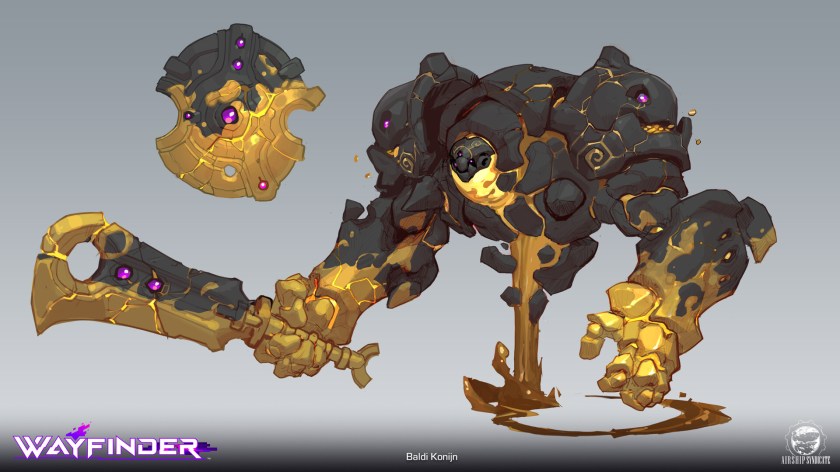
Wayfinder Creatures and Monster Concepts – Gold Elemental by Baldi Konijn

“Whoa! Check this out!”

“Wow… It’s a whole legion of golden statues. They’re so realistic too… A bit too realistic. Take a look at the faces. No way someone spent that long carving that level of detail.”

“Well come on! If someone can spend this much gold for just statues, they gotta be beyond loaded! Haha! We’re gonna need more wagons!”

“I’m not too sure about this…”

– Final conversation of two dungeon delvers.

Leave it to D&D to even have the rocks be threatening creatures. Just typical… The first Elemental we got on the plate is the Aurelionite, which fun fact shares its name to the somewhat secret boss in the extremely popular (and a beloved game of mine) Risk of Rain 2 which is also a towering rocky/golden elemental. The Aurelionite is a special kind of monster, because unlike every other we have covered so far, it WILL NOT EVER be found outside its lair. Honestly, despite being nowhere close to the Abyssal Greatwyrm’s CR, this might be the most dangerous monster shown up until this point and for a good bit more.

Aurelionite: The Overview

Elementals can typically be found in one of 4 elements: Air, Earth, Fire, and Water. Now these can have sub-categories, but typically its one of these four. Aurelionite obviously falls entirely into the Earth Elemental genre and as such it I designed a few “rules” for it to follow: Slower than other creatures of its caliber and giving it a chunky AC and hit point pool. This is not meant more so to be an obstacle than a creature in a way as it will never leave its Lair, and as such will never be a persistent threat to the party but rather a final test/challenge for a party through a difficult dungeon. I envisioned the Aurelionite as a tragic creature due to its most dangerous feature being ripped straight from the tale of King Midas from Greek mythology. It’s cognizant of its destructive power and thus holes itself away, only attacking those who have found it to try and hide its secret.

Stats and Abilities:

With high STR, CON, and WIS, solid INT and middling DEX and CHA, the Aurelionite is designed to be a bruiser with hit points to spare. While its INT is not bad, with a 20 in WIS the Aurelionite cannot be tricked or ambushed easily, and while diplomacy will rarely work for a creature determined to keep itself hidden, it’s not impossible to reason with.
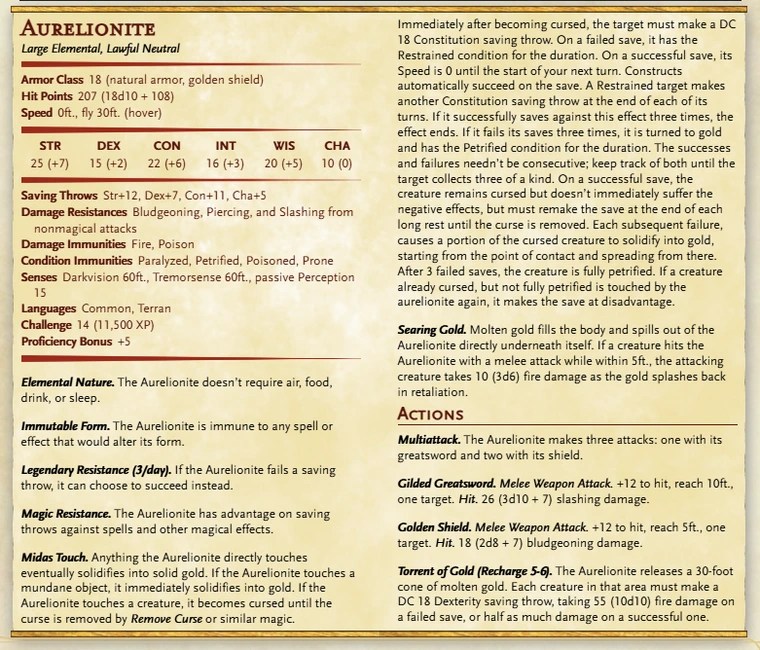
This thing is a bulky behemoth in combat, sporting an 18 AC and over 200 hit points, this goliath will not be tapping out anytime soon. With a Lawful Neutral alignment, its not inherently good or evil, but instead following its own ideology and acting in its own interest. Its still honorable, abiding by the rules it has in place of itself, but these rules are not strictly malevolent or benign. As mentioned, it doesn’t want to be freed. If you’re nearby but don’t venture into the center of its lair and leave, all good. If you encounter it and try to escape, it will hunt you down until it is too risky to pursue.

  • Stats and Skills: With proficiency in four saving throws, STR is not as important as the other three as typically a STR check is to breaking free of restraint or avoiding being moved against your will/knocked prone (the latter which the Aurelionite is outright immune to). DEX and CHA are great because these are the Aurelionite’s lowest stats and as such need to be helped as spells/effects that require these saves are typically big damaging spells such as Lightning Bolt or effects that remove Aurelionite from the battle outright such as Banishment. While lacking any skill proficiencies, the Aurelionite is no fool and naturally is guarded. Paired with Magic Resistance makes it so most other utility or control spells likely won’t be effective against it.
  • Resistances, Immunities, and Senses: Resisting all nonmagical weapons and being immune to both Fire and Poison damage is very on brand as while gold itself isn’t the most resilient material, you can’t poison a rock, its got molten gold spilling from its body, and it is at the end of the day a pile of gold covered boulders. Additionally, its common for most elementals to be immune to a plethora of conditions, and with rock-themed elementals specifically i find it hard to paralyze a pile of rocks, you cant petrify it because it is already stone, it cant be poisoned because… rocks…, and it cant be knocked prone because its hovering in the air. Having Darkvision makes a lot of sense as this is a creature that resides deep in gilded caves, isolated from the outside, but TremorsenseTremorsense is the ability to detect vibrations through the earth which makes sense for a creature that is comprised of earth, there’s just one problem… With the fact the Aurelionite’s only movement option is to hover through the air, its not going to be on the ground. With that, I might instead bump Darkvision up to 120ft. and remove Tremorsense, but thats a change for a later day.

Passive Abilities and Actions

Elemental Nature. The Aurelionite doesn’t require air, food, drink, or sleep.

Just like a lot of other creatures, the Aurelionite doesn’t need food or anything of the like. After all… its a pile of golden rocks…

Immutable Form. The Aurelionite is immune to any spell or effect that would alter its form.

Just like most constructs, the Aurelionite cannot have its form altered in anyway, preventing a lot of cheap and easy solutions (though between magic resistance and Legendary Resistances, this wouldn’t be likely anyways).

Legendary Resistance (3/day). If the Aurelionite fails a saving throw, it can choose to succeed instead.

Just like the other big bosses shown off, this is a staple that is required for end-game level monsters. Additionally, due to its bonuses and saving throw proficiency, its likely to use this whenever it fails a save (minus a STR saving throw)

Magic Resistance. The Aurelionite has advantage on saving throws against spells and other magical effects.

Big boon to have against spellcasters and a necessary aid to help avoid the upper tier magic spells.
Midas Touch. Anything the Aurelionite directly touches eventually solidifies into solid gold. If the Aurelionite touches a mundane object, it immediately solidifies into gold.

If the Aurelionite touches a creature, it becomes cursed until the curse is removed by Remove Curse or similar magic. Immediately after becoming cursed, the target must make a DC 18 Constitution saving throw. On a failed save, it has the Restrained condition for the duration. On a successful save, its Speed is 0 until the start of the Aurelionite’s next turn. Constructs automatically succeed on the save. A Restrained target makes another Constitution saving throw at the end of each of its turns. If it successfully saves against this effect three times, the effect ends. If it fails its saves three times, it is turned to gold and has the Petrified condition for the duration. The successes and failures needn’t be consecutive; keep track of both until the target collects three of a kind. On a successful save, the creature remains cursed but doesn’t immediately suffer the negative effects, but must remake the save at the end of each long rest until the curse is removed. Each subsequent failure, causes a portion of the cursed creature to solidify into gold, starting from the point of contact and spreading from there. After 3 failed saves, the creature is fully petrified. If a creature already cursed, but not fully petrified is touched by the Aurelionite again, it makes the save at disadvantage.

So we go from several abilities we have already covered and are simple, one sentence description to something that rivals Homer’s The Odyssey… Typical. Well buckle in, this is a doozy. To simplify it down, essentially this is the Midas Touch from Greek mythology; anything that King Midas touched is turned to gold. Now, in a game setting that’s not fun to deal with as there’s no counterplay to “I touch you and you’re petrified now :),” so instead it functions similarly to the Flesh to Stone spell. When a creature is directly touched by the Aurelionite (not through one of its attacks), its speed is reduced to 0 for that round and it makes the CON save and one of two things happens:
Failure – It becomes partially restrained as its body slowly solidifies into gold. It repeats the saving throw until it either has three failures or three successes, becoming fully petrified on three failed saves or ending the effect on a success.
Success– It still becomes cursed until it passes three saving throws, however these only occur once per day and at the end of a long rest (or until the curse is removed). Again, three failures leads to petrification and three successes ends the effect. Additionally, if a creature that initially passed the save (and is suffering the lingering effects of the curse) is touched by the Aurelionite again, it makes the save at disadvantage this time.

Searing Gold. Molten gold fills the body and spills out of the Aurelionite directly underneath itself. If a creature hits the Aurelionite with a melee attack while within 5ft., the attacking creature takes 10 (3d6) fire damage as the gold splashes back in retaliation.

A penalizing retaliatory feature to dissuade constant close-quarters aggression and to help chip at the frontliners. Equal damage to the CR 11 Remhorahz, so it feels very much in line difficulty wise. Not the most fun ability for players, but its thematic.

Multiattack. The Aurelionite makes three attacks: one with its greatsword and two with its shield.

This needs to be re-flavored some as despite it being a higher-end monster which frequently have more than two attacks, something this bulky, slow (compared to other CR 14s), and deliberate should only have two swings. Additionally with a new idea I have for the Shield attack, it should only be able to use it once per turn.
Gilded Greatsword. Melee Weapon Attack. +12 to hit, reach 10ft., one target. Hit. 26 (3d10 + 7) slashing damage.

A friend of mine gave me an idea I might adopt. In the artwork for the Aurelionite, gold covers the edge of the blade and so it could have caused the weapon to go from a sharp bladed weapon to more of a club. Minor flavor change, but a fun idea. Otherwise, this is just a normal attack, though the damage will likely be increased when dropping the amount of attacks Multiattack allows. It varies slightly, but around CR 14, a creature should deal ~40 damage per turn with a multiattack.

Golden Shield. Melee Weapon Attack. +12 to hit, reach 5ft., one target. Hit. 18 (2d8 + 7) bludgeoning damage.

So… It turns out initially the Aurelionite was doing ~60 damage per turn… ahem… So this damage will actually be lowered as the new idea I had was allowing the Aurelionite to knock a target prone (provided the target fails a STR save) with the shield attack. This allows it to follow up with the greatsword attack at advantage (so long as the Aurelionite is no more than 5ft away).

Torrent of Gold (Recharge 5-6). The Aurelionite releases a 30-foot cone of molten gold. Each creature in that area must make a DC 18 Dexterity saving throw, taking 55 (10d10) fire damage on a failed save, or half as much damage on a successful one.

Typical with end-game monsters, the Aurelionite comes packing a nuclear deterrent similar to a dragon’s breath weapon feature and packs a solid punch. Otherwise, not too interesting. Could lower the damage and have it be a possible restrain mechanic, but I don’t want to do too much at once because it’s not really fun for anyone if a monster has three effects off of one feature and Midas Touch is already pushing it.

Legendary Actions: The Aurelionite can take 3 legendary actions, choosing from the options below. Only one legendary action option can be used at a time, and only at the end of another creature’s turn. The Aurelionite regains spent legendary actions at the start of its turn.

The Aurelionite has the following Legendary Actions:
Greatsword. The Aurelionite makes one attack with its greatsword.

Nothing to really note with this. Typical, on brand attack costing one Legendary Action.
Malleable Terrain (2 Actions). The Aurelionite targets a creature that it can see that is standing on a golden surface and forces them to make a DC 18 Dexterity saving throw. On a failure, the target is restrained as the gold molds itself to restrain the creature, partially engulfing them.

As an action on each of their turns, the restrained creature can make a DC 18 Strength (Athletics) check to break free.

An area control ability to help halt advancing players and allow it (or any summoned allies) free reign for a bit. Chances are, anything in this area either has a good enough DEX to avoid the initial save, or has a high enough STR to break free quickly on following turns.
Gilded Waves (2 Actions). The Aurelionite creates a flood of molten gold. Each creature within a 30ft. radius, centered on the Aurelionite must make a DC 18 Dexterity saving throw, taking 35 (10d6) fire damage on a failed save, or half as much on a successful one.

To be perfectly honest, I’m not super thrilled about this feature as it feels too similar to Torrents of Gold. A 30ft. AoE that deals fire damage, but again and in a different shape with less damage. This is subject to being tweaked and changed, but to what yet I do not know.

Lair Actions: On initiative count 20 (losing initiative ties), the Aurelionite takes a lair action to cause one of the following effects; the aurelionite can’t use the same effect two rounds in a row:

  • Fountain of Gold. An eruption of molten gold occurs in a 40ft. long, 20ft. high 1ft. wide line within 60ft. of the Aurelionite. Until the start of the next round, the line acts the same to the Wall of Fire spell (DC 18), dealing 27 (5d8) fire damage to each creature that ends their turn within 10ft of the wall or inside the wall. At the start of the next round, the wall cools and acts the same as the Wall of Stone spell. The wall lasts until the Aurelionite uses this lair action again.
  • Meld the Cracks. The gold throughout the lair melds and reforms from any damage its taken. The Aurelionite and any summoned golden statues within 30ft. of the Aurelionite heal 10 (3d6) hit points.
  • Cursed Legion. 7 (2d6) golden statues become animated under the Aurelionite’s control and act on their own initiative. The golden statues remain animated for 1 hour, until the Aurelionite uses this ability again, or until the Aurelionite is incapacitated

Each of these Lair Actions offer a large boon for the Aurelionite’s options; creating semi-permanent effects in the arena to wall off opponents from allies or simply create space if needed, heal a moderate amount of hit points to help sustain the fight, and finally to allow for allies to join the fray and help take hits. Just a little bit of everything at its disposal and that really helps elevate the Aurelionite from a challenging boss to something really special and memorable (and dangerous).

Regional Effects: The region containing the Aurelionite’s lair is warped by its magic, which creates one or more of the following effects:

  • Within 1 mile of the Aurelionite’s lair, non-magical plants and animals transform into solid gold over time, creating areas of golden terrain. Each creature that spends 7 uninterrupted days in this area must make a DC 10 Constitution saving throw when taking a long rest, becoming afflicted with the lingering version Midas Touch curse on a failed save.
  • Mineral veins within 1 mile of the lair all take a golden appearance, appearing 10x more valuable than normal, but return to normal after 1d4 days after leaving the area.
  • Light refracts easier, making it harder to perceive minute details via sight. All Wisdom (Perception) checks made via sight have a -5 modifier.
    If the Aurelionite is killed, these effects dissipate over 1d10 days.

Like most Regional Effects, these will have little outcomes during a battle, though the final one should be tweaked and reworded as a flat -5 to perception is very strict for just being in the area (which is also an undisclosed amount of land).

Revisions:

While I’m happy that this statblock doesn’t feel obscene or completely imbalanced, I would be lying if I said it was perfect. Midas Touch I feel needs to have its DC lowered and possibly reworded to make it easier to comprehend that way it doesn’t automatically petrify the low CON casters in the back, who would be the answer to free anyone else cursed. Additionally, there needs to be clarification on how exactly the Aurelionite touches another creature. Is it a DEX save? Is it an attack roll? Does it just happen? So there’s a lot of missing info. Gilded Waves I’m sure will be reworked into something else down the line, but again I’m not sure what to. Finally, the more I think about the lingering effects of the Midas Touch effect, the more i dislike it so I will probably be removing that section and just have it function akin to the Flesh to Stone spell.
Dragon Land by Konstantinos Skenteridis

I’m still very happy with how this turned out and am content with the fact it’s not as dangerous as it could have been. A lot of work needs to happen before it’s as good as it can be, but all in all, not too bad if I say so. Well, that’s all this week, so tune in next time when we cover the infernal and abyssal beings of sin: The Fiends!
D&D Homebrew Monster of the Week: Abyssal Dragons

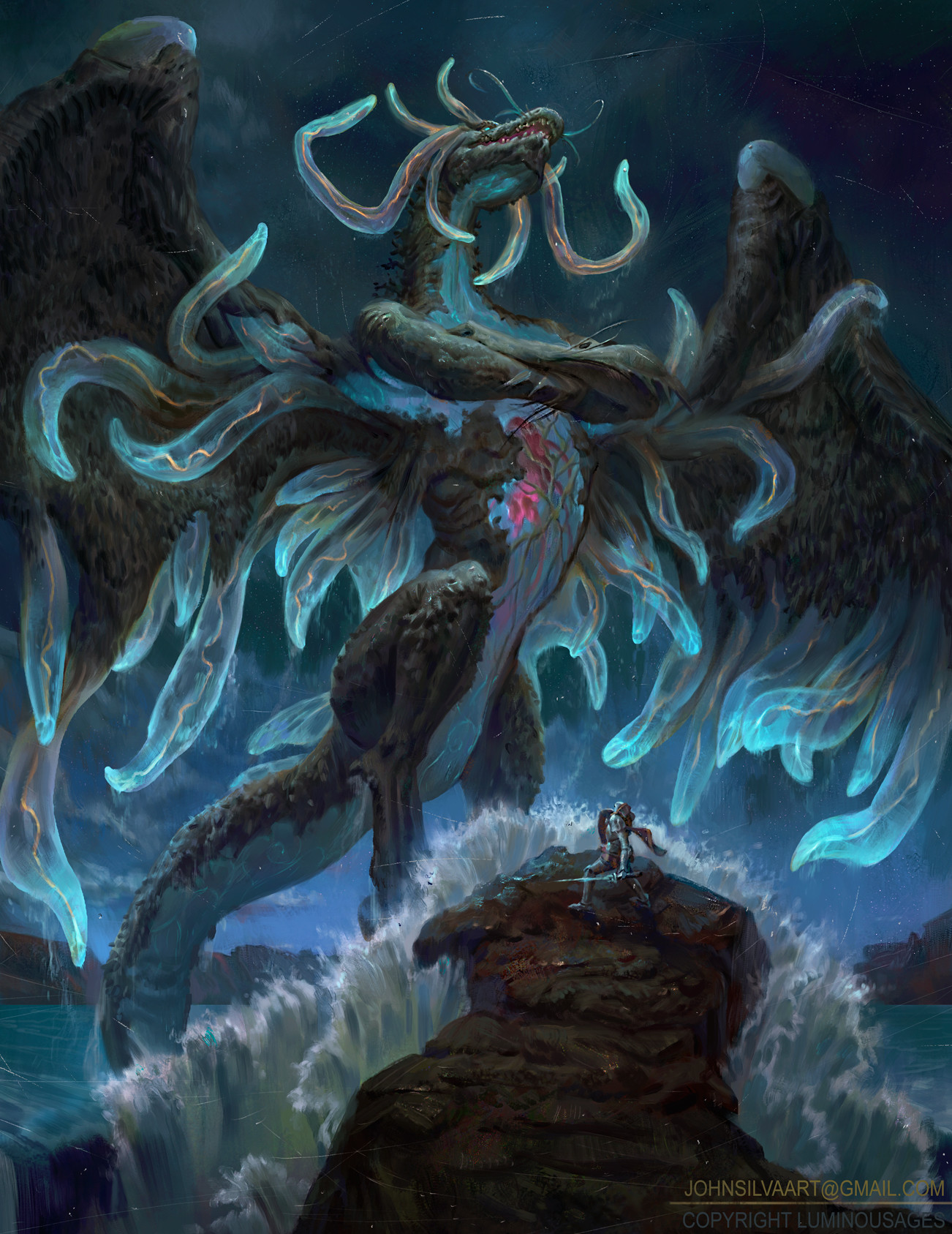
Dragon Captuveri – Luminous Ages by John Silva

“Everyone warns ya to look to the skies when searching for dragons. No one ever mentions the ones that come from below.”
– An old townsfolk’s warning.

Well it wouldn’t be Dungeons and Dragons without some Dragons populating the monster compendiums would it? Before diving into the Abyssal Dragons, a few guidelines on how this post is going to go as Dragons in D&D are a special kind of monster. Most “true” dragons have multiple statblocks depending on the stage of their life they’re at when encountered. This starts at the lowest with Wyrmlings, progressing to Young Dragons, then Adult Dragons, and after that to Ancient Dragons, and then to the oldest level called Greatwyrms. Wyrmlings sit in the lower CRs (3-5), Young Dragons just above that (6-9), Adults are the first real challenge and a suitable boss monster (13-17), Ancients are campaign ending challenges (19-22), and Greatwyrms are for only the highest echelon of combat encounters (25+). As dragons age and grow in power, they gain new abilities and their prior ones enhance, growing more dangerous the larger and older they get. To prevent this blogpost from being a hour long read, i will be marking * to display which level of dragon has which feature using the key below:

  • * – Wyrmlings
  • ** – Young
  • *** – Adult/Ancient
  • **** – Greatwyrm

Not perfect, but it helps a bit. Now, without further delay, lets get to it!

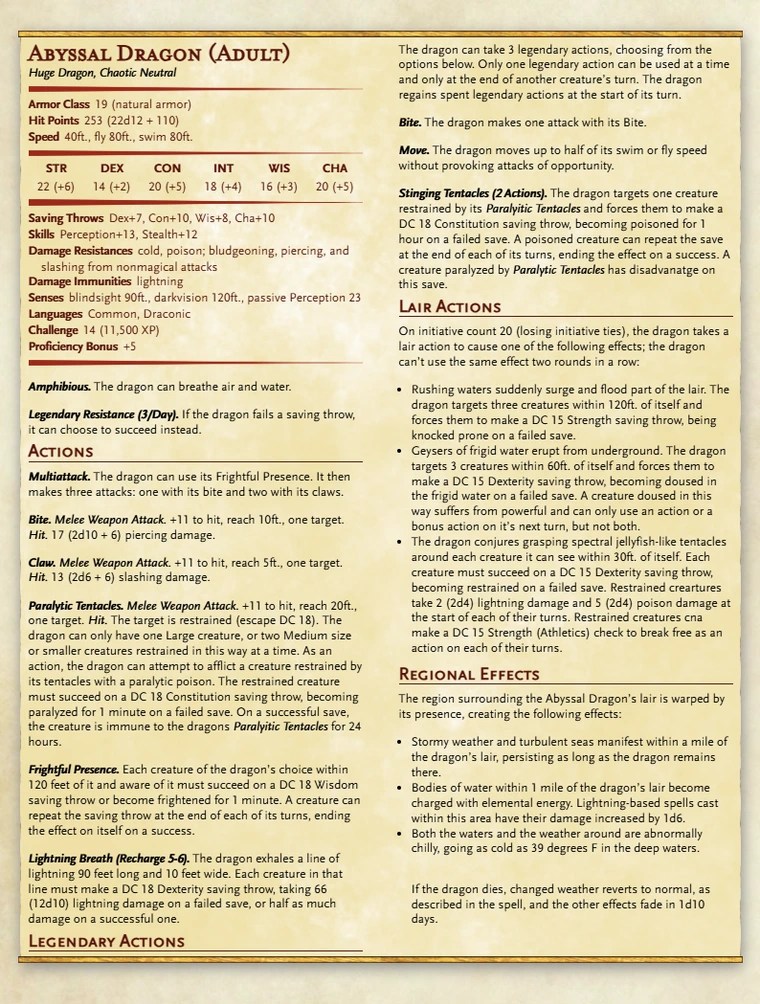
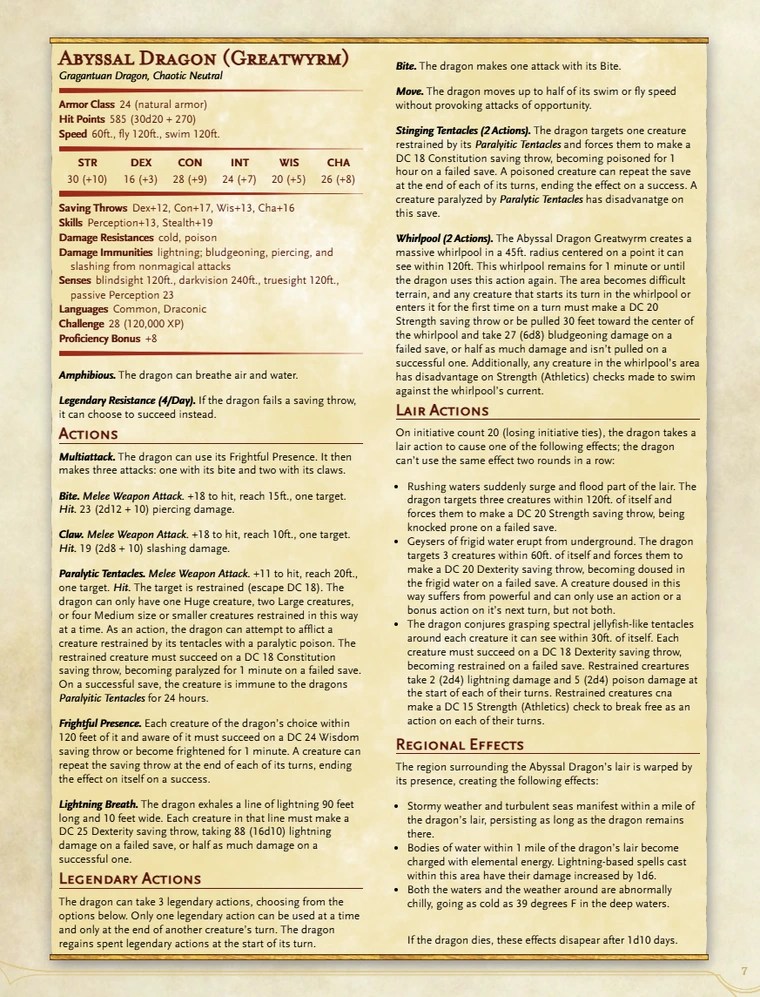
Abyssal Dragons: The Overview

The first of the mighty Dragon Compendium, Abyssal Dragons make their nests and lairs deep under the ocean’s surface, using their aquatic prowess to hunt and defend their homes with terrifying prowess. While not one of the “Big Three” dragon types (Chromatic (Evil), Gemstone (Neutral), or Metallic (Good)), Abyssal Dragons are temperamental and somewhat aloof as a result of their isolationist natures. While residing deep underwater, these dragons are just as quick in the air as they are underwater so they have no qualms leaving the safety of the ocean floor and soaring into the sky if provoked or needing to make a hasty exit. As apex predators of the seas, Abyssal Dragons often feed on other massive sea creatures such as whales, Storm Giants, or even Krakens once strong enough.

Stats and Abilities:

While vastly different in strength between all the different ages, each of the Abyssal Dragon’s statblocks all point to it being a bruiser with its high STR and CON, yet unlike a decent chunk of bruiser type monsters, all of the Abyssal Dragon’s mental stats are above board and can lead to diplomatic solutions. Afterall, if there is one thing dragons love more than fighting, its tributes and adoration. Even if its secluded from the rest of the world and is a bit more “savage” than its other kin, a dragon is still a dragon.

Dragons scarcely have weaknesses that are obvious in a statblock. More often than not, a dragon’s weakness is something in its personality. It’s vain and easily snaps when its character is questioned, they love gold and are easily swayed with monetary incentive, they were previously wounded severely in earlier events of the story so they avoid combat, etc. The weakest section in the statblock is the dragons still good DEX and WIS, as it is more often not relying on brute force due to its “feral” nature (when compared to other true dragons), yet thanks to its proficiency in those saving throws, along side CON and CHA, every level of this dragon is not going down without a fight or some good diplomacy (and probably groveling).

  • Stats and Skills: As mentioned, having proficiency in four saving throws allows the dragon to act in a much more aggressive and sure manner during combat, not fearing offensive or utility spells. With a decent AC and fair hit points (especially in the weaker levels) it does fairly well in close quarters, but as a Wyrmling, it can be easily overwhelmed. Proficient in both Perception and Stealth allow the Abyssal Dragon to be somewhat of an ambusher, though even with that bonus because of its lower DEX/WIS scores it would still focus more on brute force rather than hit and run tactics in a fight.
  • Resistances, immunities, and Senses: Being resistant to lightning initially and later gaining more while shifting to a lightning immunity, the older it gets the more resilient the dragon’s hide gets. In the upper tiers, being immune to lightning and resistant to cold, poison, and all nonmagical weapon attacks, the Adults, Ancients, and Greatwyrms have little to fear aside from the other CR 15-20+ creatures of the sea. Capable of taking on entire ships with little more than scratches unless said ship is specifically designed to fight them, in which they can slink away deep under the surface. Intelligent to boot, these dragons know when to abandon a fight or when to stop toying with their prey. Not having condition immunities such as frightened, poisoned, or charmed seems… odd? Already a revision that should happen, other Greatwyrms are immune to these conditions and I don’t think the Abyssal Dragons should be an exception to this.

Passive Abilities and Actions:

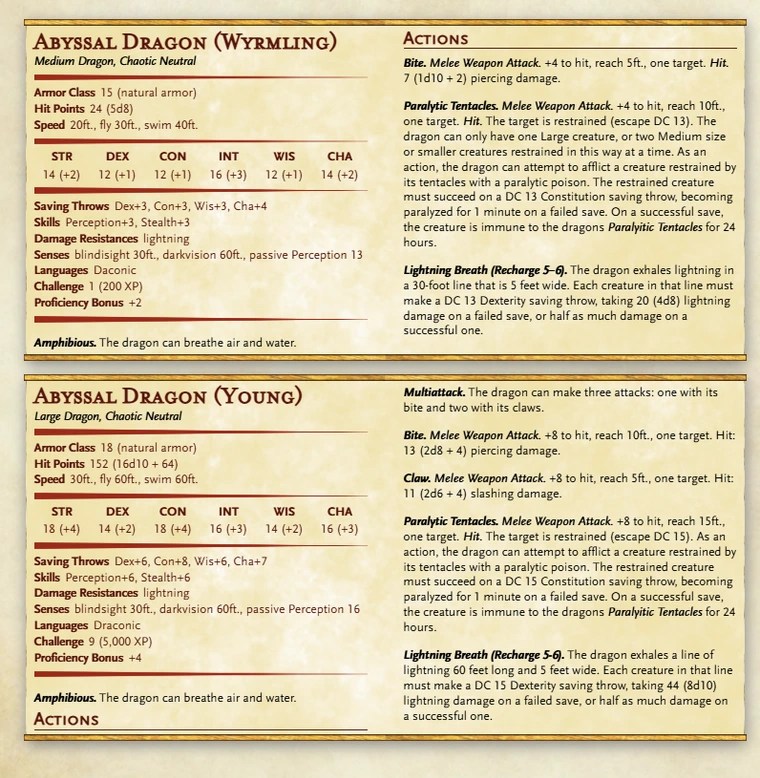
Amphibious. The dragon can breathe air and water.*

It’s kind of important to have an aquatic undersea dragon be able to breathe while underwater, and with its equally fast flying speed, there is no reason it wouldn’t have to also be able to breathe air.

Bite. Melee Weapon Attack. [ ] to hit, reach [ ]ft., one target. Hit. [ ] ([]) piercing damage.*

Obviously a Wyrmling’s bite isn’t going to hit nearly as hard as a Greatwyrms, so the to hit bonus, reach, and damage will all vary between the levels. Every dragon has a face full of sharp and pointy teeth, why not use it?

Paralytic Tentacles. Melee Weapon Attack. [ ] to hit, reach [ ]., one target. Hit. The target is restrained (escape DC [ ]). The dragon can only have one Large creature, or two Medium size or smaller creatures restrained in this way at a time.

As an action, the dragon can attempt to afflict a creature restrained by its tentacles with a paralytic poison. The restrained creature must succeed on a DC [ ] Constitution saving throw, becoming paralyzed for 1 minute on a failed save. On a successful save, the creature is immune to the dragons Paralytic Tentacles for 24 hours.*

The big gimmick of the Abyssal Dragon line, using the myriad of jellyfish-like tentacles across its body to grab, restrain, and paralyze their targets. As they grow larger, the difficult of escaping grows, the range they can attack at increases, and with Greatwyrms the size of creatures they can restrain also increases. This is an incredibly dangerous ability with how debilitating the paralyzed condition in D&D is (Incapacitated (cannot take actions or bonus actions, cannot speak, or concentrate on spells), movement drops to 0ft., automatically fail on STR and DEX saving throws, all attack rolls roll at advantage, and creatures that hit a paralyzed creature within 5ft. automatically critically hit), that is why once a creature saves, it is immune to the effects of Paralytic Tentacles for 24 hours. Otherwise, a whole party is gonna go down paralyzed and slowly get crit to death by the dragon, and that’s no fun.

Lightning Breath (Recharge 5–6). The dragon exhales lightning in a [ ]-foot line that is 5 feet wide. Each creature in that line must make a DC [ ] Dexterity saving throw, taking [ ] ([ ]) lightning damage on a failed save, or half as much damage on a successful one.*

It wouldn’t be a dragon statblock if it didn’t have a breath weapon now would it? With the main focus on Abyssal Dragons being their jellyfish tentacles and their tendency to reside in stormy seas, lightning felt like the best selection for a breath weapon attack. While poison might have also worked since that’s what a jellyfish toxin is, in fantasy settings it feels more appropriate that a jellyfish’s sting “shocks” you instead and thus would deal lightning damage

Multiattack. The dragon can make three attacks: one with its bite and two with its claws.**

Aside from the Wyrmling, every other level of the Abyssal Dragon gains the Multiattack feature as it is a necessity to compete with adventuring parties the higher and higher level you go.

Claw. Melee Weapon Attack. [ ] to hit, reach [ ]ft., one target. Hit: [ ] ([ ]) slashing damage.**

Similar to bite, if you have razor sharp claws, why not use them? Dragons are prideful creatures and while they could spend the entire combat flying and raining fire, acid, poison, or whatever else from their maws, its more fun to strike your enemies with your own hands, at least if you’re a building sized lizard with swords for claws.

Legendary Resistance ([ ] /Day). If the dragon fails a saving throw, it can choose to succeed instead.***

Surprise surprise, the all powerful dragon is a legendary creature in its older age. Like the last legendary creature mentioned a couple weeks ago, the celestial Absolution, Abyssal Dragons have such good stats and saving throws that if they fail one, they’re going to just expend a usage of one of their Legendary Resistances to pass.

Frightful Presence. Each creature of the dragon’s choice within 120 feet of it and aware of it must succeed on a DC [ ] Wisdom saving throw or become frightened for 1 minute. A creature can repeat the saving throw at the end of each of its turns, ending the effect on itself on a success.***

Frightful Presence is a staple ability for any dragon once they reach adulthood and just about every “true dragon” has this feature (though for some reason, the Greatwyrms form Fizban’s Treasury of Dragons doesn’t). This is the first thing a dragon will do in combat as the frightened condition prevents creatures from approaching any closer than they already are and they suffer disadvantage on ability checks and attack rolls while the source of the frightened condition is within line-of-sight. For this reason, an Abyssal Dragon’s main arena is likely to be a spacious cavern with minimal hiding spots, thus its always within line of sight. Additionally, this arena style allows the dragon’s Lightning Breath to meet its maximum range without being blocked by stray pillars or walls.

Legendary Actions: The dragon can take 3 legendary actions, choosing from the options below. Only one legendary action can be used at a time and only at the end of another creature’s turn. The dragon regains spent legendary actions at the start of its turn.***

Just like Absolution, Abyssal Dragons gain three Legendary Actions per round they can use after another creatures turn. The Abyssal Dragon gets the following Legendary Actions:


Bite. The dragon makes one attack with its Bite.
***

A standard Legendary Action. No notes.

Move. The dragon moves up to half of its swim or fly speed without provoking attacks of opportunity.***

Most other dragons have their Wing Attack that deals damage to everything around them and then allows them to move freely, but with the design and aesthetic of the Abyssal Dragons I just don’t get that. While not super dexterous, I feel as though the dragon has no difficulty to slip out without provoking attacks of opportunity.

Stinging Tentacles (2 Actions). The dragon targets one creature restrained by its Paralytic Tentacles and forces them to make a DC 18 Constitution saving throw, becoming poisoned for 1 hour on a failed save.

A poisoned creature can repeat the save at the end of each of its turns, ending the effect on a success. A creature paralyzed by Paralytic Tentacles has disadvantage on this save.***

So remember that brief blurb earlier about how when a jellyfish “shocks” you its actually a toxin? Well the Abyssal Dragon can do something similar. The poisoned condition in D&D is more of a nuisance than a threatening debilitation like the paralyzed condition. It’s still bad as it forces disadvantage on ability checks and attack rolls, and if you have a low CON, that hour long timer could lead to multiple combats suffering under its effects (if the DM is mean enough to throw more combat encounters after an Adult Dragon that is). This can technically be a nasty feature as if the dragon successfully grapples a creature, it can wait until the end of the next turn in the initiative and immediately try and poison the creature it restrained, but thankfully poisoned creatures can repeat the save at the end of each of their turns, so chances are they will get out of it in time.

Whirlpool (2 Actions). The Abyssal Dragon Greatwyrm creates a massive whirlpool in a 45ft. radius centered on a point it can see within 120ft. This whirlpool remains for 1 minute or until the dragon uses this action again.

The area becomes difficult terrain, and any creature that starts its turn in the whirlpool or enters it for the first time on a turn must make a DC 20 Strength saving throw or be pulled 30 feet toward the center of the whirlpool and take 27 (6d8) bludgeoning damage on a failed save, or half as much damage and isn’t pulled on a successful one. Additionally, any creature in the whirlpool’s area has disadvantage on Strength (Athletics) checks made to swim against the whirlpool’s current.****

This legendary action is exclusive to the Greatwyrm statblock and is definitely something that needs some tweaking. Currently, it’s best used in a strictly underwater location so the open cavern idea from earlier doesn’t make this too applicable unless the whirlpool actively replaces terrain. So for example, it creates a 45ft. radius and any creatures in that area fall into a turbulent whirlpool, suffering the effects as normal. Another revision that might need to be made is that a 45ft. radius is massive AoE and unless you’re in an absolutely gargantuan combat map, there is nowhere this won’t cover. Limiting the AoE down to even 30ft. or 25ft would drastically help balance this so its not guaranteed to immediately get everybody in the whirlpool.

Lair Actions: On initiative count 20 (losing initiative ties), the dragon takes a lair action to cause one of the following effects; the dragon can’t use the same effect two rounds in a row: ***

  • The dragon conjures grasping spectral jellyfish-like tentacles around each creature it can see within 30ft. of itself. Each creature must succeed on a DC 18 Dexterity saving throw, becoming restrained on a failed save. Restrained creatures take 2 (1d4) lightning damage and 5 (2d4) poison damage at the start of each of their turns. Restrained creatures can make a DC 15 Strength (Athletics) check to break free as an action on each of their turns.
  • Rushing waters suddenly surge and flood part of the lair. The dragon targets three creatures within 120ft. of itself and forces them to make a DC 18 Strength saving throw, being knocked prone on a failed save.
  • Geysers of frigid water erupt from underground. The dragon targets 3 creatures within 60ft. of itself and forces them to make a DC 18 Dexterity saving throw, becoming doused in the frigid water on a failed save. A creature doused in this way suffers from powerful and can only use an action or a bonus action on it’s next turn, but not both.

Sound the victory bells, we got the first our first monster with Lair Actions! Unsurprisingly, creatures of world famous renown and myth have entire dungeons and areas they’ve claimed which aid them with bonuses and additional actions/effects. More often than not, these effects originate from the environment itself and not the creature who owns the lair, however they still choose the effect. Lair Actions happen on initiative count 20 (or more often, top of initiative) and the creature who owns the lair can choose one of the three actions each turn, rarely able to use the same one multiple rounds in a row. Nothing across these abilities is meant to be nearly as detrimental as the main features of the Abyss Dragon, but they still need to support the dragon in some way so that’s why there’s no “big damage” option and all are geared for support usage.

Regional Effects: The region surrounding the Abyssal Dragon’s lair is warped by its presence, creating the following effects:

  • Both the waters and the weather around are abnormally chilly, going as cold as 39 degrees F in the deep waters.
  • Stormy weather and turbulent seas manifest within a mile of the dragon’s lair, doubling the amount of time it takes to travel by sea within the area.
  • Bodies of water within 1 mile of the dragon’s lair become charged with elemental energy. Lightning-based spells cast within this area have their damage increased by 1d6.
  • If the dragon dies, changed weather reverts to normal, as described in the spell, and the other effects fade in 1d10 days.

And with Lair Actions come another perk, after all if you’re some master of the area, powerful enough to literally carve a place out for yourself and bend the realm to your whim, why not right? Regional Effects are specifically for high end monsters that have a lair, but not every creature that has a lair gets Regional Effects. Usually it’s only if said creature has the power to warp the environment due to its sheer existence, and dragons fit that mold to the letter. No Regional Effect should have a tremendous impact on the party or be particularly threatening/dangerous, but they should at least have an impact and change how the party approaches either just passing through the lair’s area, or marching up to the front door.

Revisions:

All in all, I’m much happier with this statblock than with a couple of the others in the prior weeks as despite their majesty and roll in a story, dragons are actually relatively simple creatures to formulate a statblock for. The biggest change I have is for the Greatwyrm’s Whirlpool Legendary Action as with the current wording, it seems only applicable for underwater application and I would like it to be applicable everywhere it can be. Whether this is creating more of a tornado as it fills a cylindrical area or it replaces the ground underneath, I have yet to decide. Regardless, I am much happier with this after some editing before making this post as the initial statblock was a bit of a mess, but hey, you live and you learn right?

Smaugust: Pale by Trollfeetwalker

Well that wraps up this week’s D&D Homebrew Monster of the Week, stay tuned next time when we discuss a golden elemental of myth! In regards to other content and the D&D Intro to the character sheet, they are still a WIP. I do have other plans outside the D&D sphere, but it will not be as consistent as this content currently, so please be patient and thank you again for any and all support!

D&D Homebrew Monster of the Week: The Air Control Unit

Analyzing Artifact by BAGOUM

“Neat lookin’ statue! You think it might be worth somethin’?”

“No idea. Hey! It’s movin’!”

“Oh relax would ya. It’s just a sphere with some fancy fences.”

“I guess you’re right. After all, what’s the worst it cou–”

– Final words of two thieves.

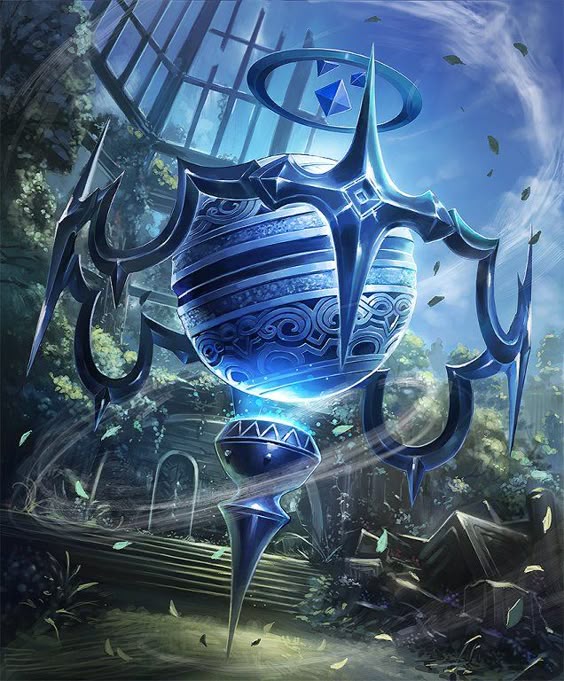
Air Control Unit: The Overview

Coming in as the first creature from the Construct Compendium, the Air Control Unit (or ACU for short) is a low-mid level enemy clocking in at CR 6 and is designed to be a defender rather than an aggressor. Using the long fence-like structure around its body to both aid in deflecting attacks from its core as well as rapidly spinning to create powerful air currents, the ACU is a master of manipulating the air around itself to both shred opponents or send them flying with powerful gusts of wind. Despite it’s ornate design, the ACU can certainly take a hit, although it like most creatures prefers to keep distance and harass opposition from a distance with the fact it has that option to. Unlike most constructs, the ACU is quite intelligent and while will follow orders from its creator/master, it has the aptitude to adjust its fighting style if its opening round doesn’t meet expectations. Additionally, while unable to speak, it still can understand the Common language and be spoken to, leading to some instances being resolved diplomatically.

Stats and Abilities:

Agile, intelligent, and hearty to boot, the ACU is a creature with no one discernable weakness, making it a difficult encounter for even more experienced adventurers.

The two biggest weakness I gather from this statblock is that it struggles in close quarters fighting and doesn’t have a way to resist being shunted to a different plane of existence from the likes of the Banishment or Plane Shift spells (both requiring CHA saves). Relying on its high DEX and INT to evade and blast foes with spells, the ACU has no problems taking a hit from a stray attack or two, but will seek to reposition itself if cornered as while it can preform decently in a head-to-head fight for a bit, it will be outclassed by something designed and built to be a brute fighter.

  • Stats and Skills: The ACU focuses on utilizing its ranged attacks and defending with its solid AC and Hit Point pool. Being able to quickly float about also aids them greatly as they can out pace most adventurers with relative ease. While not having any skill proficiencies, the ACU does get proficiency in STR and DEX saves, allowing it to resist attempts to grapple and restrain it as well as most offensive spells. Most other offensive spells that don'[t rely on a DEX save rely on a CON save instead, but often deal either Necrotic or Poison damage, and the latter being both more common and a damage type the ACU is immune to.
  • Resistances, Immunities, and Senses: The ACU has a wide array of defenses, being outright immune to poison and resistant to lighting, thunder, and nonmagical weapon damage types. Thunder might be a bit of a stretch as thunder damage in D&D isn’t directly related to an instance of thunder, but more so anything relating to sonic waves. In a way it could be described as a more visceral from of bludgeoning damage as spells like Shatter violently destroy anything within the cube and deal double damage to objects or Constructs. Regardless, with the ACUs constructed design, lighting and wind themed capabilities, and being magical in nature, I’m content with the remaining immunities and resistances. Now, due to being a Construct and artificial in design, the ACU gets a good amount of conditions it’s immune to as well: Charmed, Exhaustion, Frightened, , Paralyzed, Petrified, and Poisoned. The former three are all due to the ACU’s decent mental scores and the latter three are due to being a construct as most Construct type creatures are immune to these conditions. One final one that should be added is the Prone condition as most creatures that hover in the air are immune to being knocked prone. Finally, unlike most faceless creatures that have blindsight, the ACU has darkvision. I always imagined the ACU had a little eye at the “front” of the fence structure around itself that it could see through. This means while most constructs don’t care whether its night or day, the ACU does its best work in the night or in dark areas, making it ideal to counter would be thieves who also prefer to skulk in the shadows.

Passive Abilities and Actions:

Constructed Nature. The ACU doesn’t require air, food, drink, or sleep.

A staple ability that is in every construct as far as I can remember. More flavor than actual combat utility, but hey if a party escapes and needs to stop and lick their wounds, a construct won’t care too much and will press on while the heroes rest unless it is heavily damaged and intelligent enough to no it doesn’t stand a hance, or if it is guarding a specific place.

Eye of the Storm. All ranged attacks targeting the ACU or any other creature within 15ft. of the ACU are made at disadvantage. Each time the ACU takes damage, it must make a concentration check (this does not prevent the ACU from casting concentration spells) to maintain this effect.

On a failed concentration check, this ability ceases to function until the end of the ACU’s next turn.

This is one of the ACU’s staple features, a defensive aura that’s useful not only for itself but for any possible allies nearby. This could pair nicely if the ACU stays at a range and has fellow ranged combatants paired with it, but this could also be a double-edged sword. Imagine if the ACU does have a ranged combatant that has slipped out of the thick of the fray and is trying to take a shot a creature locked in melee combat with the ACU. Sadly it will be rolling any attack towards the creature next to the ACU at disadvantage because ALL ranged attacks have disadvantage when targeting the ACU or anything within 15ft. of it, not just enemies of the ACU. Thankfully players can brute force their way in and a melee bruiser like a Barbarian or Fighter can help nullify this ability for a round allowing a Ranger or Wizard (ranged spell attacks would also be effected by Eye of the Storm) to get some good hits in before the ability resets.

False Apperence. While motionless and out of combat, the ACU looks like an ornate piece of machinery.

As mentioned in the beginning, I envisioned the ACU to be a guardian and focusing on defending an area rather than prowling the realms killing randomly. Additionally, various constructs (i.e. the Animated Armor) get this feature to blend in and help their usually clunky bodies get a free surprise round on inexperienced adventurers. The ACU can maximize this with a high INT stat, picking exactly when is the best opportunity to strike and not “intruders have reached X threshold, now attack.”

Immutable Form. The ACU is immune to any spell or effect that would alter its form.

Another staple feature for Constructs around the globe! This feature prevents being Polymorphed into something weak and helpless and being tossed aside for an hour, allowing the ACU to continue following its directives.

Innate Spellcasting. The ACU’s spellcasting ability is Intelligence (spell save DC 14, +6 to hit with spell attacks). The ACU can innately cast the following spells, requiring no material components:

  • At will: dust devil, ray of frost (5th level), thunderwave
  • 3/day each: ice storm, lightning bolt, thunder step
  • 1/day each: storm sphere, invisibility

Just like Absolution in last weeks post the ACU has some spells hidden up its metaphorical sleeves. Unlike Absolution, the ACU instead is what is considered an innate spellcaster, meaning that instead of following the normal spellcaster rules of having spell slots that can be used to cast spells of the same level or boosting spells of a lower level (i.e. casting Fireball with a 4th level slot instead of a 3rd level slot to boost the damage), innate spellcasters have a specific spell list and can cast certain spells only a certain amount of times before needing to rest, typically having spells it cast At Will and without limit, spells it can cast 3 times per day, and spells it can cast only once per day.

At Will:
Dust Devil– Concentration spell that summons a small cyclone within a 5ft. cube (1 space). Each creature that ends a turn within 5ft. of the cyclone has to make a STR save, taking damage and being shoved away from the dust devil. If this was it, Dust Devil would be an alright spell, but on follow up turns as a bonus action you can move the cyclone 30ft. in any direction as a bonus action and additionally, if the cyclone moves over loose debris (dirt, gravel, sand) it additionally creates a 10ft. radius of heavily obscuring dust centered on the cyclone. This is a great opening move that the ACU loses nothing by immediately firing off at the start of combat, and because it can cast this usually 2nd level spell at will, it has no issues dropping concentration whenever it sees fit.
Ray of Frost– A cantrip that can always be casted however many times as the caster wants, no matter if they are an innate spellcaster or standard spell caster. Like many damaging cantrips, Ray of Frost is boosted as the caster gains levels and as the ACU is roughly on par with a 10th level spellcaster, it wouldn’t quite hit the threshold of the 11th level bump Ray of Frost would get so it remains a 2d8 damage cantrip, which isn’t too bad as a ranged option.
Thunderwave– A decent “Get off me!” tool that creates a barrier of thunderous energy in a 15ft cube centered on the ACU. Everything inside has to make a CON save, taking 2d8 damage and being knocked back on a failed save. Requiring a CON save does little to help this spell and with such a short range and minimal damage, it really is only useful as a last ditch attempt to create space to get away.

3/Day:
Ice Storm– A conjured storm of hail appears and fills a 20ft. radius, raining down in 40ft. column. Each creature in the area has to make a DEX save to avoid both 2d10 bludgeoning and 4d6 cold damage as hail rains down. Additionally until the end of the caster’s next turn, the area is considered difficult terrain due to a layer of ice that now covers the ground. Good offensive capabilities, great area control, good spell all around. No notes.
Lightning Bolt– Ahh a classic. The often overlooked sibling of the infamous Fireball spell. Sharing Fireballs DEX save requirement and 8d6 of damage (lightning instead of fire now, surprise surprise), Lightning Bolt’s area of effect is now an 100ft. line instead of Fireball’s 20ft. radius. So it’s not as easy to clump together a group of adventurers to maximize usage, but with its high movement speed the ACU can quickly reposition to get a good angle.
Thunder Step– The ACU’s big teleportation option, allowing the caster to quickly teleport up to 90ft. away. Additionally, each creature within 10ft. of the spot you left before teleporting has to make a CON save, taking 3d10 thunder damage on a failed save as a sonic boom erupts from the point. The ACU can also teleport one creature of it’s size (Large or smaller) for free as well. Decent damage though the CON save leaves a lot to be desired. Such is the way with most “thunder” themed spells, though its more of an escape tool rather than a damage dealer anyways.

1/Day:
Storm Sphere– Another concentration spell, but this one is a much better offensive spell than Dust Devil. Covering a 20ft radius sphere that imposes difficult terrain and deals 2d6 bludgeoning damage to everything inside on a failed STR each turn. The real juice of this spell comes from the bonus action ability where you can target one creature within 60ft. of the center of the sphere and hit them with a stray lightning bolt, rolling a ranged weapon attack to hit them and dealing 4d6 lightning damage.
Invisibility– The ACU’s ultimate “Get out of Jail Free,” card. Lasting for a full hour with the only caveat being it can’t cast spells, make attack rolls, or deal damage. Another concentration spell, but this is used solely if the ACU needs to bolt or if it feels like it can end the fight by just quickly repositioning and it doesn’t have Storm Spere up and is out of Thunder Step uses. All in all, a good solid spell list.

Wind Manipulation. The ACU is always under one of the 2 following effects once in combat. It can choose which effect it is under and change the effect as a bonus action.

Alright so we got quite the beefy ability here so we are gonna break it down and talk about the two options respectively: Scatter and Shred.

Scatter: Creatures within a 45ft. radius centered on the ACU are buffeted by strong winds. If a creature starts its turn or moves into the radius, it must make a DC 15 Strength saving throw, being pushed back 10ft. on a failed save. While the ACU is under the effects of this wind, all tiles within the area are considered difficult terrain

A massive wall for any melee oriented character as closing the distance will first start with a decent STR save (will probably revised to an Athletics check instead) and forces you to move through difficult terrain the entire time. Now as a guardian, the ACU is not inclined to move from what its defending if it doesn’t have to and will initiate the fight with this ability unless it is already in the middle of the fray when it springs the ambush. Now we have talked about Difficult Terrain a lot, but what does that entail? The short of it: halved movement speed. For every 1ft. of movement you need to spend 2 instead, so to move 5ft. (from 1 tile to another) it costs 10ft. A massive radius of difficult terrain (which thankfully doesn’t stack with the ACU’s other spells which also cause difficult terrain) means its going to be a challenge to approach the thing, much less get close enough to hit it, and all the while the ACU can keep pace by shifting about with its quick movement speed, pelting those who approach it with Rays of Frost from a safe distance.

Shred: The winds around the ACU suddenly intensify, tearing at anything in their way. If a creature starts its turn or moves within the 25ft. radius centered on the ACU, it must make a DC 15 Dexterity saving throw, taking 20 (4d8) slashing damage on a failed save or half as much on a successful save.

Creatures that fail the save by 5 or more are also blinded until they either leave the radius or until the end of their next turn (assuming they don’t fail the save again).

So what happens if the ACU kicks off combat with enemies already close by or if something does push through the gale force winds of Scatter? Well the winds intensify into a razor-sharp wall designed to shred whatever is nearby to ribbons. In hindsight, this ability can be tweaked as this does more damage than its standard attack action. A monster we can look to is the Gearkeeper Construct from Explorer’s Guide to Wildemount which has a similar feature. “Whirling Blades. Any creature that starts its turn within 5 feet of the gearkeeper takes 4 (1d8) slashing damage.” I think this is a bit more nicely flavored, but if the required DEX save were to stay, reducing the damage from 4d8 to say 2d10/2d12 would be fine. That gives it the oomph to be a worry for martial characters yet not penalizing enough to immediately shred through a frontliner’s hit points in a couple rounds. The ACU shifts into this form once it feels as though Scatter either isn’t useful against whatever is rushing it down, or once it feels like it can push the offensive against a creature, whittling down their hit points little by little.

Gust Blade. Melee Spell Attack. +6 to hit reach 10ft., one target. Hit. 14 (4d6) slashing damage.

One of the only two standard actions the ACU has in its kit, Gust Blade functions as the ACU’s one melee feature, allowing it to deal with attackers that are threatening it even after the effects of either Wind Manipulation option. While dealing a pretty solid chunk of damage, this is an all or nothing and the only attack it can make in a turn, so it’s not too problematic for the ACU to have this. this also pairs nicely with the bonus action capabilities from either Dust Devil or Storm Sphere

Wind Blast (Recharge 4-6). The ACU creates a funnel of wind and launches it forward. Each creature in a 30ft. cone originating from the ACU must make a DC 15 Strength saving throw, taking 27 (6d8) slashing damage and being pushed back 20ft. on a failed save or half as much on a successful one.

Depending on how combat starts with the ACU, it could immediately start off the ambush and firing this off if the intruders are nicely clumped together. A standard big damage recharging option. A rather staple ability and an option to quickly threaten everybody in the party if they place recklessly. The knockback also allows the ACU to help reset itself if if it is being threatened and doesn’t have any more uses of Thunder Step, though this would be a niche case as it would likely be better to simply switch to Scatter and try to escape that way.

Revisions:

All in all, I’m quite happy with this creature. The ACU is designed to be a low level mini boss of sorts, nothing too strong but definitely a step up from most creatures a party would have faced up until this point. Thanks to it’s defensive nature, the ACU shouldn’t pursue wounded parties unless said party is actively running away with what the ACU is protecting. Good defensive bulk with its hit points, AC and Wind Manipulation feature, great offensive capabilities between its spells, and lastly great movement and area denial leaves the ACU a near perfect all rounder monster. the only major adjustment i would make is changing Scatter from a STR save to an Athletics check, allowing for martials to close the distance slightly easier.

Mechanical Dragon: Dragoborne Travis Anderson

This might be my favorite monster up until this point, and words cannot express how happy I am with it. I love monsters that can function in every situation when compared to ones who do one thing the best, and the ACU is perfectly suited to be dropped anywhere. Need an ancient artifact protected? Depending on the level, drop a few of these down. Need a Person of Interest defended and watched, have one of these follow them about and idle in their garden.

Monster of the Week: Absolution

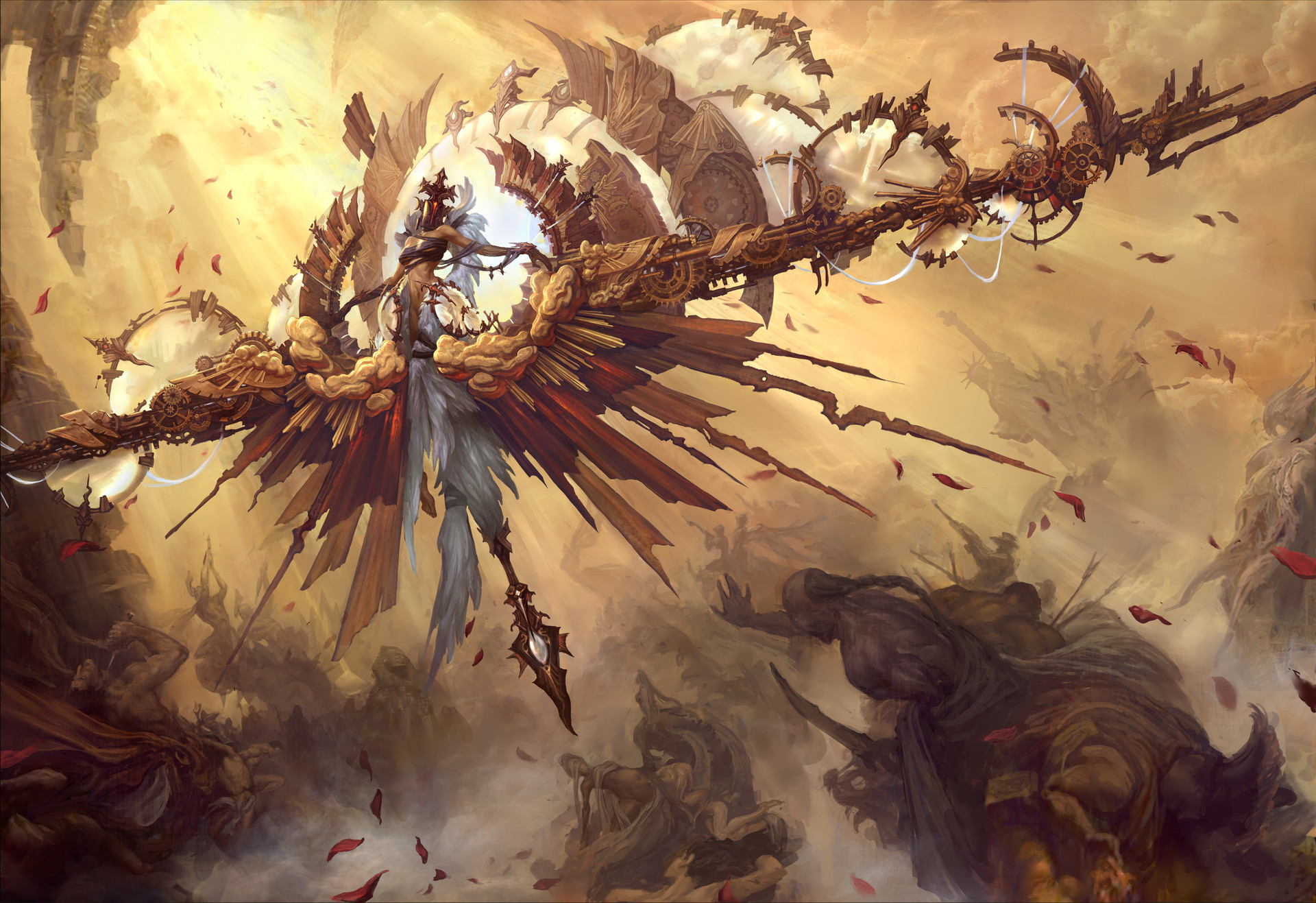
God of Time by Shiyao Jiang

REPENT! Your time is nigh! Justice shall be unleashed upon your wretched lands! Purified with divine retribution and the blood of the sinners, this land shall be reborn the same laws your kin abide by: The Laws of War!”

– Absolution’s Decree.

Absolution: The Overview

As the first member of the Celestial Compendium, Absolution is by no means a push over. Weighing in at a hefty Challenge Rating of 16 (on par with with many Adult Dragons), Absolution is a force to be reckoned with and while might appear in earlier sections of a story, will only be found in combat towards the later levels of the campaign. A zealous and powerful force of nature with an obsession to smite the hedonistic sinners, fiends, and unholy creatures of the realm in blazes of divine light without remorse. Loaded with powerful spells, bits of machinery orbiting around itself to bludgeon nearby enemies, and surrounded by an aura that weakens the unholy creatures that have earned Absolution’s ire.

Taking the appearance of a vaguely humanoid person from the waist up, Absolution wears ragged robes around their chest with an intimidating yet ornate head piece. From roughly the waist down is where Absolution shifts to something foreign and vaguely eldritch. Comprised of metal wings with rows of sharp edges, gears, feathered wings, and ornate motifs spread across their body in golds and reds. Absolution is not a celestial to bestow kindness or hope: Their an agent of unmaking, using their divine strength to vaporize and wipe away stains across the land. Due to their over-the-top methods and mannerisms, rarely are they permitted by their overseers (often a literal god or Empyrean) to actually interact with the planes directly, much to their annoyance. This doesn’t stop them from commanding other celestials under them from acting in their name, though in more trying times Absolution will descend from the heavens and revel in the destruction of the unholy.

Stats and Abilities:

Absolution is a powerhouse and has little weakness in their abilities, relying on destructive spells and abilities with some support for any allies or innocent bystanders that happen to be in the fray of Absolution’s war path.

Starting from the top, as a Lawful Good creature, Absolution does want to do good and just by others. Yet, their perspective is slightly twisted and skewed as they believe peace can only be obtained through the absolute (heh) eradication of Aberrations, Fiends, and the Undead. Poison may seem like a weird damage to be resistant to and in hindsight I agree, yet a lot of creatures throughout 5th edition are resistant or flat out immune to the poison damage type, though i do not believe looking back that Absolution should be resistant towards poison damage as no other Celestial from the Monster Manual is either. This would also remove the immunity to the poisoned condition. Utilizing truesight, Absolution is also able to see through illusions and invisible creatures, making it that much harder to get the drop on them or trick them in combat.

Stats and Skills: Absolution first and foremost is focused on hitting hard and leaving sparing none of their combatants. With their lowest stat being a 16 in DEX, Absolution is strong in almost every regard, but excels in their mental stats. 20 INT, 24 WIS, and 20 CHA make Absolution a spellcaster’s nightmare already, but paired with advantage on all spell saves this makes Absolution almost impossible to deal with spells such as the big damage dealers like Fireball, Blight, or Lightningbolt. Even spells to try and remove/hinder Absolution such as Banishment or Planeshift would be difficult to pull off leaving Absolution a force that must be tackled almost exclusively with brute force. Being proficient with both Insight and Perception checks, Absolution will see through any deception or trick like a glass pane and see any attempt to sneak up or away with minimal issue. Ever vigilant, ever ready to smite.

Passive Abilities and Actions:

Angelic Aura: Any Aberration, Fiend, or Undead within 30ft. of Absolution that is not of the same alignment suffers disadvantage on saving throws from spells or other magical effects.

This is a very, very useful ability for Absolution as a supportive measure. Despite being a powerhouse that can do quite the bit of damage on its own, Absolution have no qualms teaming up with other Celestials or heroes that share in the urge to fight such creatures. A lot of higher tier monsters have Magic Resistance so being able to nullify that outright is quite the boon. There is exactly 1 Aberration/Fiend/Undead that shares the Lawful Good Alignment and that is the Flumph, a token helper and sign of good fortune for adventurers. All others suffer under Absolutions oppressive aura.

Legendary Resistance (3/Day). If Absolution fails a saving throw, they can choose to succeed instead.

Our first Legendary Creature of the series! Legendary Resistances are an ability where if a creature fails a saving throw, it instead can expend a use of one of its Legendary Resistances to succeed instead. Most Legendary Creatures have 3 per day, regaining all uses the next day. Absolution is in a league of its own and will rarely fail a saving throw, so when it does it will use one of its Legendary Resistances immediately.

Machinery Orbits. Gears and celestial machinery orbit Absolution, providing a protective aura. Absolution and friendly creatures within 30 feet gain advantage on saving throws against spells and other magical effects.

Working as the inverse of Absolution’s Angelic Aura, the floating debris and metal that makes up most of Absolution’s form orbit and protect allies of Absolution, giving them a boon in festively the Magic Resistance feature so long as they remain within 30ft. of Absolution. Hindsight, I think this ability needs to be changed slightly to offer bonus AC instead as visually i cant really see how suddenly being engulfed and surrounded by floating debris helps you against spell saves.

Magic Resistance. Absolution has advantage on any saving throws from spells or other magical effects.

Magic Resistance is a stapple for higher tier monsters, especially ones tied to magical capabilities such as divine powers. Not much else to note as this is just the cherry on top for defenses against spells like mentioned earlier.

Spellcasting. Absolution is a 12th-level spellcaster. Their spellcasting ability is Wisdom (spell save DC 20, +12 to hit with spell attacks). They requires no material components to cast its spells. Absolution has the following cleric spells prepared:

  • Cantrips (at will): light, sacred flame, spare the dying
  • 1st level (4 slots): command, detect evil and good, detect magic, guiding bolt
  • 2nd level (3 slots): lesser restoration, silence, zone of truth
  • 3rd level (3 slots): dispel magic, magic circle, spirit guardians
  • 4th level (3 slots): aura of life, banishment
  • 5th level (2 slots): flame strike, greater restoration
  • 6th level (1 slot): forbiddance

Hoooo, the first creature with spellcasting and it is a doozy of a list. Strap in, this will be a bit long but I’m going to try and simplify it.

Cantrips:
Light-Because Absolution has truesight, it has little use for Light as it can see up to 120ft. in absolute darkness. Light only grants a 40ft. radius. This is a spell really useful when Absolution is aiding allies in areas of darkness who cannot see.
Sacred Flame– An offensive spell requiring a DEX save. As a 12th level caster, its damage is increased up to 3d8 radiant, which is nothing terrible to scoff at, but not great either.
Spare the Dying-Only useful if an ally of Absolution falls to 0 hit points. Even then, unless its a PC or an NPC that the DM is purposely using death saves for, its functionally only there to aid a player.

1st Level:
Command-Very useful for shutting down certain individuals by forcing a WIS save and commanding them with 1 word. “Grovel”, “Halt”, and “Scatter” are some commands Absolution might use to cause an enemy to leave themselves open to attacks from others.
Detect Evil and Good-Allows the caster to sense most magical creatures within 30ft. of themselves. Functionally useless once in combat as Absolution has truesight, being able to detect anything hiding without requiring a spell slot.
Detect Magic-Allows the caster to see lingering magical effects and enchantments within 30ft. of themselves. Another fairly useless spell for Absolution directly due to their truesight and the spells lack of use in combat.
Guiding Bolt-A ranged attack that deals a solid 4d6 radiant damage on a hit and granting advantage on the next attack roll towards the target. No notes, this is a very good spell for Absolution.

2nd Level:
Lesser Restoration-Decent support spell, but under current rules of Machinery Orbits, it will not be super useful as a lot of debilitating conditions come from spells. Still, useful to have on hand.
Silence-A great support spell to shut down enemy casters even further. Concentration means this competes slightly with others, but can be used a great opener if starting from a distance. With Absolution’s flying speed, it can remain outside the sphere and still sling spells and firing ranged attacks.
Zone of Truth-Entirely useless in combat and more so used as a form of proof if Absolution figures out its being deceived. With a +12 to Insight checks, Absolution will not be needing Zone of Truth for itself.

3rd Level:
Dispel Magic-Great spell for removing beneficial buffs to other creatures and fits nicely with Absolutions semi-supportive kit.
Magic Circle-Useless once in combat due to its 1 minute casting time (each round of combat is 6 seconds. 1 minute equals 10 rounds of combat). However, very beneficial for weakening magical creatures if used preemptively due to its three abelites crippling a chosen creature type. Niche, but not bad.
Spirit Guardians-Gold standard spell. Concentration so Absolution won’t be able to cast another concentration spell while this is active. Deals good damage over time to any creature (of Absolutions choice) in a sizeable area. Additionally slows creatures down while in the Area of Effect. Absolution will almost always start with this spell unless they are starting combat far from the fray.

4th Level:
Aura of Life-Situational at best. If this wasn’t a concentration spell it would be better for Absolution; granting resistance to necrotic damage, granting 1 hit point for allies at 0 hp, and preventing hit point maximums from being reduced are all beneficial. However because it is a concentration based spell, Absolution has better spells to focus on.
Banishment-Very, very good spell. A pesky enemy threatening or harassing Absolution? Boom. Gone. Out of the fight until concentration drops or a full minute passes. Another bonus is that when banishing Aberrations/Fiends, chances are they aren’t from the plane their on (unless your specifically on their home turf), so banishment will just remove them from the fight indefinitely (as long as a full minute of concentration is used).

5th Level:
Flame Strike-Big damaging AoE spell that deals appears in a large column of fire. Great for purging the unholy. No notes.
Greater RestorationLesser Restoration on steroids. More useful out of combat due to niche situations that call for it (dispelling curses, more serious conditions like Petrification, or reductions to ability scores).

6th Level:
Forbiddance-Useless in combat due to its 10 minutes casting time (100 rounds of combat…) but can be useful in Absolution is guarding a sanctuary or consecrated sight as it prevents creatures from teleporting within a 40,000sqft. area and it deals damage to 1 kind of creature that enters the area for a good chunk of damage (5d10 radiant/necrotic) each time the creature first enters the area or starts its turn there. The issue is… Absolution is an aggressive celestial and prefers to focus on offense over defense. Niche at best, useless at worst.

Multiattack. Absolution makes two attacks: one with their Light Beam and one with her Gear Slam.

Standard amongst nearly every monster above CR 5. Could be modified by just saying two attacks as there is no real reason why Absolution is limited to one ranged and one melee attack each turn.

Light Beam. Ranged Spell Attack. +12 to hit, range 120ft., one target. Hit. 27 (6d8) radiant damage.

Straightforward, long distance, heavy hitting spell attack. Unless facing a creature that relies on a high AC and dumped DEX into the ground, there’s little reason to use Sacred Flame over this.

Gear Slam. Melee Weapon Attack. +9 to hit, reach 10ft., one target. Hit. 13 (2d8 + 4) bludgeoning damage plus 13 (3d8) radiant damage.

Hindsight 20/20. It makes no sense, no matter how holy or divine, being socked in the head by a flying gear deals radiant damage. Needs to be reworked: significantly less chance to hit than Light Beam, deals 1 point less damage over all, and is restricted to a range of 10ft vs 120ft.

Heavenly Radiance (Recharge 5-6). Absolution releases a burst of radiant energy in a 30-foot radius. Each creature in that area must make a DC 22 Constitution saving throw, taking 45 (10d8) radiant damage on a failed save, or half as much damage on a successful one.

Recharging feature that should be equivalent to a dragon’s breath weapon. Instead it does less damage than Absolutions entire multiattack… Needs heavy reworking. CON saves are also just near useless for a large chunk of both fighting other creatures and Player Characters.

Legendary Actions: Absolution can take 3 legendary actions, choosing from the options below. Only one legendary action option can be used at a time and only at the end of another creature’s turn. Absolution regains spent legendary actions at the start of their turn.

Every Legendary Creature has a set of Legendary Actions alongside their Legendary Resistances (again, usually 3) that recharge at the start of its next turn. The only difference is, instead of occurring when failing a save, the creature can choose to take 1 Legendary Action (so long as it has remaining Legendary Actions available) at the end of another creature’s turn. Absolution has the following Legendary Actions:

Light Burst. Absolution casts their Light Beam spell.

Unless otherwise mentioned, each Legendary Action takes 1 Legendary Action to use. So for example, Absolution could take use Light Burst three separate times (each after a different creatures turn) within 1 round of combat before needing to wait before their turn. It is common for a creature to have a simple attack for a Legendary Action.

Call to Arms (Costs 2 Actions). Absolution summons 3 (1d6) celestials to their aid. Each of these celestials can be no higher than CR 5.

Another ability in need of revision. The idea is ok, but with the only restriction being that each individual summoned celestial cannot have a CR rating greater than 5, summoning (average) 7 unicorns would just ruin a fight with their abilities to teleport and heal each other. Additionally, Absolution has no limit on how many summons it can have in total nor how long they last. Hope you enjoy 21 unicorns by round 3…

Celestial Restoration (Costs 3 Actions, 3/day).  Absolution casts Mass Heal, targeting themselves and up to three other creatures within 30ft. of themselves.

A very strong ability that again, needs some refining. For 3 times per day, this a grand total of… 2,100 hit points. While this is spread between 3 separate creatures, this is ridiculous. For maximum effect and value, Absolution would have to wait until itself and/or 3 other creatures of its choosing are on deaths door and then fully heal. Because it can take a Legendary Action immediately after a players turn (granted it needs all 3 actions available), it is can use this ability as soon as it feels like it absolutely needs to without too much punishment (Mass Heal 9th level spell so counterspelling is expensive/risky).

Revisions:

Oh boy where to begin. To put it simply, this statblock is a mess. It is grossly overturned while also wielding frankly lackluster or questionable features. Its a creature that enjoys being in the fray, maximizing its usage of its Angelic Aura, Machinery Debris, and being able to use Heavenly Radiance, yet its melee attack is weaker than its ranged option, the abilities it has are a myriad of questionable choices from my end. I plan on heavily revising this creature later, and that’s kind of what this is. A way for me to revaluate, tweak, and gain input form others. So if any of you read something else that causes you to scratch your head a bit, please reach out. Until next time!

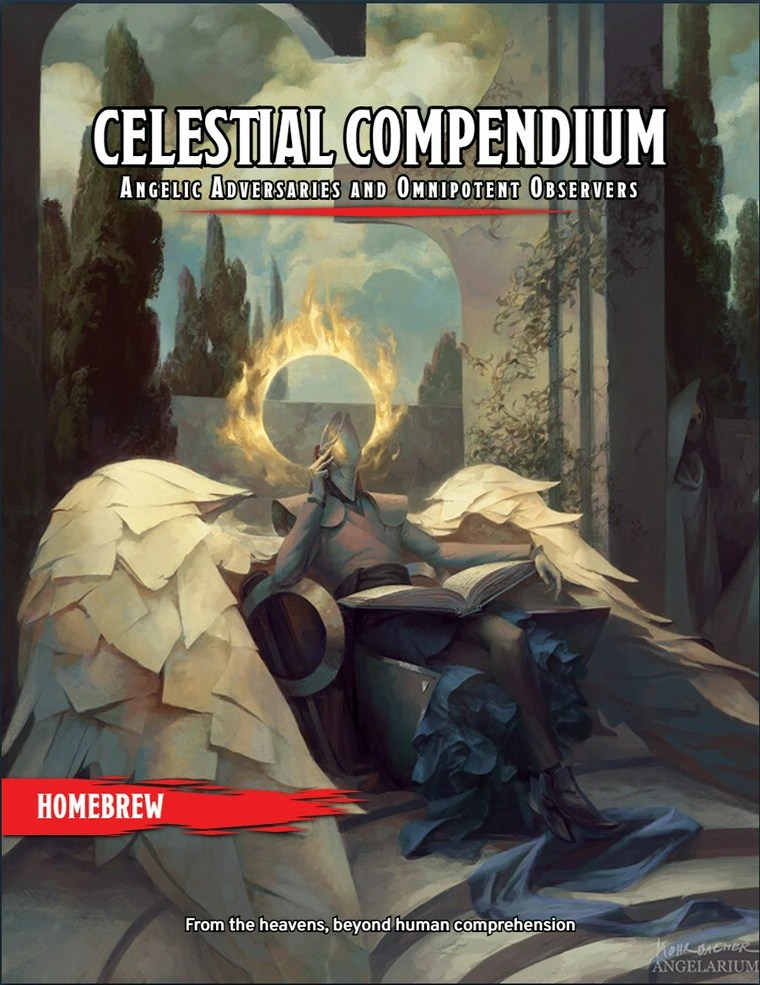
Raziel, Scholar of the Infinite, Peter Mohrbacher

The first of the celestials done! Despite my harsh critiques, I still really like what I have done with Absolution and I think it functions as a great baseline for a higher tier celestial adversary. I just believe and know I can do better, so with some modifications this can go from an ok statblock to something much much better.

Announcement: Brief Hiatus

Good evening everyone! I will be going on a brief road trip vacation for the next couple of weeks and will not be able to work on any blogposts for the next couple weeks. Tune back in on Monday the 26th for your regularly scheduled posts! I will also try and get to work on other stories/series to be posted on other days such as game/movie reviews as this isn’t supposed to be a D&D exclusive blog. Thank you all for understanding and the support! See y’all soon!

D&D Homebrew Monster of the Week: Axopin

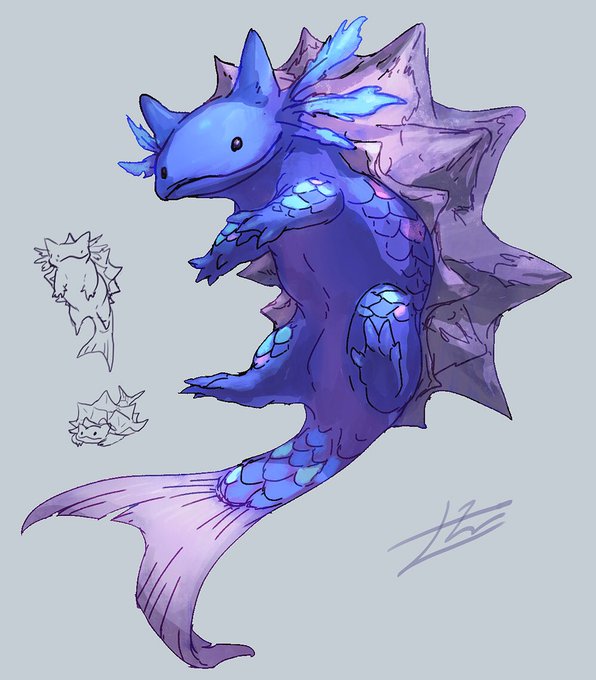
Blue and Fishy Cat-type Wooper Looper with a Rugged Shell by Gomma Lee

“I didn’t even want a pet at first. My kids had been begging for weeks to get them something, and they kept promising they’d clean after it, feed it, play with it, love it, and everything. I reluctantly agreed, but once we arrive at the shop, we couldn’t get enough of them. Their playful little coos and tiny little smiles. I remember thinking as we were leaving, ‘How could I only grab one?’”

– Survey recording how much recent pet adoptions effected new owners.

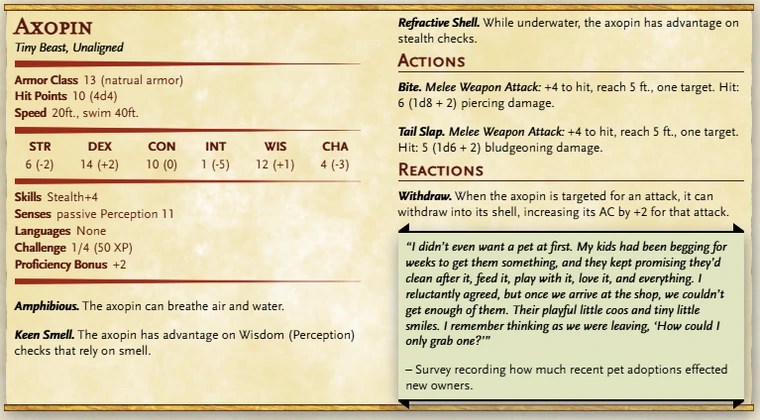
Axopins: The Overview

First member of the Beast Compendium is the Axopin, a cutesy and friendly creature often found in pristine ponds and rivers. A somewhat chimeric mix of turtles, axolotls, and fish taking features of all three to differentiate from the more “normal” wildlife within the realms. These are not creatures to fight as much as they are flavor for the world and options for the Wildshape or Polymorph features/spells, which is largely the only reason they have a statblock to begin with at all. A large section of the Beast Compendium consists of these types of creatures as, at least to me, the Beast category in D&D is meant for believable creatures and ones that either exist or could feasibly exist within our own world. These creatures lack a lot of magical abilities and deeper mechanics aside from “hit hard, take a hit well” in the upper challenge ratings when compared to the other creature categories in D&D.

Axopins use their sturdy shells to help protect themselves from predators both by withdrawing into it when threatened, but also using the reflective scales lining the shell to help blend into the clear waters of their home. Axopins lack a lot of the raw strength needed to survive in harsh environments of the realm, so they often nest within calm waters in secluded ponds and rivers with plenty of nooks and crannies to hide in. Using their fish-like tails, Axopins can quickly swim through the water or bat away possible attackers, though such methods are more difficult to deter larger creatures.

Stats and Abilities:

Axopins rely on defense rather than offense, using the environment around them to slip away and hide rather than stand and fight. If pushed into conflict, Axpoins must rely on their defensive shell rather than any bites or slaps of the tail due to its minimal offensive prowess.

When compared to last week’s Abductor statblock, the Axopin leaves a lot to be desired across the board. Lower stats, no dangerous gimmicks, no real offensive capabilities or defensive bulk to speak of. That is the level of difference I wanted across all my compendiums, I wanted creatures who could level towns with a single breath but also creatures who could only survive when in a pack or in a group. I do not think I would ever run a combat encounter with a party fighting a school of Axopins, but having the stats of the Axopin on hand for niche situations like Polymorph or Wildshape or if the party adopts one and bites someone’s hand is the main reason for this work. I don’t typically statblock frivolous creatures, but the will be most common here in the Beast Compendium.

  • Stats and Skills: The Axopin focuses more on evasion and escape rather than combat prowess as seen by its lower STR score compared to its decent DEX score and with its only proficient skill being the Stealth skill. While looking at mental scores, Beasts tend to be weighted weirdly in D&D as sentience and human-level cognitive function is usually associated with around a 7 INT score. That’s why creatures such as Orcas have an intelligence of around 3 despite being an incredibly smart animal. All this to say, while an intelligence of 1, the lowest you can go without literal loss of function in D&D, might seem harsh, it is what 70% of Beasts in D&D are labeled with. WIS is more of a survival and instinct stat so typically Beasts will have a much higher WIS score than INT as they are more in tune with their instincts than cognitive thoughts. Lastly with CHA being the social skill, its important for creatures of this kind to communicate with one another, but typically this is undesirable by other creatures. So having a moderately low CHA score is appropriate for these social animals as they effortlessly communicate with others of their kind but are incredibly hard to discern what each sound is from an outside perspective.

Passive Abilities and Actions

The meat and bones of this statblock will be much less juicy than that of the Abductors, but the Axpoin does still have a couple tricks up its sleeve:

Amphibious. The axopin can breathe air and water.

Just like many semi-aquatic creatures, Axopins can breathe both on land and in the water, allowing for them to be encountered in multiple areas and allowing them to hide from terrestrial or avian predators.

Keen Smell. The axopin has advantage on Wisdom (Perception) checks that rely on smell.

Like many animals, Axopins have a heightened sense of smell to help navigate their surroundings and help avoid the scents of known predators.

Refractive Shell. While underwater, the axopin has advantage on stealth checks.

Axopins use their naturally reflective shells to help hide their presence by blending into the shimmering waters. In murkier habitats like swamps and marshes, this can often be detrimental as it draws unnecessary attraction, leading Axopins to stay in cleaner waters.

Bite. Melee Weapon Attack: +4 to hit, reach 5 ft., one target. Hit: 6 (1d8 + 2) piercing damage.

One of the Axopins basic attacks. A simple bite that in all honesty, feels misplaced despite most every other feral creature in D&D having a Bite attack. The Axopin just doesn’t scream “strong bite force”, especially at the damage this can do (for reference, a Commoner who is considered the average non-adventuring person has 4 hit points).

Tail Slap. Melee Weapon Attack: +4 to hit, reach 5 ft., one target. Hit: 5 (1d6 + 2) bludgeoning damage.

This should be the Axopin’s main offensive means as it’s the Axpoin’s most prominent feature aside from its shell. That said, this should not be the Axopin should not be relying on physical prowess over evasion and defense.

Withdraw. When the axopin is targeted for an attack, it can withdraw into its shell, increasing its AC by +2 for that attack.

The first Reaction skill talked about in this series this ability allows the Axopin to avoid an otherwise successful hit by hiding into its sturdy shell. Reactions are a special kind of ability a creature can take in response to an action occurring around them. For example, the Shield spell can only be casted when the individual is targeted by an attack roll and will offer a +5 bonus to the caster’s AC until the start of their next turn. Certain features can also allow creatures to either make additional attacks or move across the board suddenly using a Reaction.

Revisions:

While I am quite happy with this statblock for what it is, it is not without issue. For starters, as a CR 1/4 creature it is the same equivalent difficulty as a goblin which seems wrong. While I’m not opposed to having beastial and feral creatures be enemies for a party of players, the Axopin leaves a lot to be desired as an enemy in combat. As such, I believe the best course of action is to lower its CR to 0 and remove its Bite attack. The tail of the Axopin is the strongest offensive part of its body and should not be outclassed by a bite force that shouldn’t even be there to begin with. Additionally, many CR 0s, especially of the Tiny size category only deal 1 damage on their attacks, so that would replace the Axopin’s current average damage of 5, making it much more realistic in its combat prowess. The Axopin should be little more than a pet for the party or an option for the Wildshape class feature or Polymorph spell and as such, it should not have too much of a combat presence. A reason players might choose to use this to disguise as over a regular fish would be because of the defense offered in the Reflective Shell and Withdraw abilities.

Giant Slaughterfish – The Elder Scrolls Legends by Graft Studio

The first of many cutesy critters to debut from the Beast Compendium so stay tuned with more being unveiled. If you have any comments/revisions of your own feel free to reach out and lend a hand! Until next time, hope to see all of you again next week!

D&D Homebrew Monster of the Week: Abductors

Solmorph from Alchemy Stars (Tecent Games)

WARNING: TRAVEL AT NIGHT STRICTLY FORBIDDEN

The guild is currently undergoing an investigation of the missing persons along this road. All disappearances occur during the night. For your safety all travels past 10pm are forbidden until further notice. Thank you.

– A warning posted by a local guild.

Abductors: The Overview

The first of the Aberrations, the Abductor! Consisting of a smallish body compensated by two long and razor sharp claws, Abductors are not common enemies within a majority of the planes within the D&D realm. The thought behind these creatures is that they are designed less as mindless creatures and more intellectual hunters, sent by something stronger to detain and capture persons of interest while fending off any interlopers that stand in-between them and and their target. Quick, nimble, and aggressive, Abductors prefer to utilize swift hit-and-run and ambush tactics to quickly capture their target and quickly get out, sometimes securing another creature alongside their target to feed on to help rejuvenate themselves after a fight.

The overall idea I had for this creature was for it to be a decently strong ambush monster that could use its agility to whittle the party down and forcefully reposition them/remove individuals from the fight for a short time. This is a fairly dangerous encounter even by itself due to the ability to outright remove combatants from the field for a time, making it so there is one less creature attacking it and that there is one less enemy for it to focus on. On top of this, I wanted Abductors to be able to survive and heal themselves mid combat, so they can suck the vitality from creatures they get in their grasp.

Stats and Abilities:

As mentioned, this is a fairly dangerous, nimble, and intelligent creature, so its stats are nothing to scoff at. It is decently frail for its level in its defensive capabilities, but it makes up for it in spades with its offensive prowess.

As we can see, the Abductor lacks a lot of bulk and resistances that a lot of other creatures at this level would have. Despite my prior statements harping on its agile and nimble nature its DEX is still lower than its STR score. My reasoning for this behind some of the secondary attacks this creature can cause when it attacks the player’s characters require a higher STR than DEX to maintain the effect. Despite this, it is still agile with a 40ft. flying speed (most creatures usually have a 30ft. movement (walking/running) speed). With a high WIS and INT this is not a creature that can be easily deceived or evaded and can quickly figure out a plan or ambush held against it.

  • Stats and Skills: Focusing on strength, intelligence, and speed rather than defensive bulk, Abductors rely on ambushing to quickly gain momentum in a fight and keep their targets on the back foot. Being able to fly about leaves them hard to pin down by most classes, allowing them to terrorize from above with swooping attacks, though getting too close leaves them susceptible to be attacked when entering a player’s range. Only gaining proficiency with the Perception and Stealth skills means the Abductors lean more into hiding away and watching for potential victims or targets rather than brashly charging in for a fight.
  • Resistances, Immunities, and Senses: Being resistant to specifically nonmagical weapons means this creature is not for the novice adventurers to confront. Usually, a starting hero will have not a lot of valuable or powerful equipment to wield and such would not be able to properly deal with an Abductor before it either kills the adventurer or whisks them away. immune to the Charmed condition means the Abductor cannot be swayed or influenced easily by those it’s attacking or stalking. While nothing is impossible, this would be a very steep check to make in order to try and talk your way out from a fight. Darkvision allows the Abductor to see in gray hues in dark areas, allowing it to hunt and ambush in the dead of night against unprepared or unsuspecting individuals. Without a torch, Darkvision, or some other source of light/sight the party would be attacking wildly, leaving the Abductor largely unscathed and free to act as it pleases. While it can speak, only being able to speak in Deep Speech leaves it difficult to communicate with as Deep Speech is a language widely saved for the aberrant creatures from beyond the realms like Mind Flayers.

Passive Abilities and Actions:

Now that we have moved through the introduction of the Abductor’s stats and abilities, its time to get to the real meat and bones of this creature’s statblock:

Faultless Tracker. The abductor has advantage on Wisdom (Survival) checks made to track creatures.

Faultless Tracker allows the Abductor to stake out creatures and follow them for great distances, possibly allowing for it to escape a combat only to return later when its target is resting from any wounds it took.

Magic Resistance. The abductor has advantage on saving throws against spells and other magical effects.

Its no surprise that magic plays a big part of the D&D world with how many classes get access to spells in one way or another. Magic Resistance is a frequent ability used by possibly hundreds of D&D creatures, especially as you enter the higher tiers of monsters. Being able to roll at advantage can really make or break a combat encounter, saving the Abductor from an otherwise quick loss at the hands of a sudden Polymorph or similar spell.

Siphon Vitality. At the start of each of its turns, if the abductor has a creature grappled the grappled creature takes 18 (4d8) necrotic damage and the abductor heals for the same amount.

This was the reason I wanted the Abductor to have a higher STR than DEX as with 5th editions rulings for grappling, grappled creatures can make a contested check using either their Acrobatics (DEX) or Athletics (STR) skills while the creature maintaining the grapple (the Abductor in this case) must use its Athletics (STR) to continue the grapple. So long as the Abductor has a creature grappled, it continues to both damage the grappled target but also heal itself, prolonging the fight. This does pose a bit of a bigger threat than the Abductor has a right to as a CR 8, by bumping the collective damage between all its Claw attacks and Siphon Vitality to a collective 46 average damage per turn, which is a monstrous amount.

Multiattack. The abductor makes two attacks with its claws.

This is possibly the most common ability for monsters within D&D as nearly everything above CR (Challenge Rating) 5 has Multiattack tacked on allowing it to make multiple attacks in a single turn. The only caveat for this feature is if something is incredibly slow or if it packs all of its damage into one singular strike, which is rare.

Claw. Melee Weapon Attack. +7 to hit, reach 10ft., one target. Hit. 14 (2d8 + 4) slashing damage. If the target is Medium or smaller, it is grappled (escape DC 16). Until this grapple ends, the target is restrained, and the abductor can’t attack another creature with its claws.

This is the basic attack of the Abductor and is arguably a bit strong for being CR 8. On top of grappling a creature on hit, this attack also inflicts the Restrained condition which does differ from the Grappled condition. While Grappled only reduces a creatures movement speed to 0, Restrained makes it so all attacks towards the restrained target are made at advantage while all attacks made by the restrained creature are made at disadvantage and it still cannot move. After successfully grappling a creature, the Abductor now has to attack the same creature until the creature breaks free, the Abductor decides to release the creature itself, or if the Abductor dies.

Planar Hop (3/day). The abductor quickly travels to the Astral Plane. If it is grappling a creature in its claws, the grappled creature must succeed on a DC 16 Charisma saving throw or be dragged into the Astral Plane with the abductor.

The Astral Plane is a sperate plane of existence, often acting as a bridge for the other planes within the realm. This ability poses a massive threat to a party as with one bad save, a player could become stranded in a completely different plane of existence with no foreseeable way back. While I personally envisioned this more of a ‘Get out of Jail Free’ ability, I cannot deny that the ability to toss a creature into the Astral Plane at this level is not only dangerous, but also unfun for players as you’re doing more than just removing them from combat as if they were stunned or downed, you are instead outright removing them from the scene and story.

Void Cell (Recharge 6). The abductor channels the magic within its body and attempts to pull a creature into an extradimensional space within itself. The abductor targets one creature it can see within 60 feet.

The target must succeed on a DC 16 Charisma saving throw or be pulled into an extradimensional space within the abductor’s body. While inside, the target is blinded and restrained. The abductor can hold only one creature at a time in this manner. A restrained target can repeat this saving throw at the end of each of its turns. If the abductor dies, the restrained creature is freed and appears at a random spot within 30ft. of the abductor’s corpse.

This is the crowning ability for the Abductor, being able to magically teleport a creature it can see into a pocket dimension stored within its body. I imagined this as the orange light underneath its face and within its head. Another dangerous ability as it can quickly lock a player inside, removing them from the fight and quickly flee, depositing the trapped creature a good distance away or using its Planar Hopping ability to escape to the Astral Plane with the creature in tow.

Revisions

The Abductor is by no means an easy foe to conquer, and in retrospect it is a tad over-tuned. While there is a lot of good in this statblock as I think the synergy between its claws being able to grapple and syphoning hit points to help heal itself is a good combo, having not one but two separate ways to outright remove players not only from the combat but from the same plane of existence as the rest of their party is too much. While I wish to keep the Void Cell feature mostly as it is, I think the Planar Hop feature should not be able to drag grappled creatures with it. This way it remains the escape card for the abductor to be able to flee quickly if a fight gets tricky for it and to return to ambush at a later time but can’t just remove a player off of one failed save with no way back to the fight or plane. Additionally, the damage output when factoring in Siphon Vitality is a bit much for a CR 8 creature as when compared to a Hezrou from the Monster Manual, its Multiattack feature uses one attack from its Bite (15 damage) and one from its Claws (11 damage) for a total of 26 damage. Already, the Abductor deals slightly more damage at 28 damage from its two claws, but adding the additional 18 from Siphon Vitality brings this way out of the league of the average CR 8. Instead of lowering the damage however, bumping the Challenge Rating up to 10 and increasing the stats and hit points slightly would make for a better change as this creature all-in-all is not designed for weaker or lower level parties.

Flying_polipe by Dante D. Corvino

This wraps it up for the first Aberration and the first D&D Homebrew Monster of the Week. Stay tuned next week for the next addition!

About Me

Welcome everyone to the Speer-Head Lounge, your one stop shop for everything nerdy. My name is Trey Speer and I am an up-and-coming freelancer in the blogging/podcasting industry. Here you will find discussions, posts, and recordings the following:

  • 5th Edition Dungeons and Dragons
  • Upcoming games (Nintendo, Fromsoft, Capcom, Indie)
  • Movies (typically Sci-Fi)
  • and more!

So stick around! Grab a drink, grab some snacks, and enjoy reading and listening in on the next nerdy thing!