“The battle had raged on for days and I guess that amount of noise and blood would have woken anything up. Still, didn’t make it any less concerning see the mountains begin rising out of the earth. With but a breath, it bellowed out a roar strong enough to deafen the gods.”
– Excerpt from The Death of our Heroes: Tall Tales of Mythology.
Welcome back everyone! I apologize for the delay on these posts. Life has been a bit crazy lately (and likely will still be for some time as I settle into a new job and begin moving preparations for later this year). I am going to try and get back into a routine schedule for these blog posts as well as finally begin diversifying the content that has been provided as this was never intended on being a D&D exclusive board and will be bringing new discussions and posts into the fold hopefully soon!
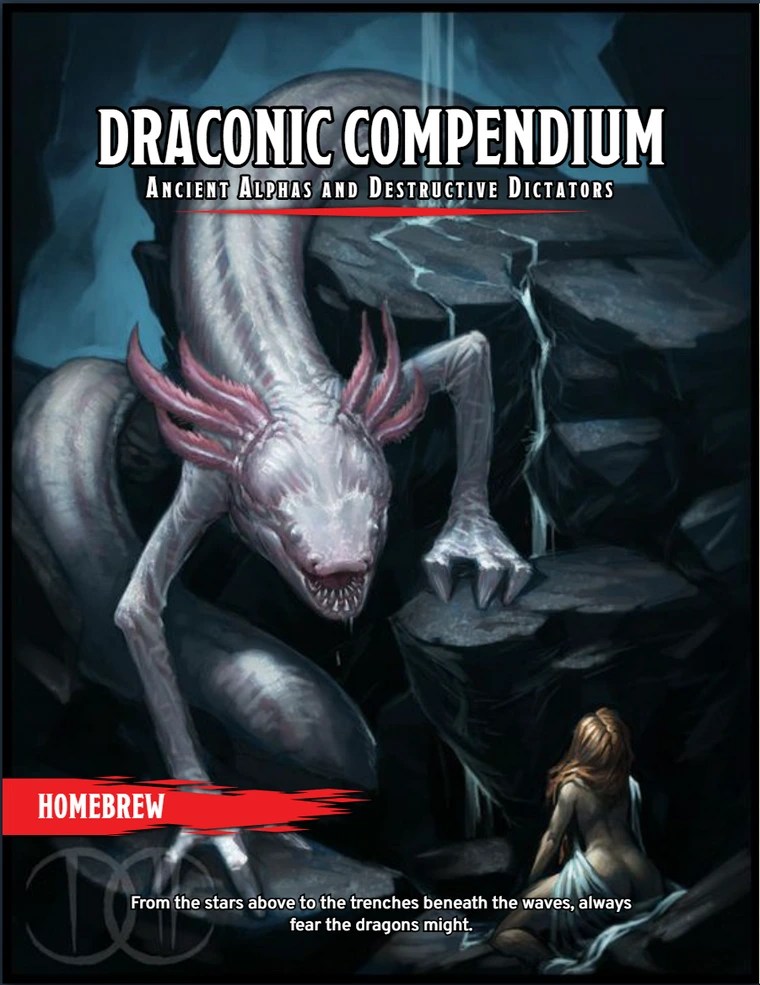
Now, on to the actual post. The Ancient Leviathan is exactly that, an apex monster of myth and legend though it resides in a place many would not expect at first. Often laying dormant for decades if not centuries at a time within the craggy peaks of rugged mountain ranges, Ancient Leviathans are a rather slothful creature when comparing the majority of their lives. However should one awaken, the mountains will crumble as this titan frees itself from under the earth and the very heavens will shake and bow to its earthshaking roars.
Ancient Leviathan: The Overview
While not the absolute pinnacle of dragon kind within the D&D universe, Ancient Leviathans come pretty close to reaching that peak. Clocking in at CR 20, these dragons are viewed with the same reverence and fear as the other top-dogs of the realms. While incredibly intelligent and capable of speech, Ancient Leviathans care little for discussion and playing protector to weaker creatures as they follow firmly to the ideas of “might-makes-right.” Not evil inherently but far from being a benevolent figure, Ancient Leviathans often spend most of their waking time hunting and feeding, keeping close to the towering mountain spires they claim (or as close as you can be when you are several thousand feet above sea level).
Stats and Abilities

Absolute physical powerhouses, Ancient Leviathans do not mince words and mince their combat strategies even less. Relying on their titanic size and strength over any magical capabilities, these dragons soar through the air biting and slamming anything that dares in their territory. Due to being a CR 20, to say the Ancient Leviathan is lacking in any department would be lying as there is little aside from being out-sped and harassed at a range that could be problematic for the dragon, though a DEX of 14 does leave it vulnerable and prone to possibly fail the more heavy hitting spells at this level of combat like Firestorm or Disintegrate.
- Stats and Skills: Aside from their lackluster 14 DEX and a respectable 18 INT, there is next to nothing this dragon lacks stat wise. And thanks to gaining a +6 to any saving throws its proficient in, even its meager +2 to DEX saves increases to a respectable +8 which on top of Magic Resistance makes it much easier for the dragon to take those heavy-hitting spells. With a 26 STR and a 22 CON, there is little that is going to be able to go toe-to-toe against the dragon without major assistance and next to nothing will be able to overpower the dragon with raw magic, though it isn’t immune to being shoved knocked Prone, Grappled, or Restrained (in retrospect, it should likely be immune to being knocked prone as it has a hovering flying speed). Surprisingly, all of the Ancient Leviathan’s proficient skills are social skills (History, Insight, and Perception, though calling Perception a social skill is a large stretch). I do think these skills would be applicable for a creature who would be less aggressive and territorial than the Ancient Leviathan as I cannot see this creature bothering to discern someone else’s intentions as opposed to just crushing them under claw and tail or bothering to study ancient ruins or recall some long forgotten memory. In truth, I don’t really know aside from Perception if there would be any applicable skills to add aside from maybe Athletics or Acrobatics, though this dragon isn’t getting into feats of strength typically and isn’t designed to be a nimble or agile flyer. With a 22 AC and over 300 hit points, this titanic dragon is not going down easily.
- Resistances, Immunities, and Senses: Just like many of the end-game tier monsters within D&D, mundane weapons are ill-equipped to handle this creature though in this case the Ancient Leviathan is outright immune to damage from nonmagical weapons. Alongside that, the Ancient Leviathan is also immune to Cold and Lighting damage due to its den and lair being at the absolute highest peaks. Lighting damage is a bit of a stretch but I wanted to make this creature a sort of “storm-caller” if you will, able to channel and focus the surrounding air into either frigid blizzards or sudden storms. Unsurprisingly, a creature of this caliber is immune to the Frightened condition as it has no natural predators and really only has to worry about the gods, other world ending powers, or extremely capable adventurers, though as mentioned earlier this creature likely should be immune to being knocked prone due to having a hovering speed. Like most Dragons within D&D, the Ancient Leviathan also boasts 60 feet of Blindsight and 120 feet of Darkvision, allowing it to see through illusions and attack even in the dead of night. That said, the Ancient Leviathan is not a creature that would go out of its way to attack or hunt under nightfall. Sure, it would benefit greatly, but this is also a prideful and assertive creature who cares little for tactics aside from overwhelming strength.
Passive Abilities and Actions:

Legendary Resistance (3/Day). If the leviathan fails a saving throw, it can choose to succeed instead.
Just like just about any of the higher tier monsters, the Ancient Leviathan boasts legendary actions and with that come Legendary Resistances. Staple feature, no notes to add.

Magic Resistance. The leviathan has advantage on saving throws against spells and other magical effects.
Another staple feature for a monster of this level. Again, just about every creature of CR 14 or higher should be coming packaged with this unless they are literally just a strong animal. No notes needed.

Siege Monster. The leviathan deals double damage to objects and structures.
Another staple feature for a creature of this size, though it isn’t one that has come up yet so lets dive into it a little bit. This trait is typically reserved for one of two different monsters. Either A, they are a creature designed to break down objects and structures like a siege weapon (or a creature using a siege weapon), or B, the creature is so large that even their stray strikes can level buildings. The Ancient Leviathan is of course the latter, and frankly why wouldn’t it be. To any of you who have seen the Godzilla: King of Monsters movies, Rodan simply gliding down from its volcanic lair leveled a majority of the city. Again, just by gliding. With a singular beat of its wings it went supersonic so you can imagine the untold destruction it could do if it actually went about attacking the city.

Multiattack. The leviathan can use its Frightful Presence. It then makes two attacks: one with its Bite and one with its Tail.
Another staple feature, and like all other major Dragons within D&D, it also allows the usage of the Ancient Leviathan’s Frightful Presence feature before actually attacking.
Bite. Melee Weapon Attack: +14 to hit, reach 15ft., one target. Hit: 30 (4d10 + 8) piercing damage.
In all honesty, despite the impressive damage on a hit, this attack feels as though it needs some tweaking. Between both of its attacks (which are all Piercing and Bludgeoning damage), it deals an average of 52 points of damage on a turn. For comparison sakes, an Ancient White Dragon (another CR 20) deals an average of 53 damage (most Slashing and Piercing, but it also has some Cold damage mixed in), The Nightwalker deals an average of 56 points of Necrotic damage with its basic attack that can also outright kill a creature if they are reduced to 0 hit points, and then finally the Pit Fiend on top of having at will Fireball spells available for free whenever it wants, its Multiattack allows it to make FOUR SEPARATE ATTACKS for a total of 78 points of damage and that’s only if the creature passes the save on the bite attack, other wise that’s an additional 21 points of Poison damage EACH TURN until they pass the save and remove the Poisoned condition. 30 Piercing damage and nothing else is not going to cut for a creature of this size. If we want to stick to the idea of the Ancient Leviathan being a creature that doesn’t have any gimmicks or tactics aside from hit hard, then yeah we would just bump up the damage but I have a different idea.
We are going to be adding a Swallow mechanic to this creature, similar to a Froghemtoh’s or Behir’s Swallow features. Typically for this to function, a creature needs to be Grappled first, so the Ancient Levithan’s Bite attack will do just that, Grappling and Restraining a target hit by the attack (with a DC 21 Strength (Athletics) to free themselves). While the Ancient Leviathan has a creature Grappled in this way it cannot use it’s Bite attack against another creature and if it successfully hits the Grappled creature with another Bite attack it can swallow them. Once swallowed, a creature becomes Blinded, Restrained, and gains cover from any sources originating outside of the Ancient Leviathan, and will take 28 (8d6) acid damage at the start of each of the Ancient Leviathan’s turns. In order to escape, a swallowed creature must deal 50 points of damage in a single turn and the Ancient Leviathan must make a DC 17 Constitution saving throw. On a failure, the Ancient Leviathan regurgitates all swallowed creatures. Due to its size, the Ancient Leviathan can have up to 10 Medium or smaller creatures, 3 Large or smaller, or 2 Huge or smaller creatures swallowed at once.
Tail. Melee Weapon Attack: +14 to hit, reach 20ft., one target. Hit: 22 (4d6 + 8) bludgeoning damage.
So, after all the work and revamping we did to the bite attack, what is the plan for this one? Honestly, just increasing the damage from using d6s to d8s, increasing the damage from 22 to 26. Honestly, increasing the damage even more by going from 4d8s to 5d8s would probably be a safe bet to do as the damage would increase up to 30 damage, making the dragons turnly damage 60 even. This is higher than the majority of CR 20s within D&D, but without a myriad of other features or effects that come with these attacks and with the fact this is supposed to be a a much physically stronger creature, I’m ok with that.
Frightful Presence. Each creature of the leviathan’s choice within 120ft. of it and aware of it must succeed on a DC 18 Wisdom saving throw or become frightened for 1 minute.
A creature can repeat the saving throw at the end of each of its turns, ending the effect on itself on a success. If a creature’s saving throw is successful or the effect ends for it, the creature is immune to the leviathan’s Frightful Presence for the next 24 hours.
This is a staple feature of just about any stronger “true” dragon. Any Adult Dragon and higher will have a Frightful Presence feature or something akin to i, so I have no notes for this feature.

Thunderous Roar (Recharge 5-6). The leviathan lets out a deafening roar. Each creature in a 90ft. cone that can hear the leviathan must succeed on a DC 22 Constitution saving throw, taking 65 (18d6) thunder damage on a failed save or half as much on a successful one.
Creatures that fail the save by 5 or more are deafened for 1 minute, repeating the saving throw at the end of each of their turns and ending the effect on a success.
Just like Frightful Presence, all dragons have some sort of breath-weapon feature. However, keeping true to the idea of a creature using nothing but its own strength to attack, instead of having some sort of frost breath, the Ancient Leviathan simply roars instead, creating a concussive shockwave that levels anything directly in front of it. Initially, I thought the Ancient Dragons that also dealt cone breath-weapons only had a 60 foot cone, so I figured the trade off of slightly less damage with an extra 30 foot range would be perfectly fine, but as it turns out Ancient White Dragons also have a 90 foot cone Cold Breath attack. Increasing the damage from 18d6 to 20d6 would bump the average damage to 70 and make it more in line with other Ancient Dragon breath weapons, so easy-peasy. The added line of “if a creature fails the save by 5 or more is deafened for 1 minute,” surprisingly isn’t as dangerous as one might assume.
Deafened – A deafened creature can’t hear and automatically fails any ability check that requires hearing.
Alongside being able to remake the save at the end of each of their turns, this is more for flavor than actual danger within the combat encounter so there is no reason to change or remove it as of now.

Legendary Actions: The leviathan can take 3 legendary actions, choosing from the options below. Only one legendary action option can be used at a time and only at the end of another creature’s turn. The Leviathan regains spent legendary actions at the start of its turn.
Very normal for a creature of this level to have this feature, so lets see what we are working with.
Tail Attack (1 Action). The leviathan makes one attack with its tail.
A staple Legendary Action, just a simple attack that the Ancient Leviathan can do in between other creatures turns. With how dangerous the Bite attack has turned, it stands to reason that the Tail attack should remain the default attack for this feature.

Clawed Swipe (1 Action). The leviathan sweeps a wide arc with one of its massive clawed limbs. Each creature in a 30ft. cone in front of the leviathan must make a DC 22 Dexterity saving throw, taking 27 (6d8) slashing damage on a failed save or half as much on a successful one.
The first of the unique Legendary Actions, this is making use of the Ancient Leviathan’s massive claws as it drags them through the earth, cleaving a path through anything right in front of it. The issue arises that a 30 foot cone is awkward for a creature that is larger than 1 space, especially if its designed to hit everything in front of itself.
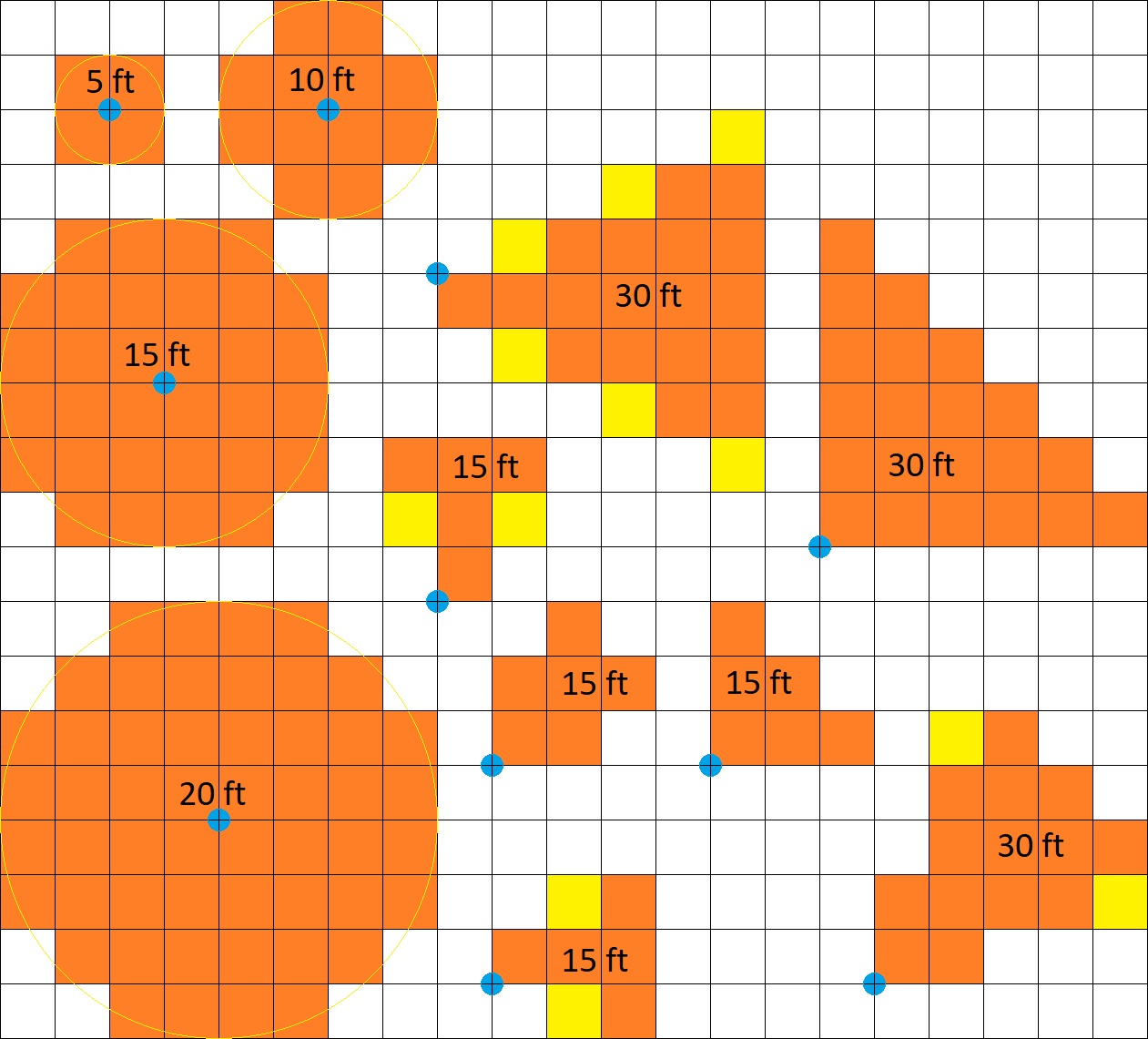
As seen in the templates (The one in the middle of the image), the 30 foot cone actually leaves blind spots right at the front of the cone, so it doesn’t quite mesh with the idea that the Ancient Leviathan is making a sweeping strike in front of itself. To remedy this and keep true to the original idea of the feature, here’s a simple change.
Titanic Claw (2 Actions). Melee Weapon Attack: +14 to hit, reach 20ft., 3 creatures. Hit: 34 (4d12+8) slashing damage.
With a singular attack roll, this means that the Ancient Leviathan isn’t guaranteed to hit each creature in front of it (though with a +14 to hit, it isn’t exactly hard either). With this being so much more damage than its basic attacks, possibly dealing over 90 damage with a singular attack on top of its multiattack during its turn, This kind of has to cost multiple Legendary Actions as to not overpower the party immediately. This prevents it from using it multiple times within a round as well as prevents it from using it with the following ability.

Earth Tremor (2 Actions). The leviathan slams its tail into the ground creating massive tremor. Each creature within a 60ft. radius of the leviathan must make a DC 22 Dexterity saving throw, taking 22 (4d10) bludgeoning damage and being knocked prone on a failed save or half as much on a successful one and not being knocked prone.
This feature almost feels redundant with the rest of the kit if I can be perfectly honest, but I am unsure what replace it with. The Tail attack already knocks creatures prone, the Titanic Claw feature now deals massive damage to multiple creatures at once, so where does that leave Earth Tremor? Honestly, thrown out to be honest. This is a redundant feature that brings nothing new to the table and is simply there to fill a slot. I think a better option would be to replace this with the common Detect Legendary Action typical dragons get in their statblocks
Detect. The leviathan makes a Wisdom (Perception) check.
Not the most interesting of features, but it allows the Ancient Leviathan to quickly adjust if a player is trying something sneaky. Reminder, this is not some simple minded beast, this is an apex creature that is rivaled by next to none.

Lair Actions: On initiative count 20 (losing initiative ties), the Leviathan takes a lair action to cause one of the following effects:
Icy Gusts. The leviathan summons freezing winds around its lair. Each creature within 120ft. must make a DC 22 Constitution saving throw, taking 16 (3d10) cold damage on a failed save, or half as much on a successful one. Additionally, affected creatures’ movement is reduced by half until the end of their next turn.
Wind Tunnel. The leviathan beats its colossal “wings”, creating a powerful surge of wind in a 60ft. cone in front of it. Each creature in that area must succeed on a DC 22 Strength saving throw or be pushed back 30 feet and knocked prone. Flying creatures that fail the saving throw fall to the ground, taking the appropriate fall damage.
Storm Surge. Until the end of its next turn, the leviathan’s flying speed is increased to 120ft. as strong winds encircle around the leviathan

Regional Effects. The region surrounding the leviathan’s lair is warped by its presence, creating the following effects:
Frigid Winds. The air in the region grows colder and harsher, with biting winds and swirling snow. Creatures not native to such cold conditions suffer disadvantage on Wisdom (Survival) checks made to navigate and endure in this environment.
Echoing Roars. Distant echoes of the leviathan’s powerful roars can be heard intermittently throughout the region. These echoes have an eerie effect on creatures, causing unease and occasional nervousness. Roll 1d8 at the start of each creature’s turn: on a roll of 1, the creature becomes briefly startled, losing its reaction until the start of its next turn.
Aura of Dominance. A Dragon creature of CR 10 or lower must succeed on a DC 15 Wisdom saving throw the first time it makes an attack roll against the leviathan. On a failed save, it is frightened and must use its full turn fleeing as much as it can for 1 minute, repeating the save at the end of each of its turns and ending the effect on a success.
If the leviathan dies, these effects disappear after 1d10 days.
You might have noticed I skipped talking about the Lair actions before jumping to the regional effects. In truth, I do not find any merit or interest with the current list of these features.
- Icy Gusts does a wide patch of chip damage, but it is more speed control which isn’t bad but its not something I can imagine a creature like this carrying for.
- Wind Tunnel is another feature that can inflict the prone status, which just isn’t needed. If I really do want to keep the ability to inflict a wide spread instance of knocking creatures Prone, I could very easily tack that on to the Thunderous Roar feature alongside the deafened condition.
- Storm Surge just just doesn’t fit. This creature sleeps for years, decades, maybe even centuries at a time before awakening up with all the subtlety of an erupting volcano. It is not agile, it is not nimble, and doesn’t care about moving quickly. So while a 120ft. flying speed is nothing to scoff at, this isn’t the statblock for it.
The Regional Effects I actually do quite like, but these can easily be woven into the setting behind the scenes by a DM as opposed to being tied to the Ancient Leviathan’s statblock. I will likely move Aura of Dominance from the Regional Effects to the passive features as I do quite like the mechanic and will likely expand it to encompass Beasts and Monstrosities as well as Dragons.
Revisions:
We had some pretty substantial changes in this statblock, from changing how the bite works, reworking the Clawed Strike Legendary Action into the Titanic Claw feature, and even removing the entire Lair Action and Regional Effect features. While I am not 100% happy with where this statblock is, I feel it is in a much better spot now as it was definitely bloated before this.
Thank you all for reading! I know its been way too long since I put out my last post. I’m on the tail ends of my major video project and am a bit overwhelmed with everything else, but I refuse to be beaten! I will continue making these posts as well as adding more in the future I promise!